
Are NFTs The Future of Photography? Hell no.
If you haven't heard of NFTs yet you may be in the minority. If you have heard of NFTs and still have no idea what they are, you are not alone. I spent six months exploring the world of NFTs and share my thoughts below on what they could mean for the future of photography and the NFT community in general. I know you have questions. So. many. Questions. Let me share with you a few of mine when I first dove in.
WHAT THE @%#&! IS AN NFT?
A non-fungible token (NFT) is a unit of data stored on a digital ledger, called a blockchain, that certifies a digital asset to be unique and therefore not interchangeable. NFTs can be used to represent items such as photos, videos, audio, and other types of digital files. Access to any copy of the original file, however, is not restricted to the buyer of the NFT. While copies of these digital items are available for anyone to obtain, NFTs are tracked on blockchains to provide the owner with a proof of ownership that is separate from copyright.
An NFT is a unit of data stored on a digital ledger, called a blockchain, which can be sold and traded on digital markets. NFTs function like cryptographic tokens, but, unlike cryptocurrencies like Bitcoin, NFTs are not mutually interchangeable, so not fungible. While all bitcoins are equal, each NFT may represent a different underlying asset and thus have a different value. This cryptographic transaction process ensures the authentication of each digital file by providing a digital signature that is used to track NFT ownership. Because of their unique identifiers, NFT are being used to secure digital certificates of ownership of artworks. It’s important to understand that an NFT is not:
An artwork—digital or otherwise
Rights—to copy, disseminate, or display the artwork
Exclusive versions of the JPG that serve as the digital surrogate for physical art
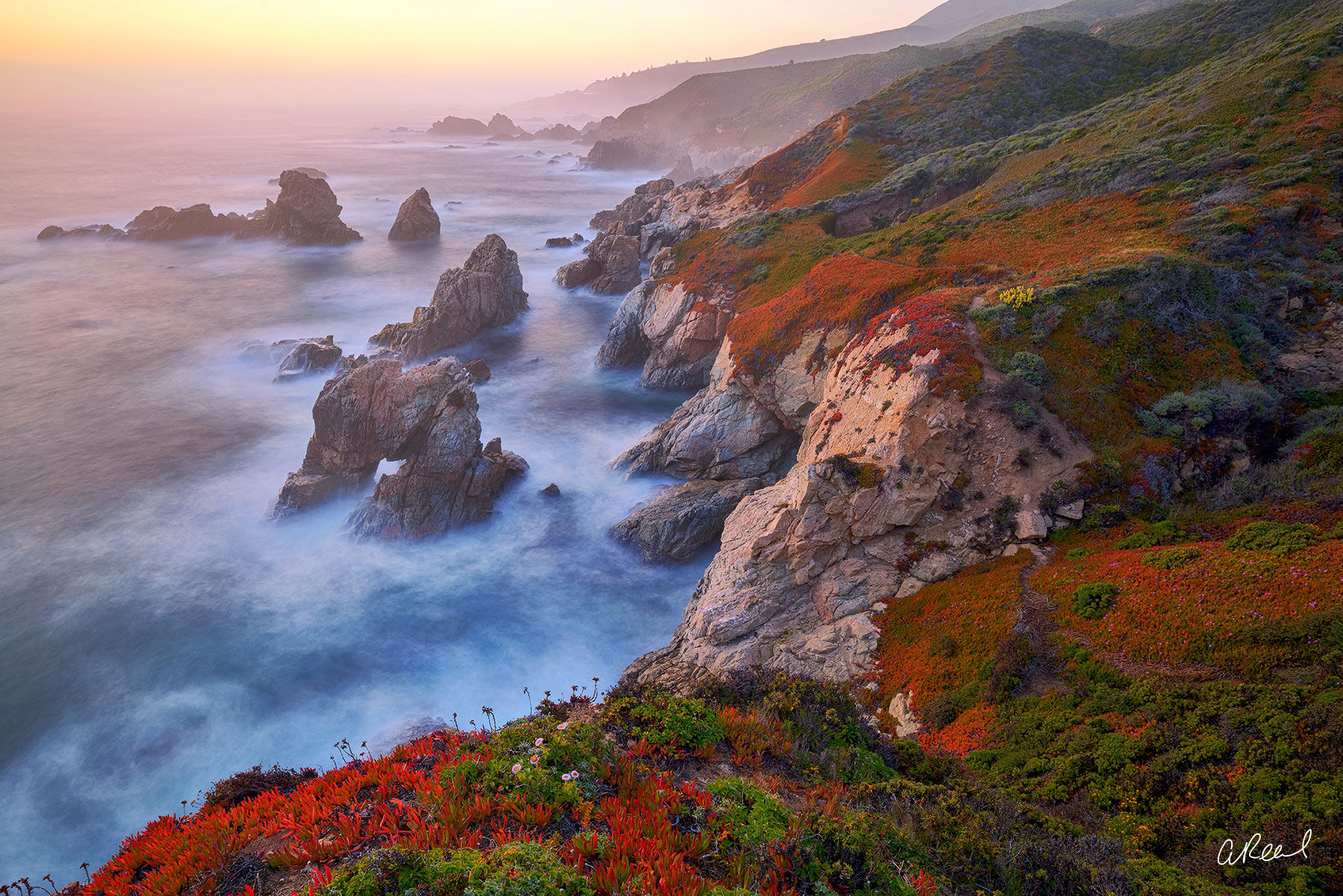
A cold evening fog caresses the sculptured cliffs along Big Sur in California. The evening light inspires a rainbow in the coastal scrub and beds of ice plant as the sun prepares to make its journey across the Pacific. Fine Art Limited Edition of 50.
What Are the Benefits of NFT'S?
The benefits of NFTs apply to any artist who works online. Through their special encryption and ability to be traded, they provide greater security, profitability, and recognition for creators.
Since the internet emerged, digital artists have struggled to maintain sovereignty over their work. Images can be saved, mp3s can be downloaded, and pretty much any kind of digital file can be transferred at will into the private files of an individual. NFTs cannot prevent versions of your work from being saved, but they can act as a standard for determining and generating authenticity.
NFTs are created using something called block-chain encryption. This is a complex process by which the data that makes up a digital artwork is written into many randomized blocks of computer code. These blocks are quite large and, thus, impossible to replicate or duplicate. Each NFT’s encryption “signature” is stored in a special virtual ledger, so that any version of that file appearing in the future can instantly be recognized as an original or a copy.
This means that online artists can now begin producing and selling their work as they would in the physical world. The sense of uniqueness and authenticity created by block-chain encryption drives up the value and demand for digital artworks in ways never before possible.
Before NFTs, there was little incentive to purchase online art unless you wanted it to be printed and mounted somewhere. Why purchase a digital image or a song when it can be saved via screenshot or downloaded from YouTube? This, of course, is disrespectful and detrimental to the livelihood of creators, but a common occurrence, nonetheless.
NFTs redefine digital art as something unique and irreplaceable, like a photographic print or a painting. Now there is greater reason (beyond morality) to own an artwork as an NFT; digital media is no longer just a source of entertainment or stimulus, but a repository of value and an object of scarcity. For the artist, this means more money to be made from each piece of art produced, and vastly increased viability for digital art as a business or career.
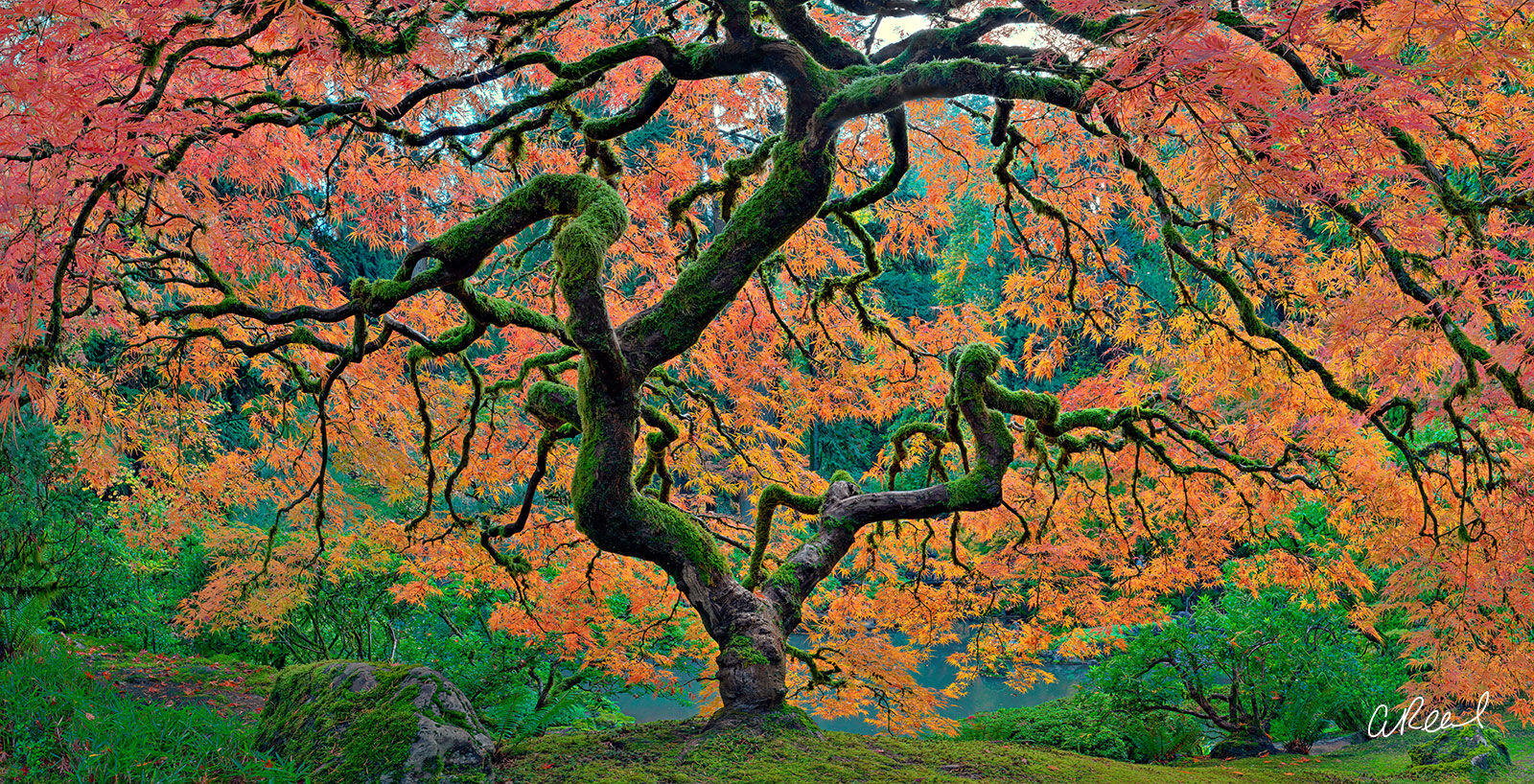
Transform your space with Aaron Reed's luxury fine art photography print, Embers, from his Panoramic Wall Art collection. Order yours today! Fine Art Limited Edition of 50.
Crypto What?
While you may not have heard of an NFT yet, if this is your first-time hearing about cryptocurrency, you should probably climb out from under that rock. A cryptocurrency, crypto-currency, or crypto is a digital asset designed to work as a medium of exchange wherein individual coin ownership records are stored in a ledger existing in a form of a computerized database using strong cryptography to secure transaction records, to control the creation of additional coins, and to verify the transfer of coin ownership. Cryptocurrency does not exist in physical form (like paper money) and is typically not issued by a central authority. Cryptocurrencies typically use decentralized control as opposed to a central bank digital currency (CBDC).
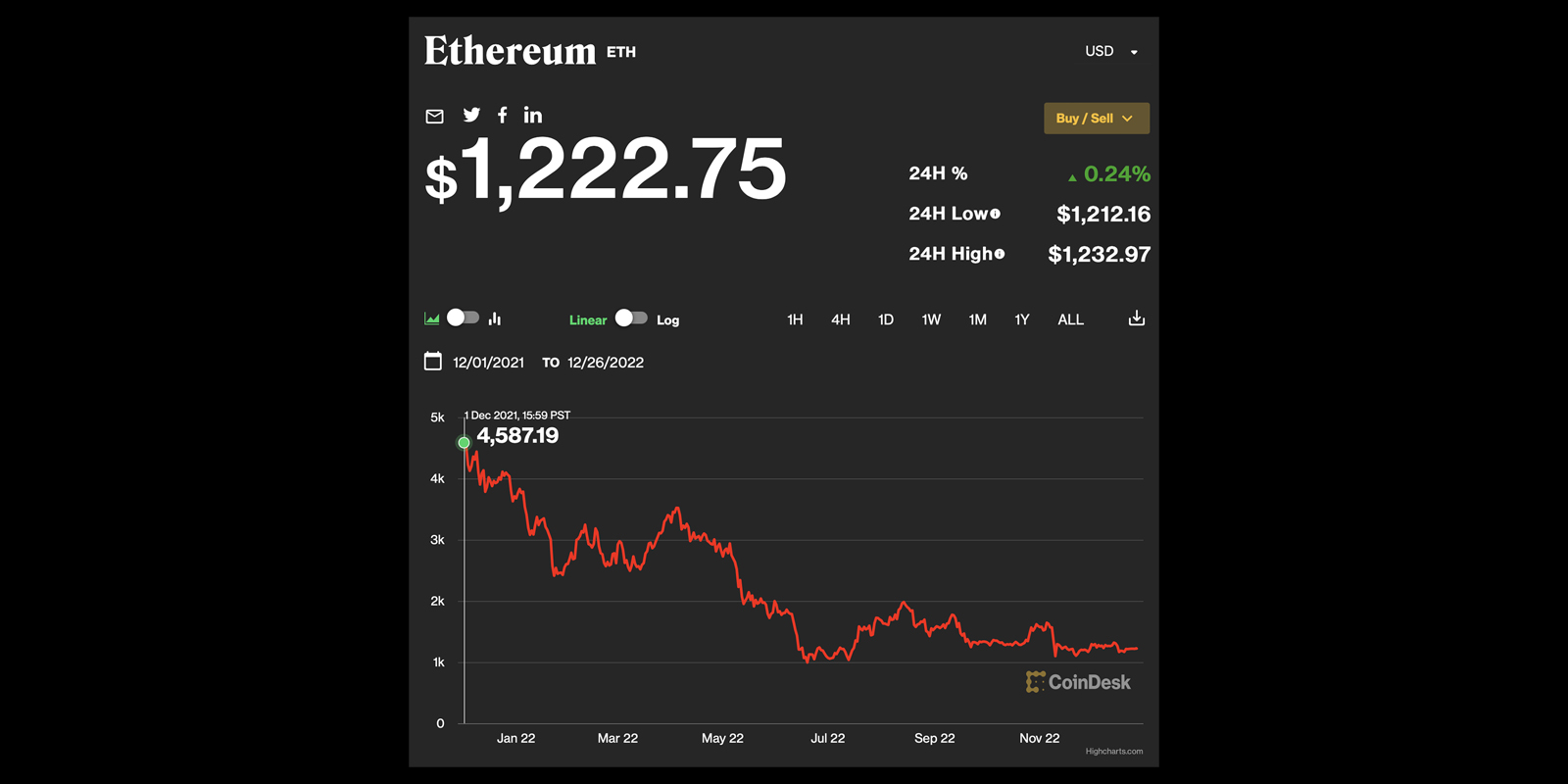
So, is cryptocurrency a valuable asset? A good investment for the future? Let's look at the Ethereum price index over the past year. If you had purchased 100 Ethereum on December 1st, 2021, it would have cost you $458,719. Today you would have $122,275, clinical depression and anxiety and little hope for the future. In contrast, had you invested in the S&P 500 instead, you still didn't have a great year but you would still have $367,709 in your bank account.
Punks Sell but Who's Buying?
One look at the digital assets that sell on NFT websites like Open Sea, SuperRare & Foundation will make anyone ask the same question. WHO would buy these and WHY? The most expensive NFT sold to date was minted by Beeple and sold through Christie's at auction for 69 million dollars. Cryptopunks have also sold for millions of dollars including a masked alien punk that fetched 11.75 million. If that looks like a pixelated JPEG to you, you can skip your next vision appointment because that is exactly what the buyer received in return for his or her purchase.
In my short time browsing around the platform, I feel like I identified three common buyers. The first appears to be artists supporting other artists, which of course is applaudable but typically comes with expectations of mutual support and reciprocation. The second buyer profile appears to be the big fish, making multiple, sometimes hundreds of large purchases that would make one think that they must have lost their minds. Some of them probably have. Most of them simply have other motives, like the advancement of cryptocurrency or the platform itself. Further investigation leads to speculation and rumors that some of these buyers came into possession of large amounts of ETH at little or no cost to them, which they now spend on those who have large followings, or who work diligently to further the NFT community, cause and "inflate their own bags". The third are those who are simply having fun and trying to turn a profit along the way.
The buyers that the community needed and desperately hoped for are the average, reoccurring consumers. Despite all the hype of NFTs and the rise in the value of Cryptocurrency during the summer of 2021, these buyers never materialized and in my opinion they never will. The summer of 2021 was their big chance, and that ship has clearly sailed.
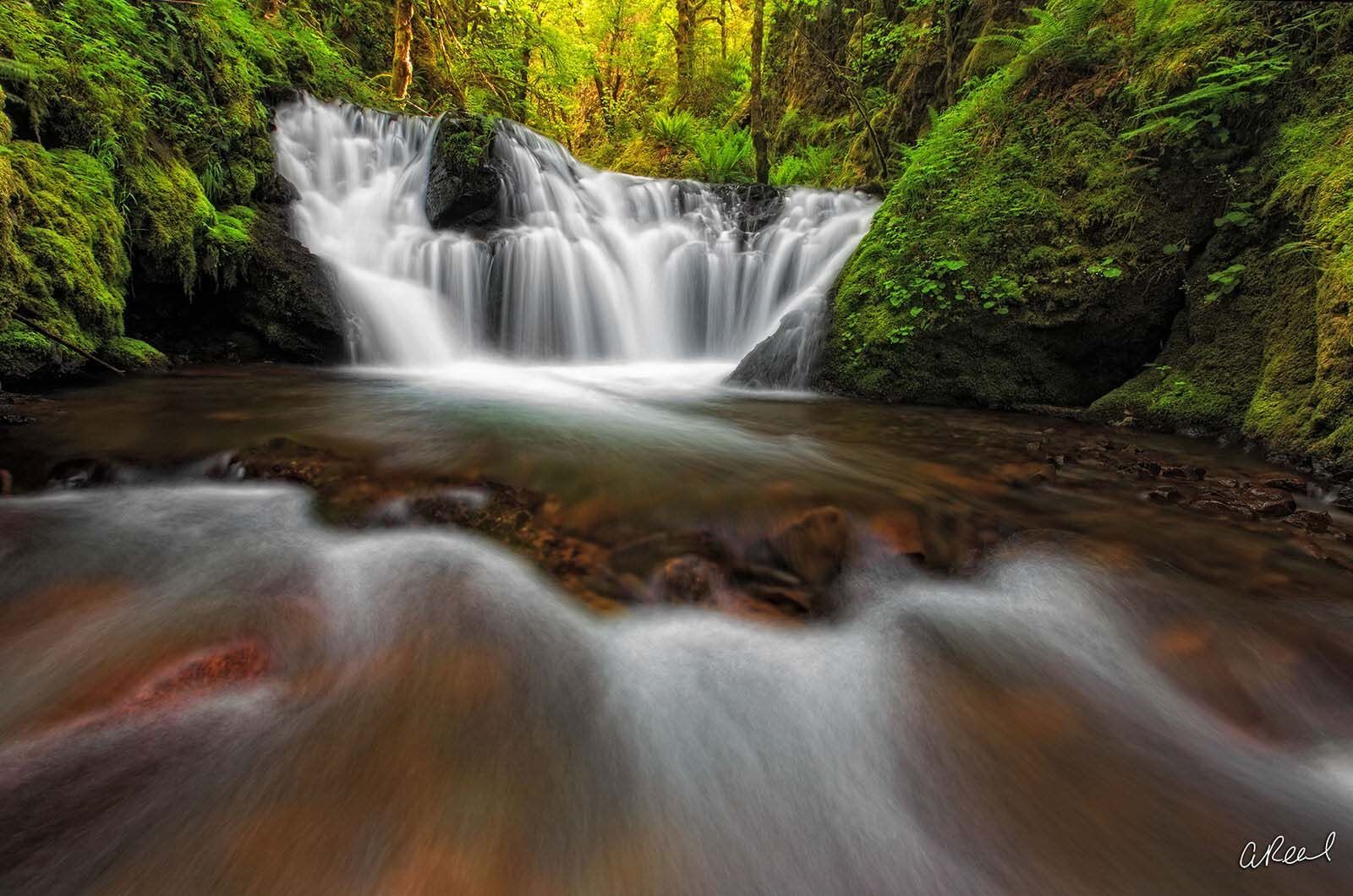
A diamond curtain of tumbling water hides a high bluff of obsidian-black stone as it drops into a clear pool of coppery pebbles. Above, the yawning golden forest is aglow with the light of evening and every wall and surface is covered in emerald green. Fine Art Limited Edition of 100.
So, What's The Problem?
The answer to this question is the one I find most thought provoking. You must remember that I am a nature photographer, who makes his living selling tangible artwork that sells to collectors all around the world. The people who purchase my work are doing so because they enjoy the work itself and enjoy displaying it in their homes and offices. Sure, some collectors buy into me as an artist as well, with hopes of their investment increasing in value but at the end of the day it is for the love of the artwork that I am being rewarded and feel good that I am providing them real value in return.
My concerns for photographers in the NFT community were surrounding the struggle that the majority would ultimately face when it all came crashing down, and that is exactly what happened. I'm not referring to NFT's themselves, those are here to stay. I am referring to the buyers.
Building and maintaining a thriving art business is quite difficult. It requires a constant stream of both new and recurring clients to maintain any level of success. The vast majority of NFT photographers made very little revenue during the peak of NFT popularity. Now that this time has passed, starving artist hits a whole lot harder across the NFT community.
When supportive fellow community members started to thin out and the big fish cashed in their digital chips and bounced, there simply wasn't any average everyday people willing to fork over their hard-earned money for a digital file that anyone can right click and save to their computer. The value of their Jpegs, both to the community and to the consumer market at large dried up. Real investors who were turning a profit on the top 1% of the NFT's with the greatest hype and scarcity, packed their bags, closed their wallets, returning to their relationships with Wealth Management Teams, Wall Street and real-world assets.
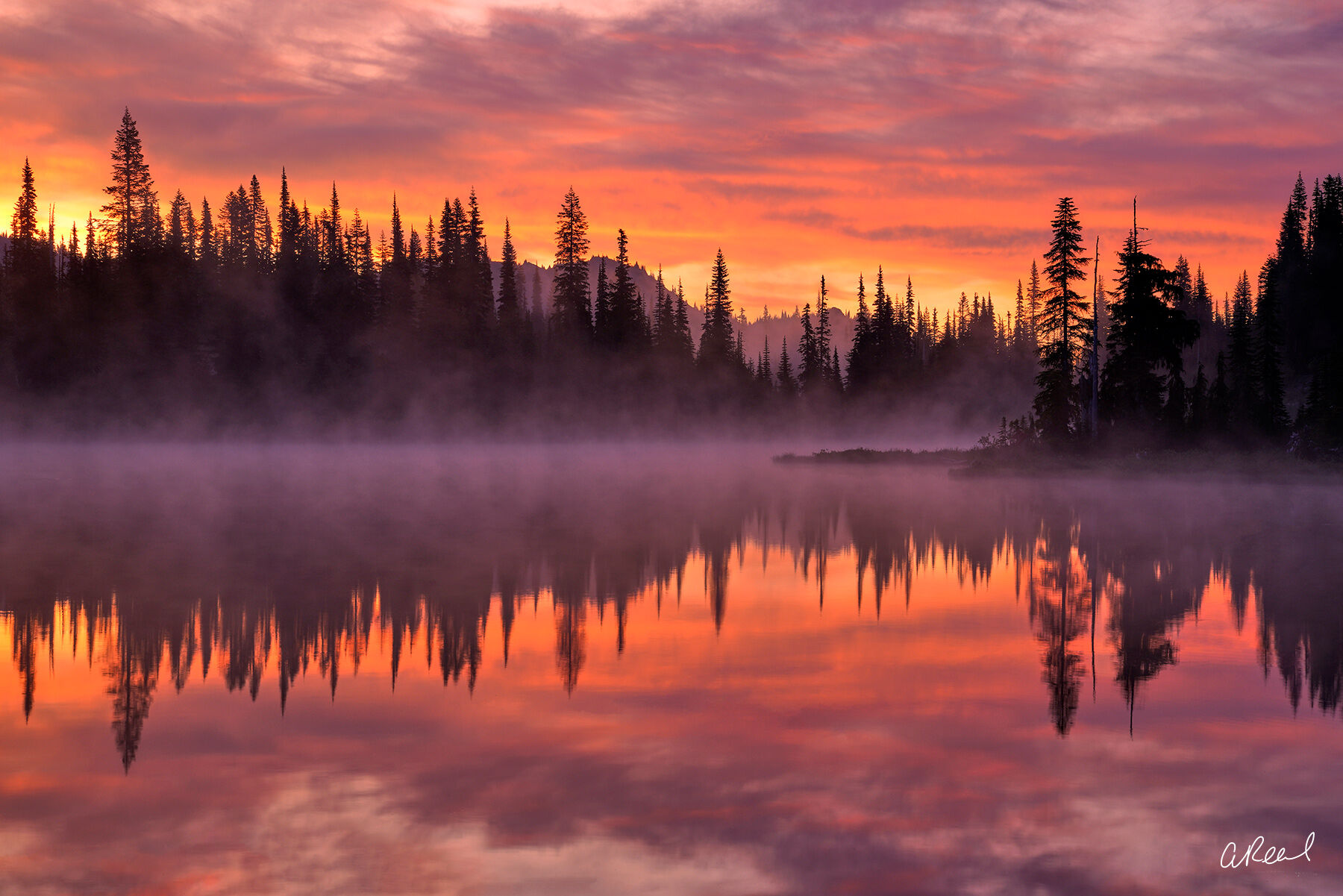
A chill dawn sets the sky alight behind the bristled silhouettes of a stand of cedar and fir. A ghostly mist hangs over the mirror-like surface of the lake, cloaking the shore in a veil of lavender. Fine Art Limited Edition of 50.
We All Gonna Make It
The entire design of the NFT photography community is based on artists propping up fellow artists, whether they like it or not. They are expected to ooze positivity, for both the community and fellow artists, even when shady, deceitful and scandalous anonymous members are using, abusing and flat out stealing from other members. You will see heaps of praise being thrown on some of the most hideous "art" you have seen in your life like it was a Picasso. The first rule of NFTs is to never talk bad about NFTs. It's simply bad for business.
This fact has led to individual artists who have now dedicated years of their lives, day in and day out, to "the community" and have received a pittance at best for their precious time and energy. There are large numbers of people speaking about their lives being changed forever because they sold a photograph for 3 ETH, making the life they have always dreamed of come true or talking about quitting their day jobs after a few successful sales. The problem is that this sale took untold months of their lives, shilling their work in spaces, groups and tweet storms on twitter. One hand washes the other so to speak in one giant cringeworthy circle.
This "we are the world" b.s. was pure make believe, toxic and ridiculous at best. People making a sale often say things like "OMG I'm crying" or "I'm literally shaking right now", all using the same catch phrases and replicating the same cult like behavior that they were taught by the community when they first joined. In all honesty, the NFT community is a weird, super cringe place that in my opinion is simply a joke. Just not the kind that makes you laugh.
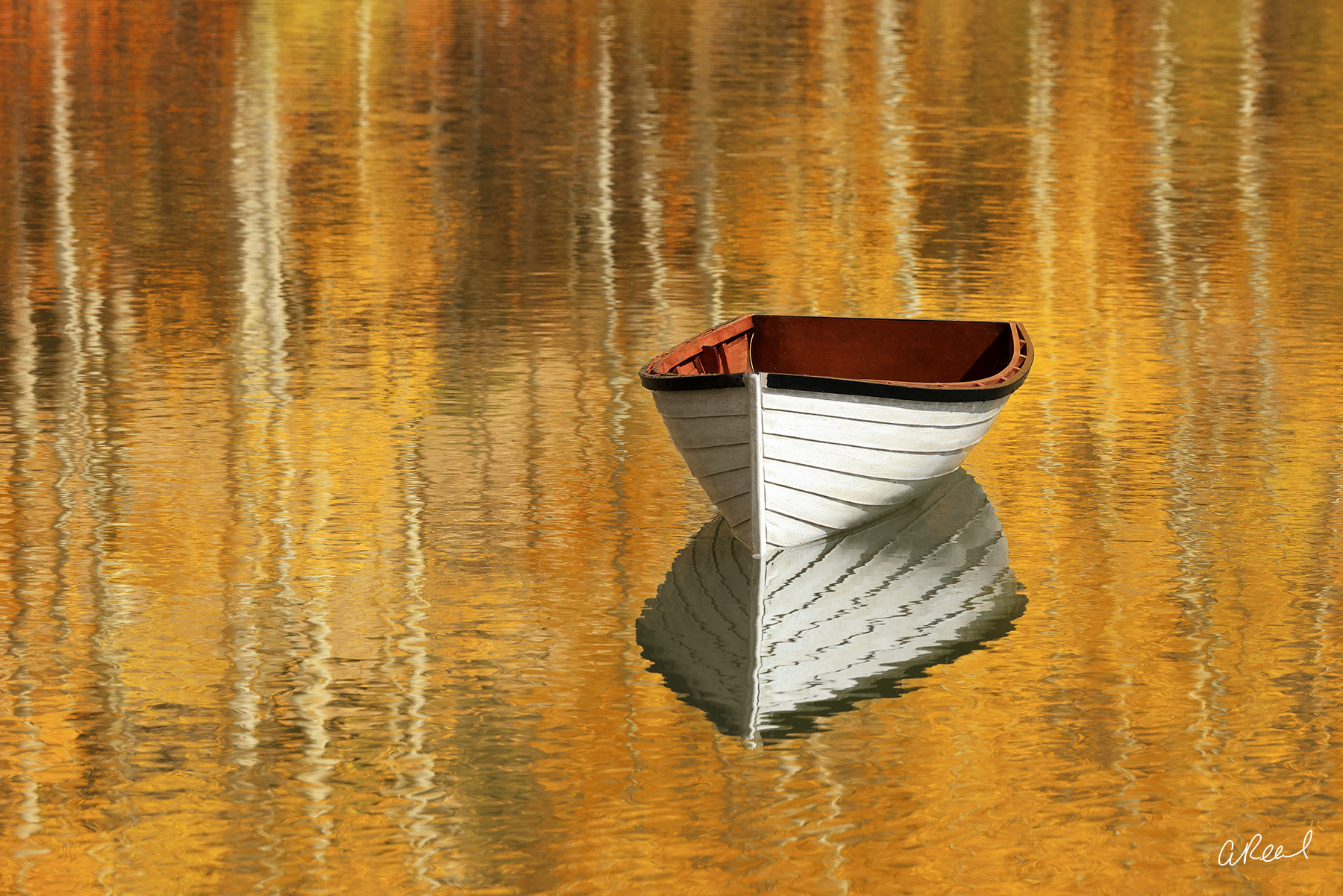
Like a ghost ship floating on a sea of gold, an empty rowboat drifts across a pond near Telluride, Colorado at the peak of autumn. Fine Art Limited Edition of 50.
But Wait, There's More
Cryptocurrency and NFTs are swirling with controversy, filled with what ifs and full of hidden dangers lurking in the shadows. The energy used to create ETH is constantly under fire in the media, despite the rumors of cleaner sources of mining and minting to come in the near future. While I will be the first to admit I don't spend too much time obsessing over my carbon footprint, I was scratching my head reading about the potential negative effects on the environment.
The real-world implications of lost wallets, broken blockchains & deleted assets are stories we will continue to hear about in the coming years. As the government continues to investigate and form new laws regarding taxation and any other number of financial costs associated with NFTs, many who have been living it up in the digital world will find themselves in very real trouble in the physical one.
I also read several tweets from members of the community speaking about taxes and the IRS like it didn't pertain to them. One person even suggested that the Jpegs they were purchasing were a tax write off! There is one thing I know without a doubt. The IRS will be taxing your earnings, just as they do any other earnings you receive, and you will ultimately pay them. If you honestly think buying a Jpeg online is a business expense, please do yourself a favor and consult an actual tax professional.
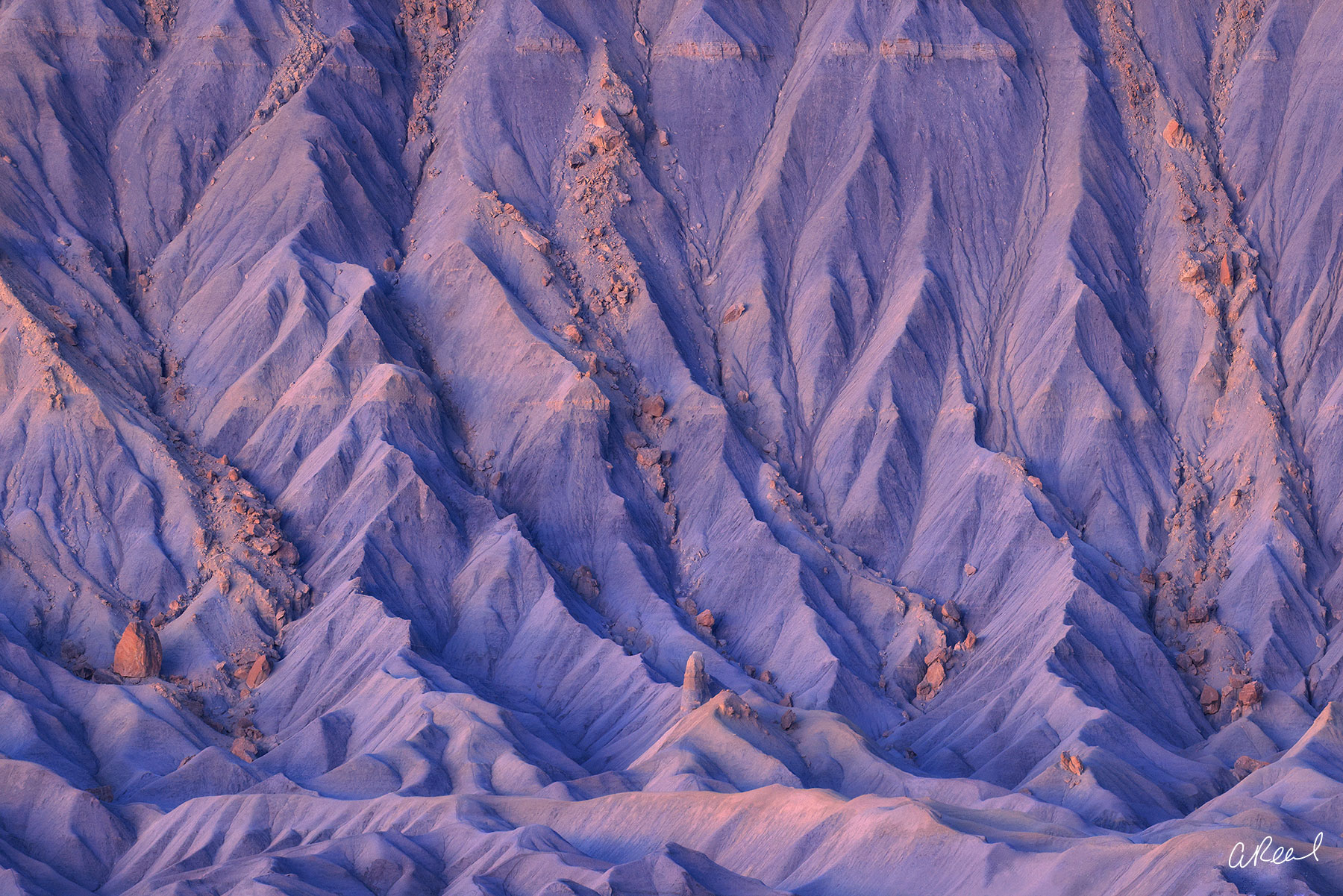
A weathered sandstone cliffside becomes a bolt of lavender silk beneath the evening light at Factory Butte, Utah. The folds and furrows of the rippled face chart the path of desert rains as they traverse the striated chronicle of the rock. Fine Art Limited Edition of 50.
So, Are NFT's the Future of Photography?
Uh, Hell No.
To find out for myself what it was all about I created and sold photography NFT's myself over the course of six months or so. I even had what many would consider a decent amount of success in the space and met some extraordinary people, some of whom graciously supported my work. I hope they are well, or have found a way to move on as well. In the end I left for a number of reasons, with mental health and wasted time being the two big ones. It was simply a pitiful use of my time and energy all the way around. The more time I spent wandering around the space the worse I felt. It was exhausting.
Honestly, my experience showed me that photographers were often used by the NFT community. They were sold a dream that everyone could be a success, that everyday should start with a GM (good morning) and a WAGMI (We all Gonna Make It) when the reality is that many of the artists in the space instead suffered mentally from the toxicity of the community itself and the reality that very few were actually "gonna make it" at all.
Photography is a beautiful art form and has enriched countless lives in so many ways. No one will be sending NFT's of their children to grandma and grandpa in the future. As someone who sells large photographic prints, I already feel like we have done ourselves a disservice by creating beautiful works of art that ultimately get resized and cropped to fit into a tiny square on our favorite social media platforms. Ultimately, I had hoped to see NFT Photography evolve into large scale art installations, gallery shows and other more tangible art for others to appreciate. There are places where this transformation was starting to occur, but it was too little too late.
Members of the NFT community literally think they are going to change the world, that they are soldiers on the forefront of a digital revolution to somehow replace currency with anonymous users and Jpegs of pixelated ape art. That was simply never going to happen.
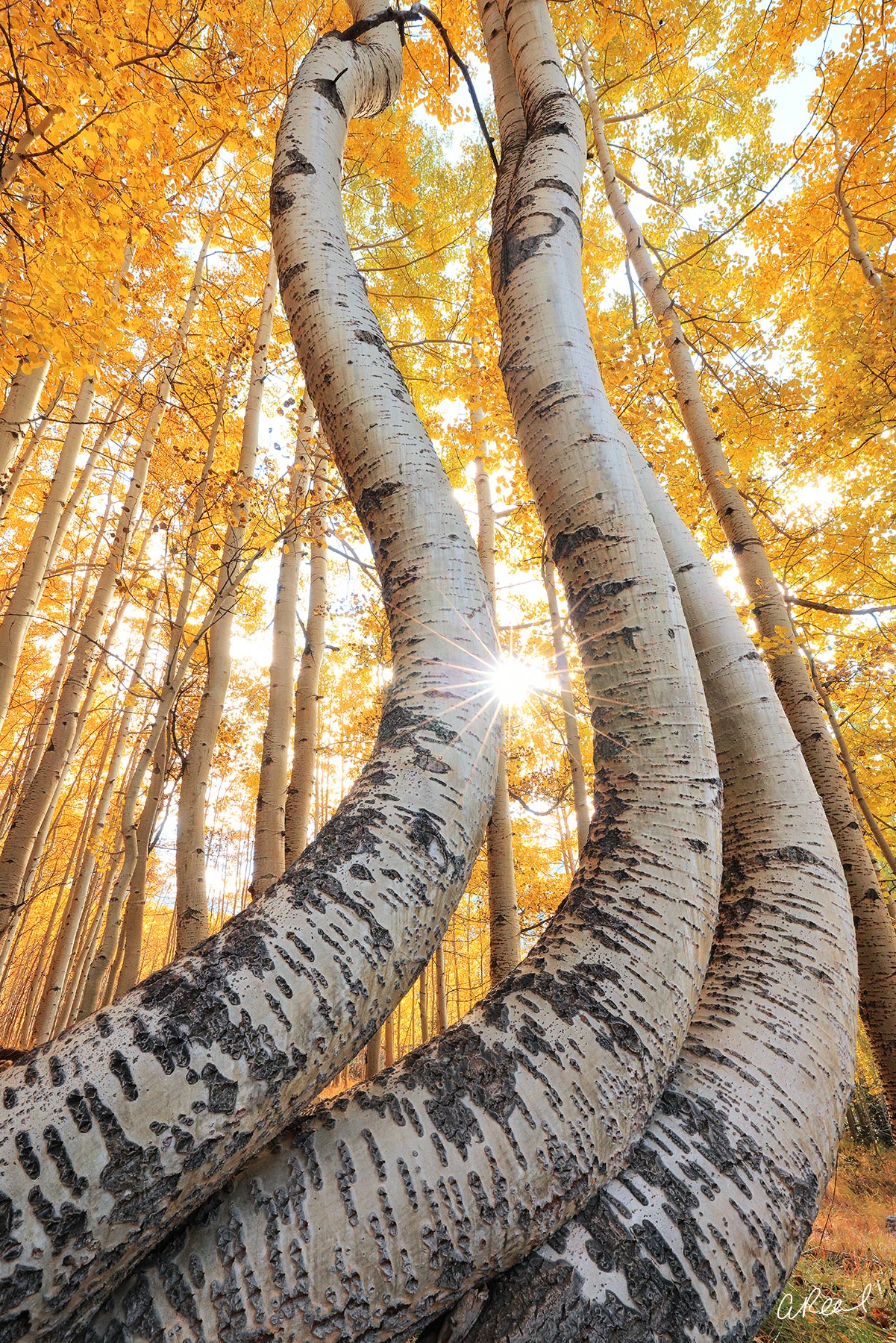
The early morning sun breaks through a strand of dancing aspen trees that fought though years of heavy snowfall to to grow against all odds near Telluride, Colorado. Fine Art Limited Edition of 50.