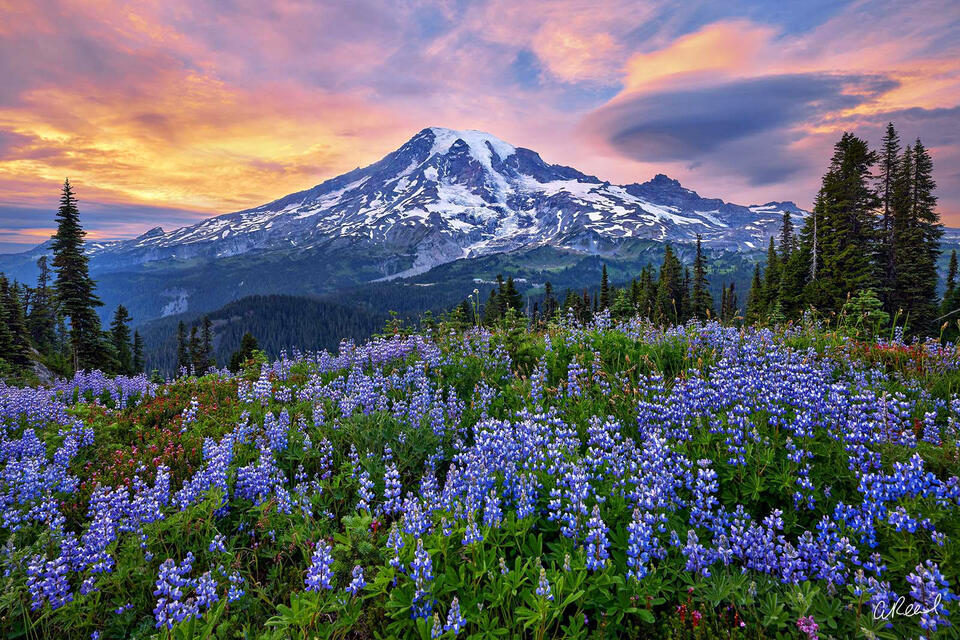
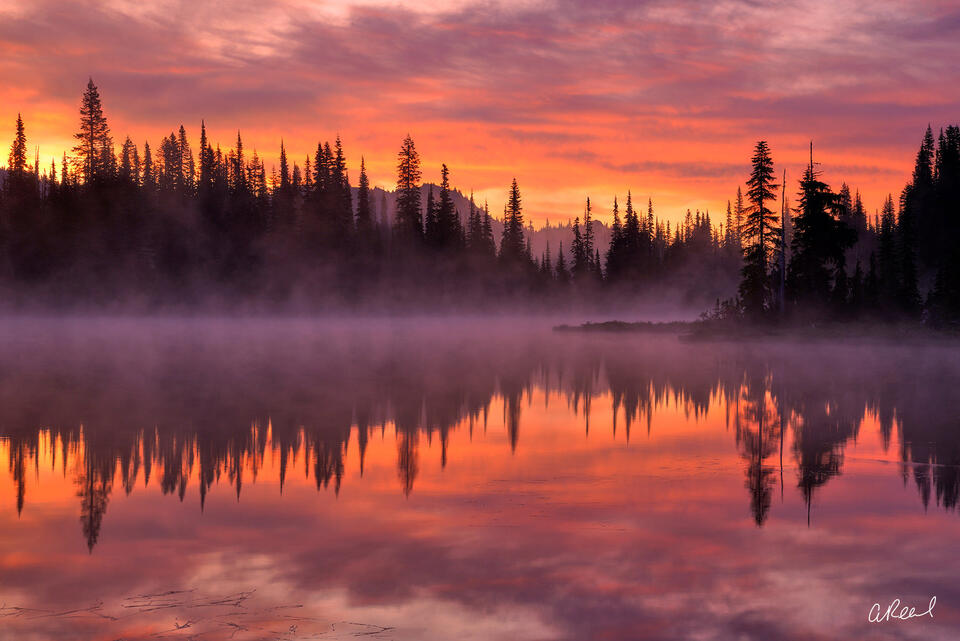
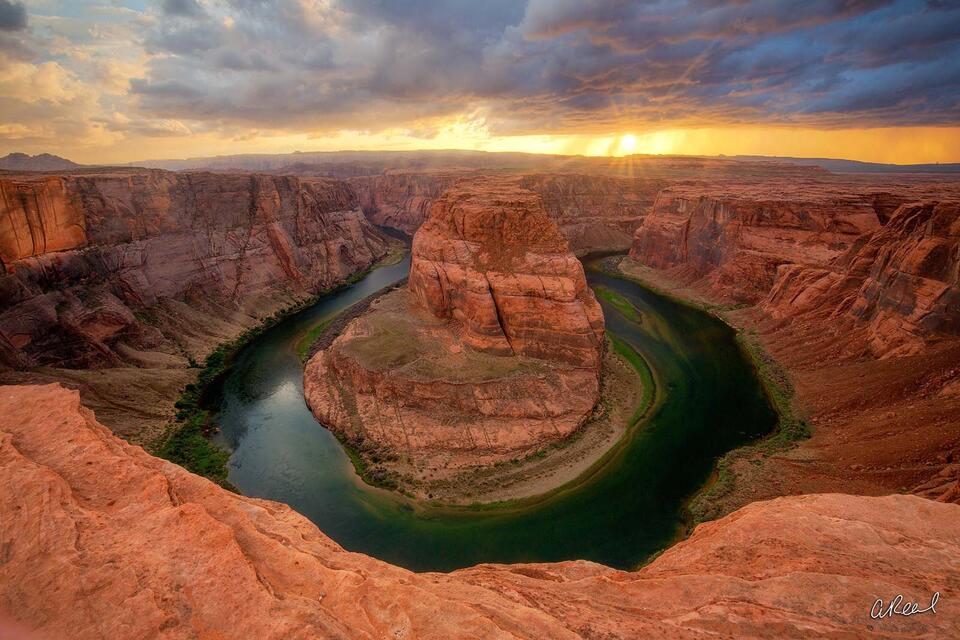
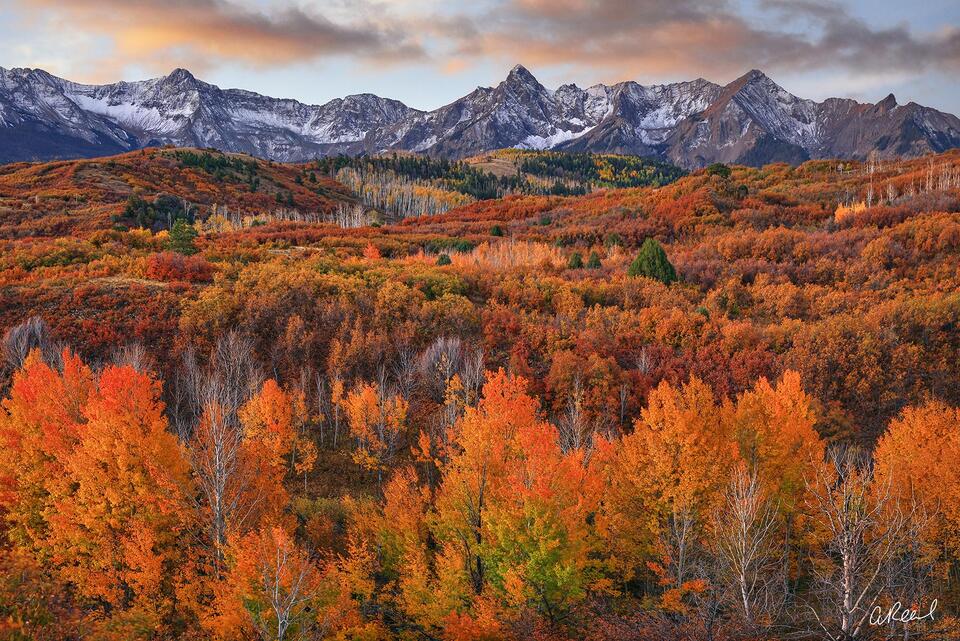
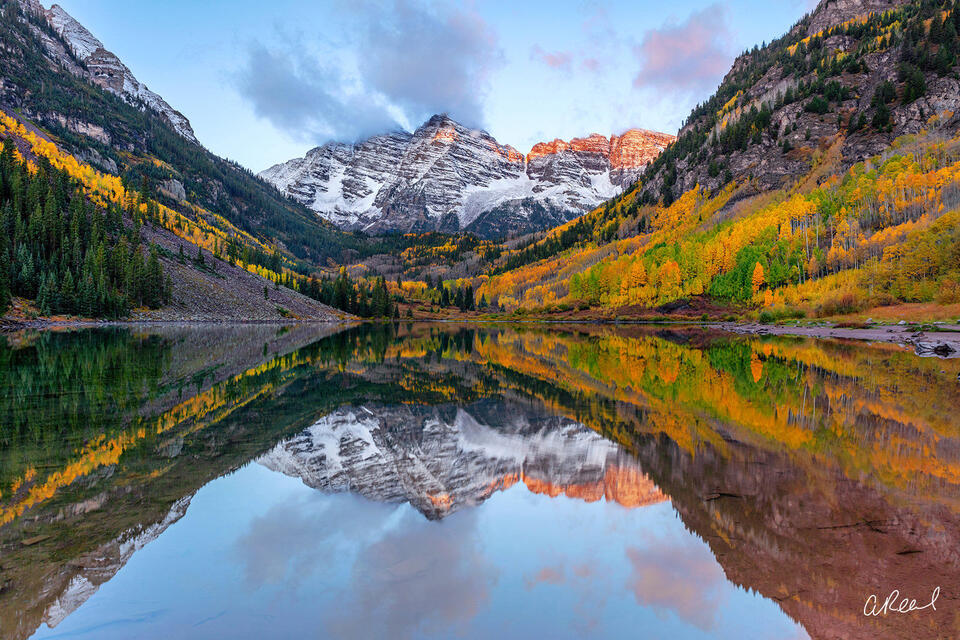
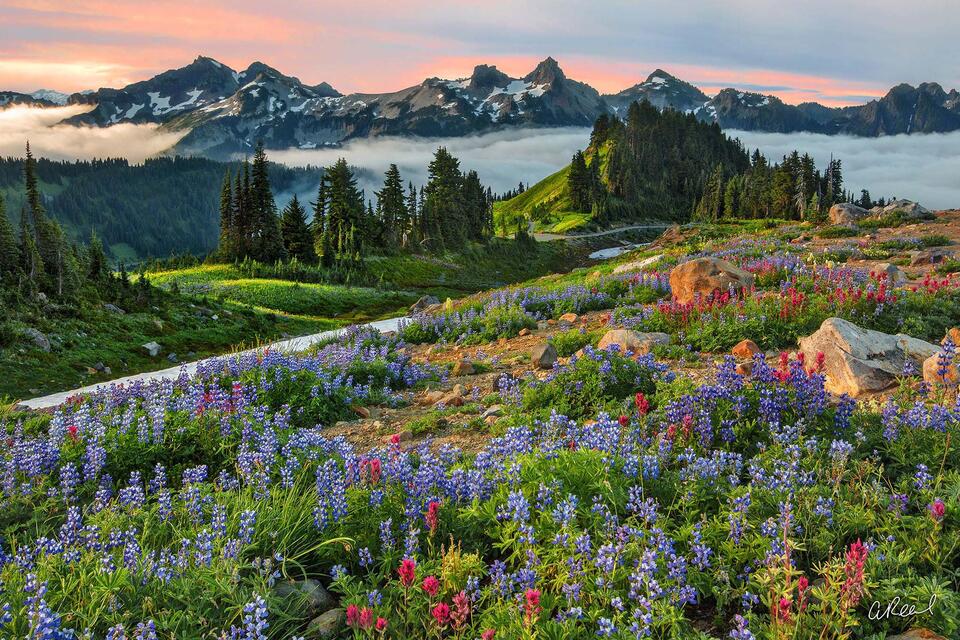
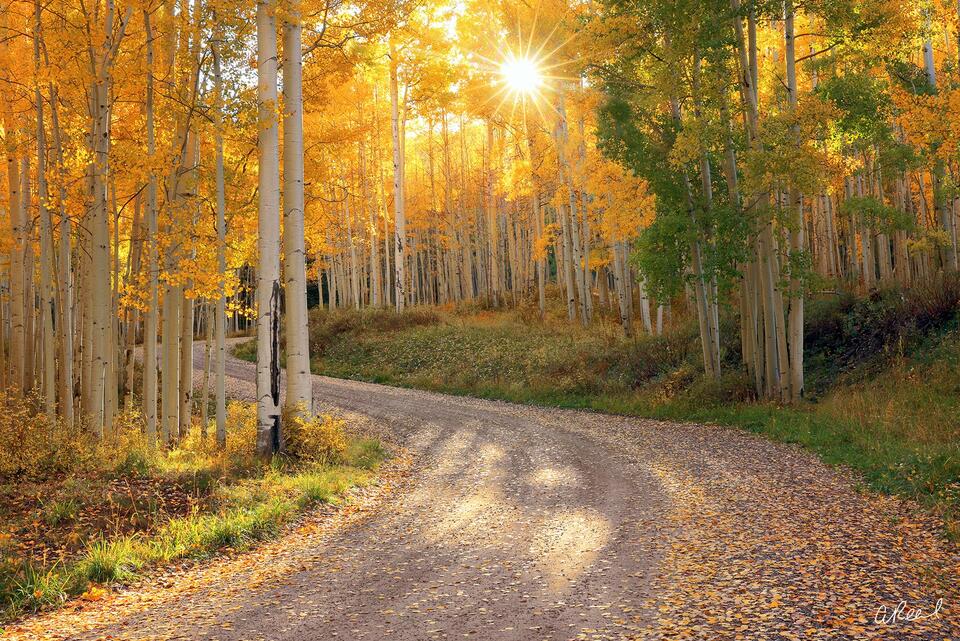
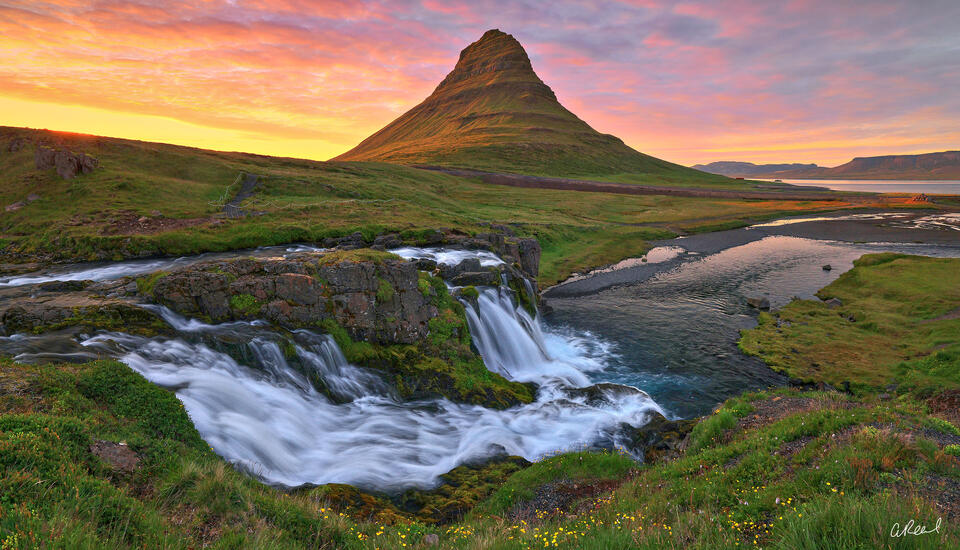
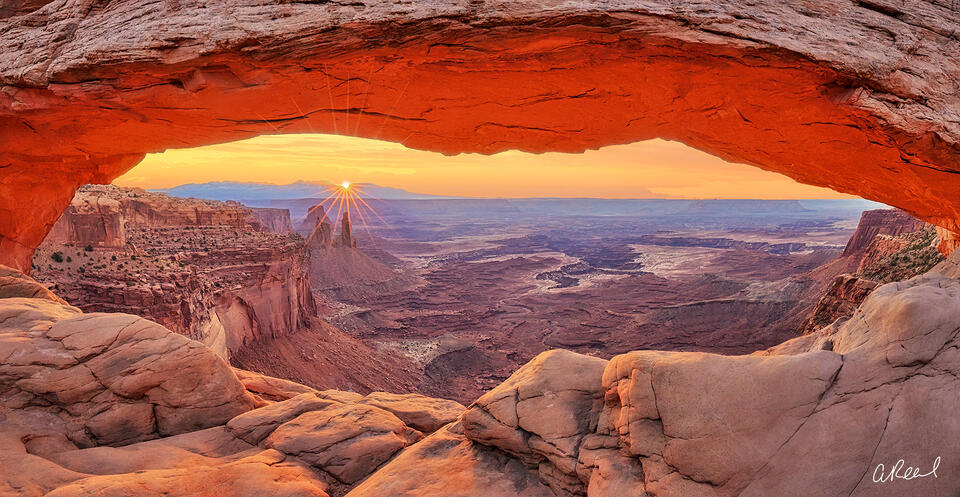
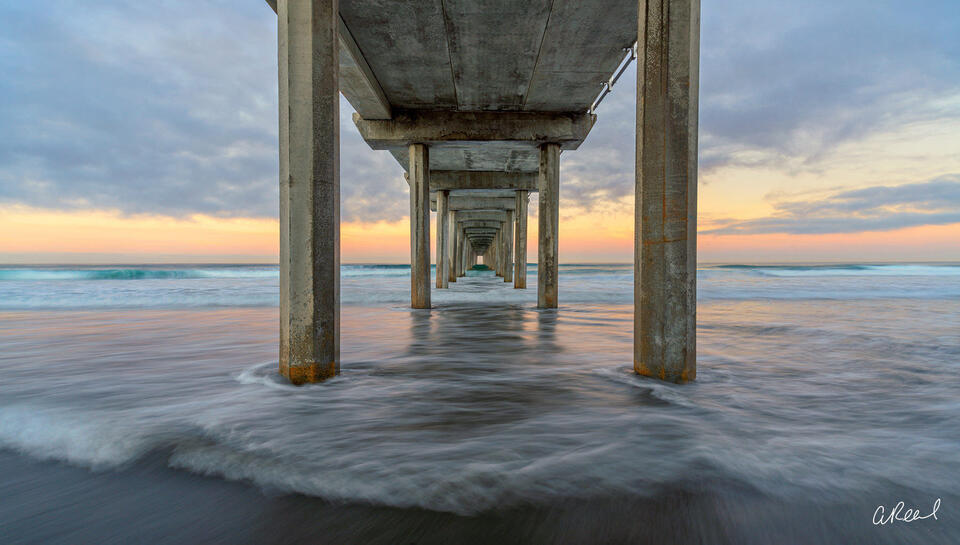
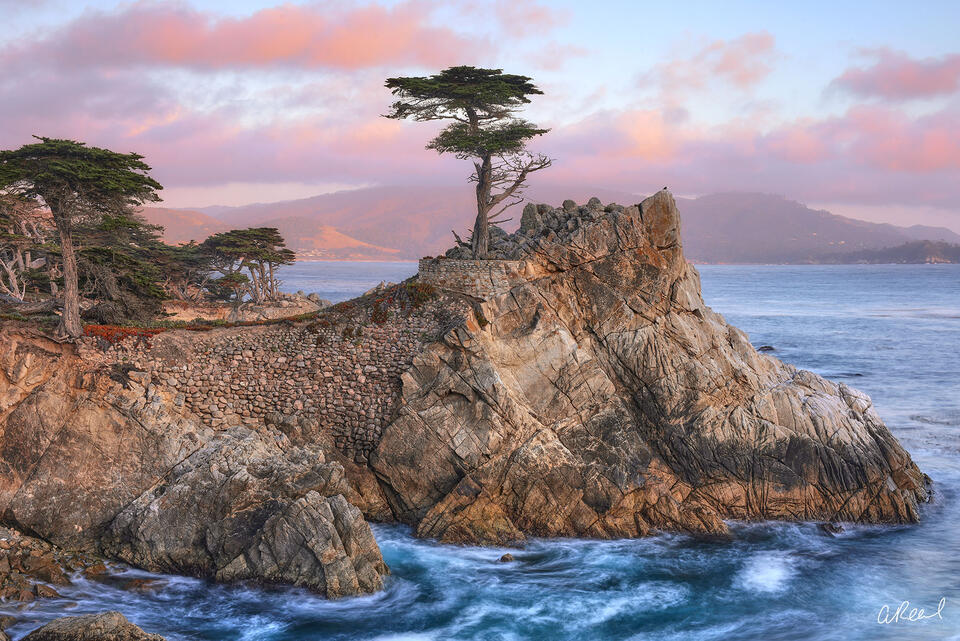
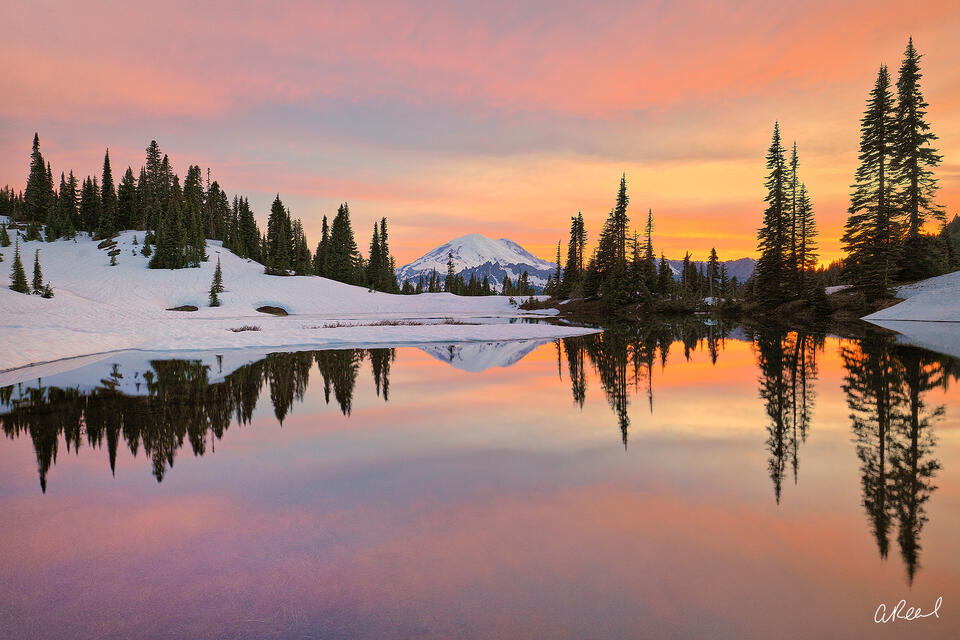
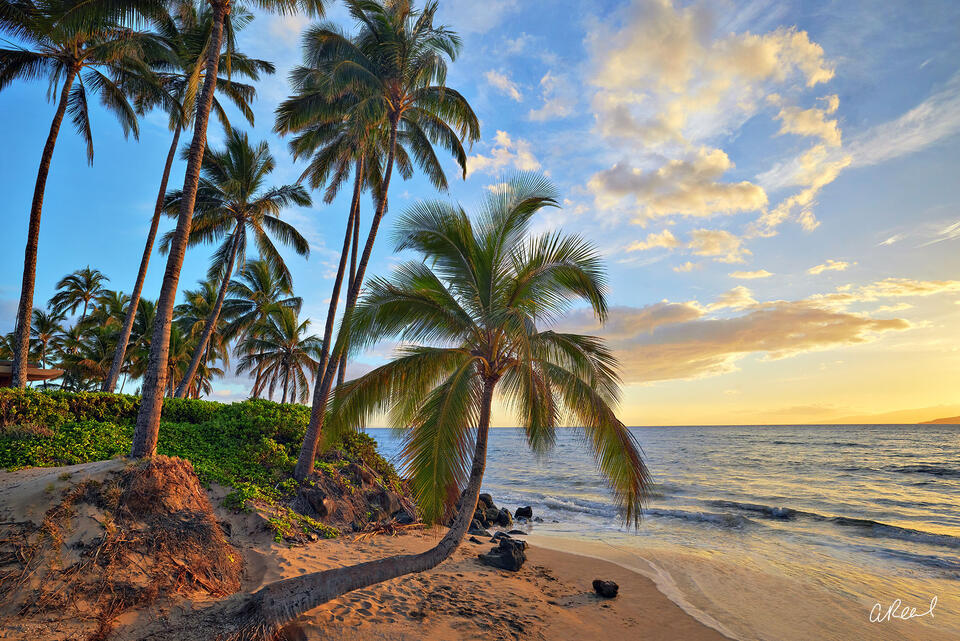
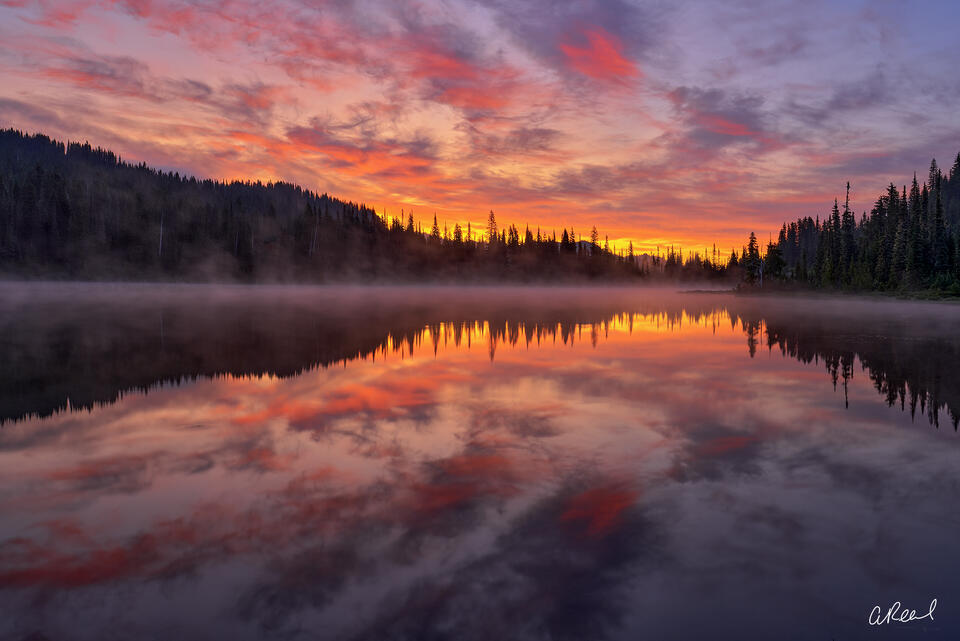
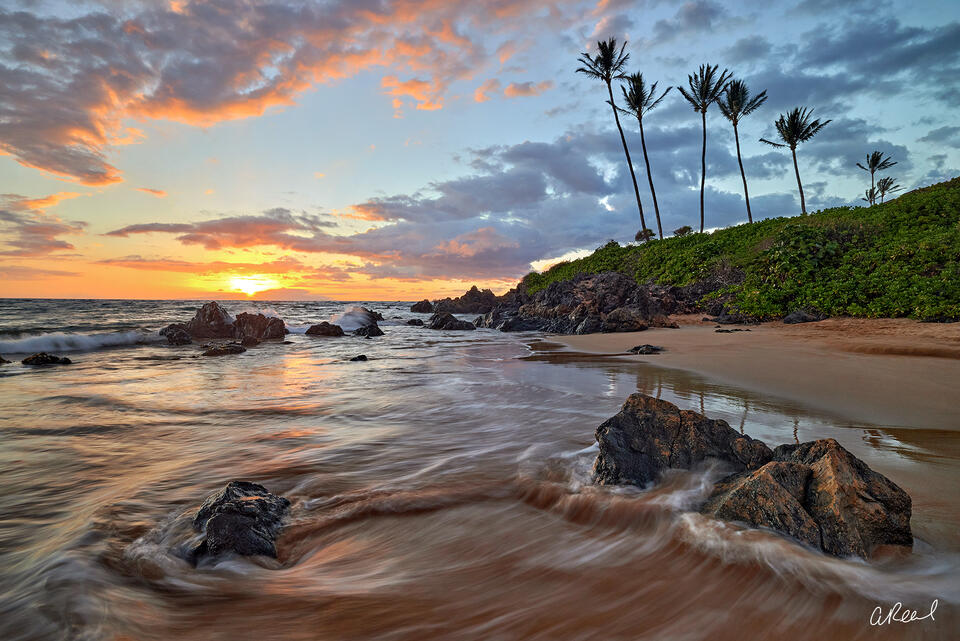
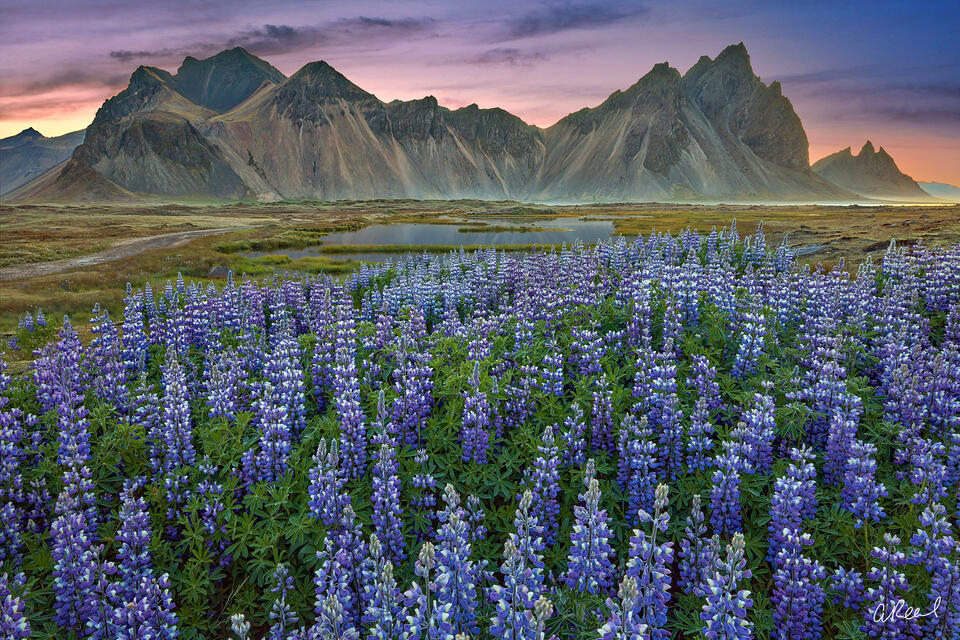
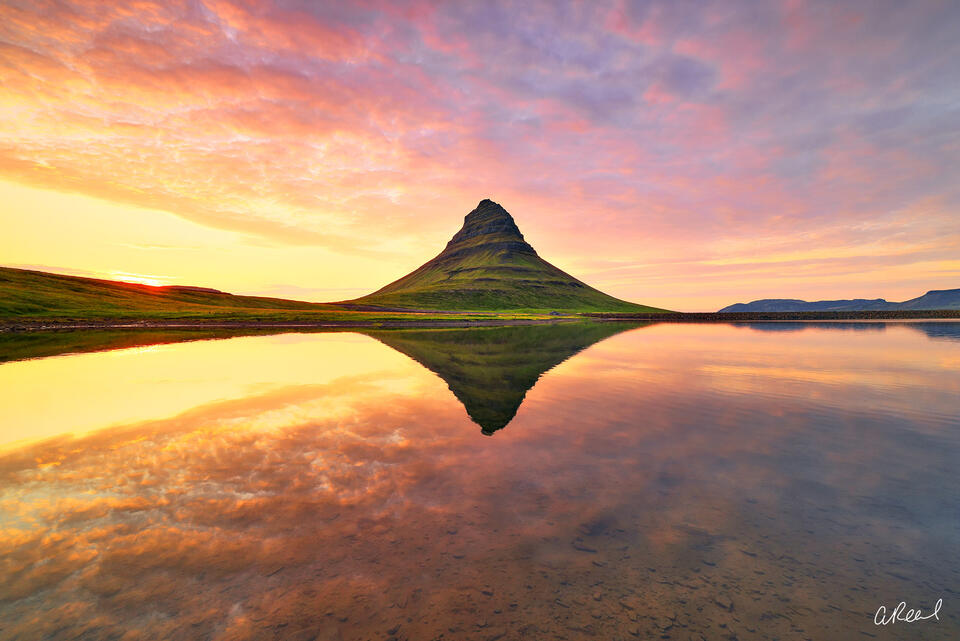
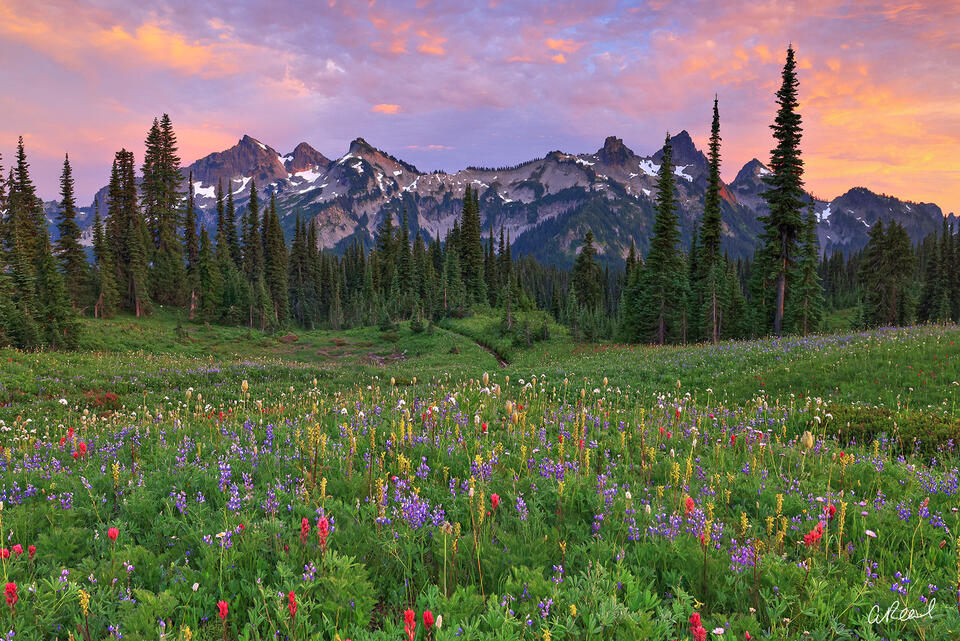
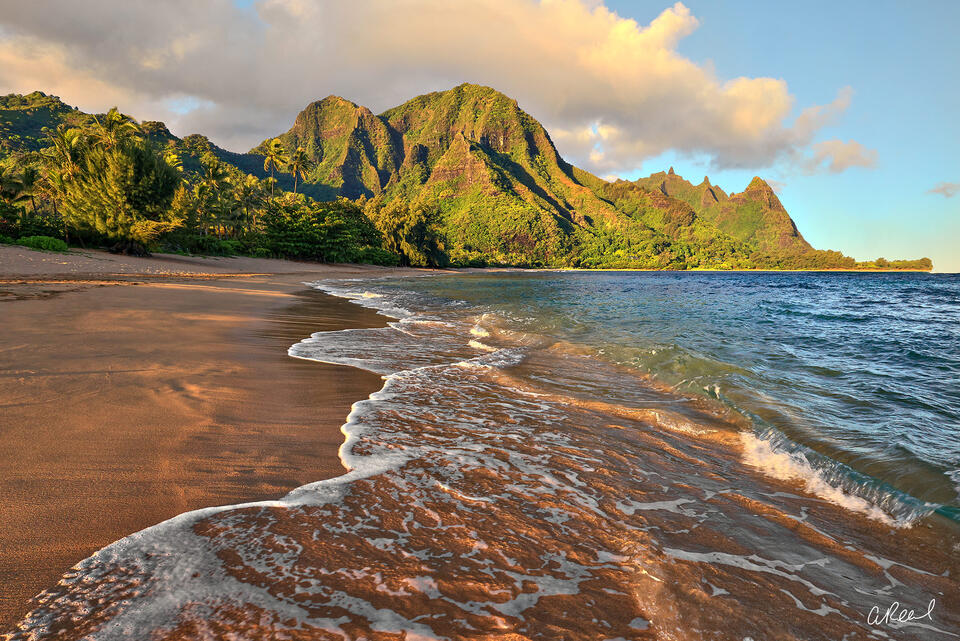
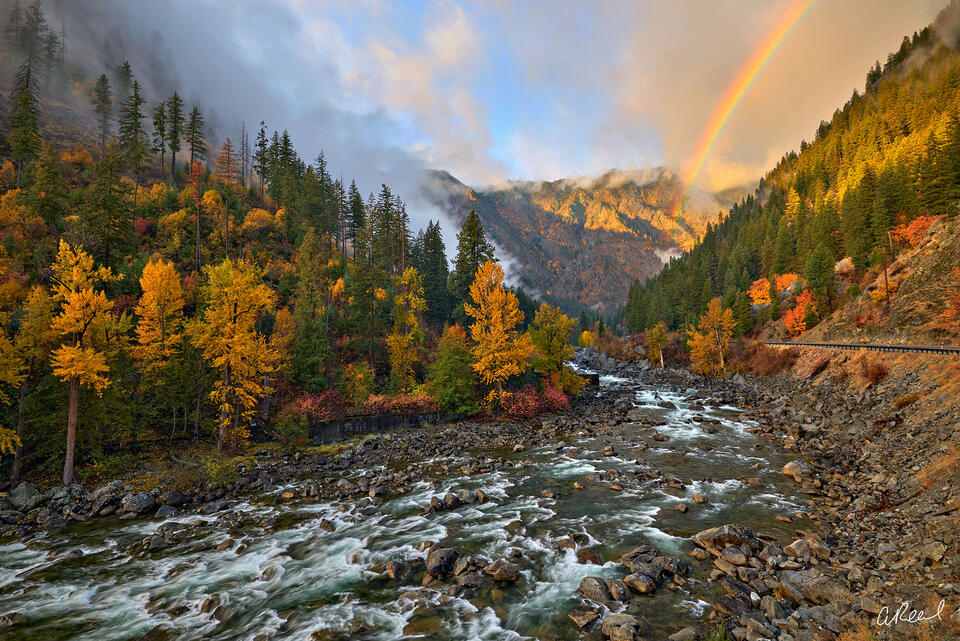
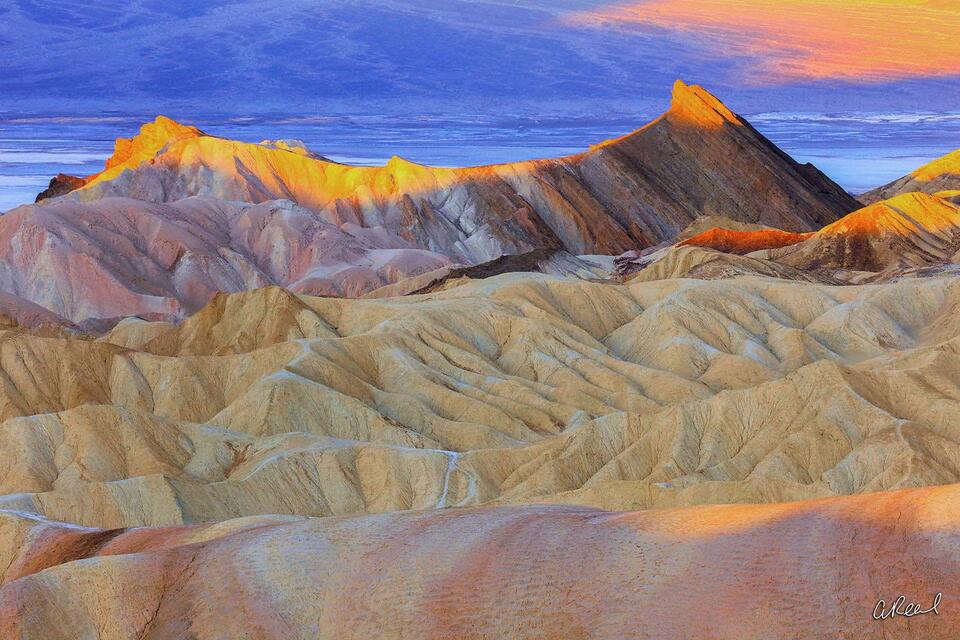
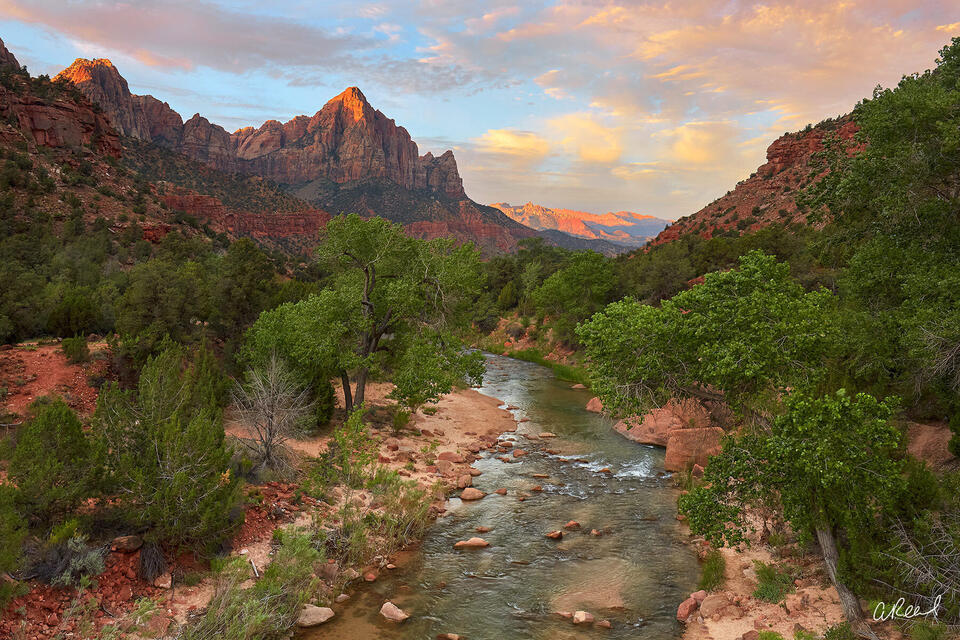
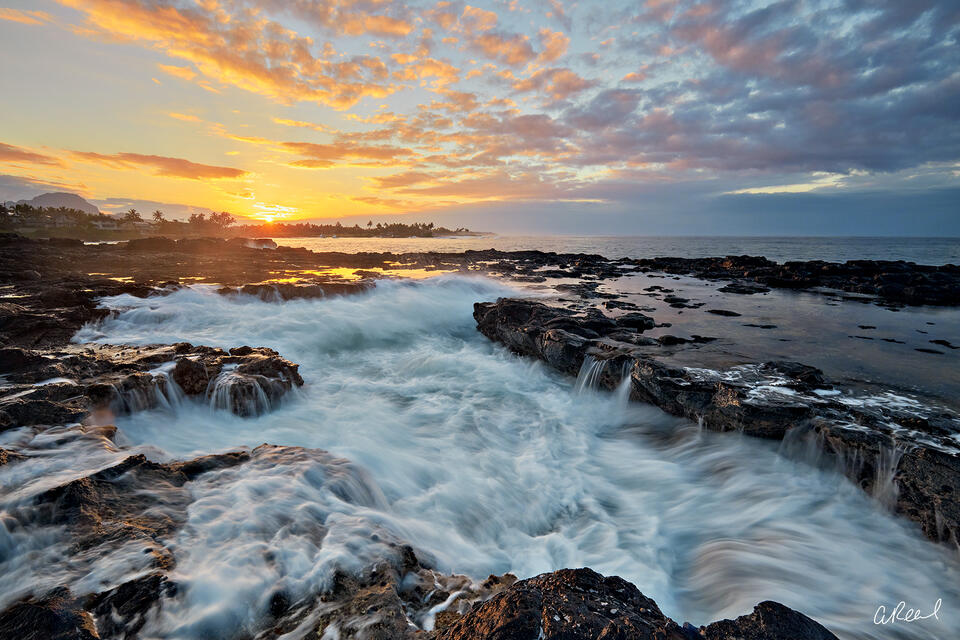
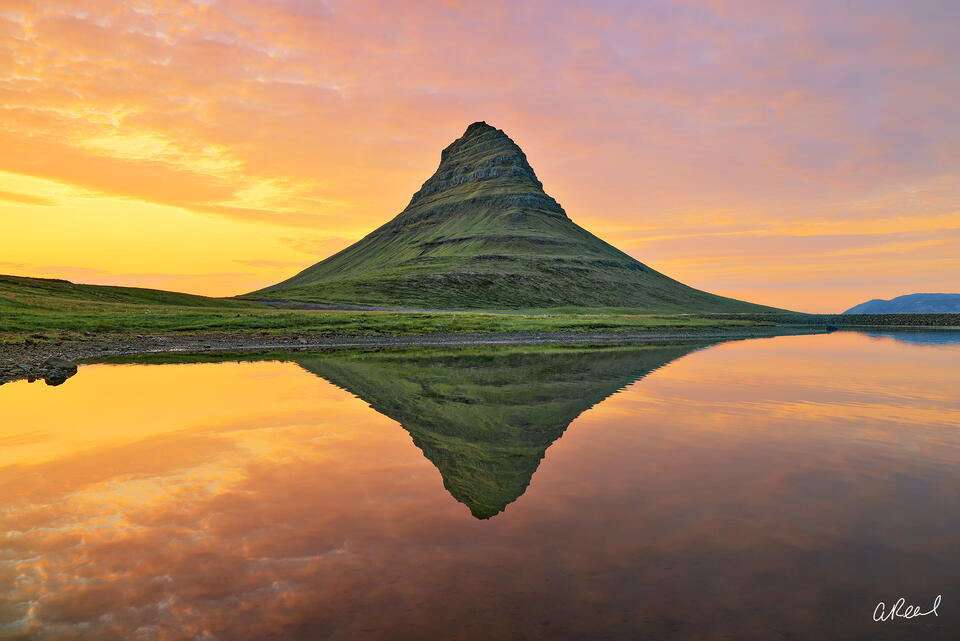
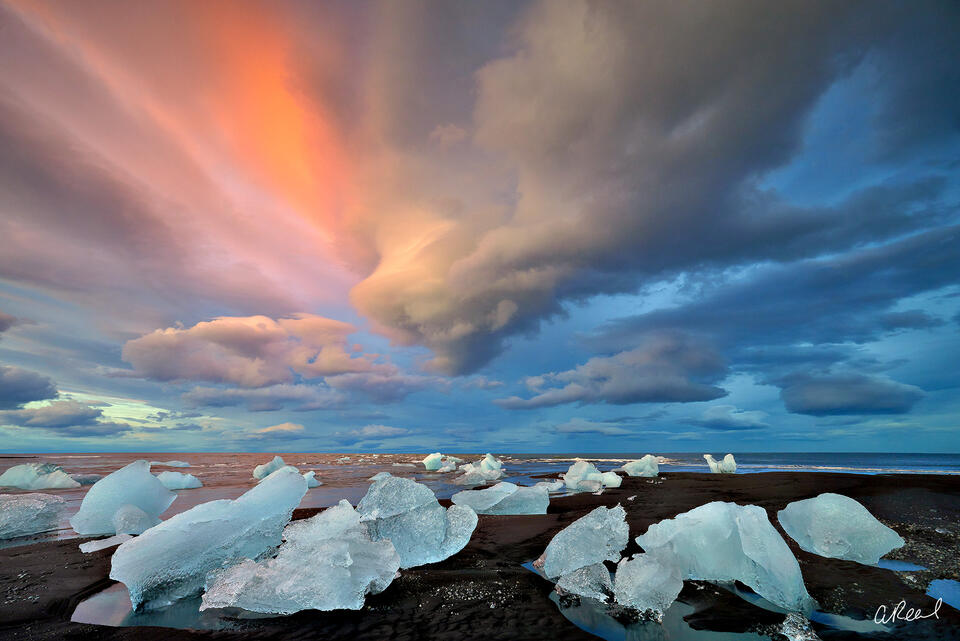
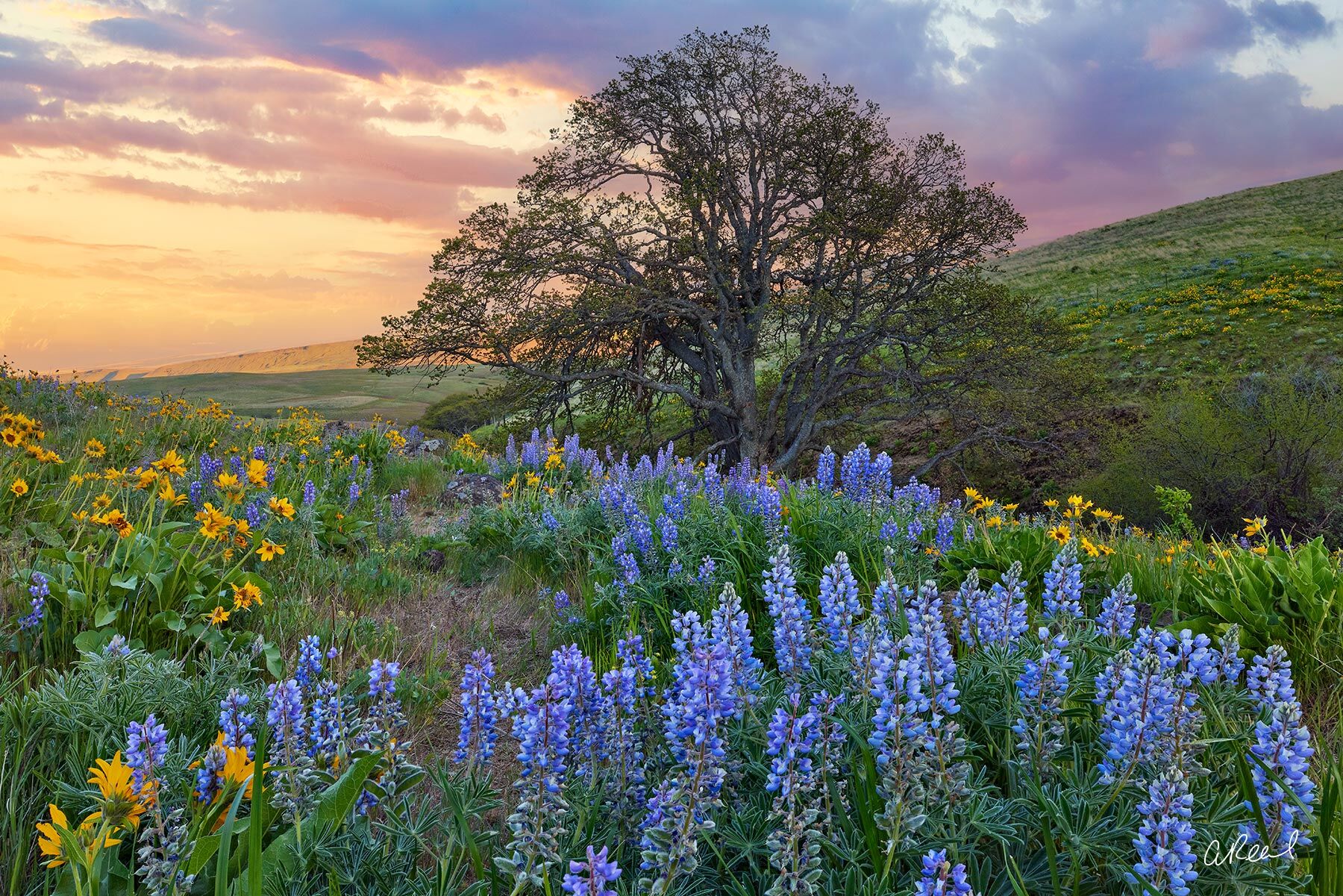
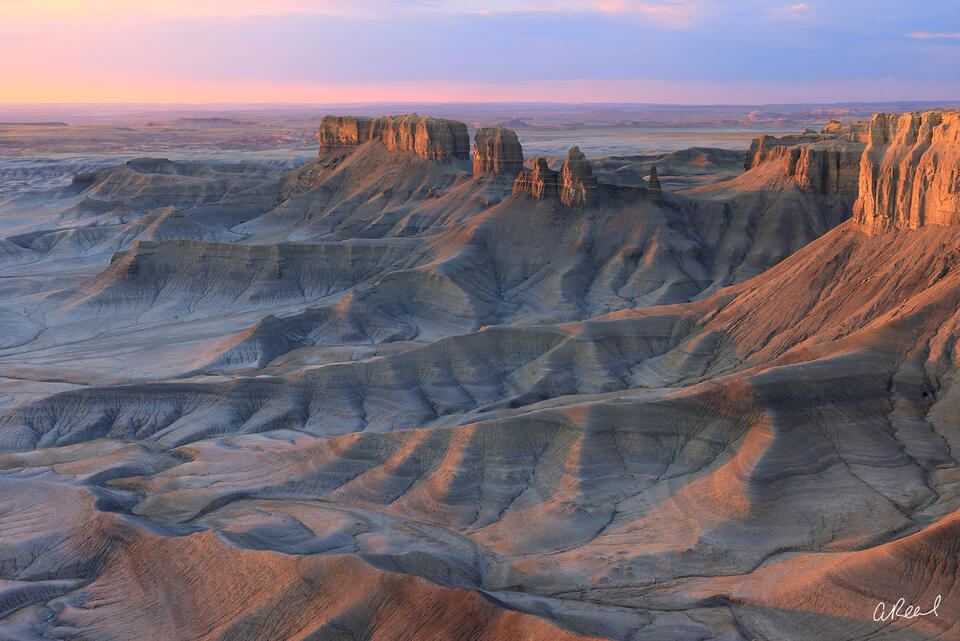
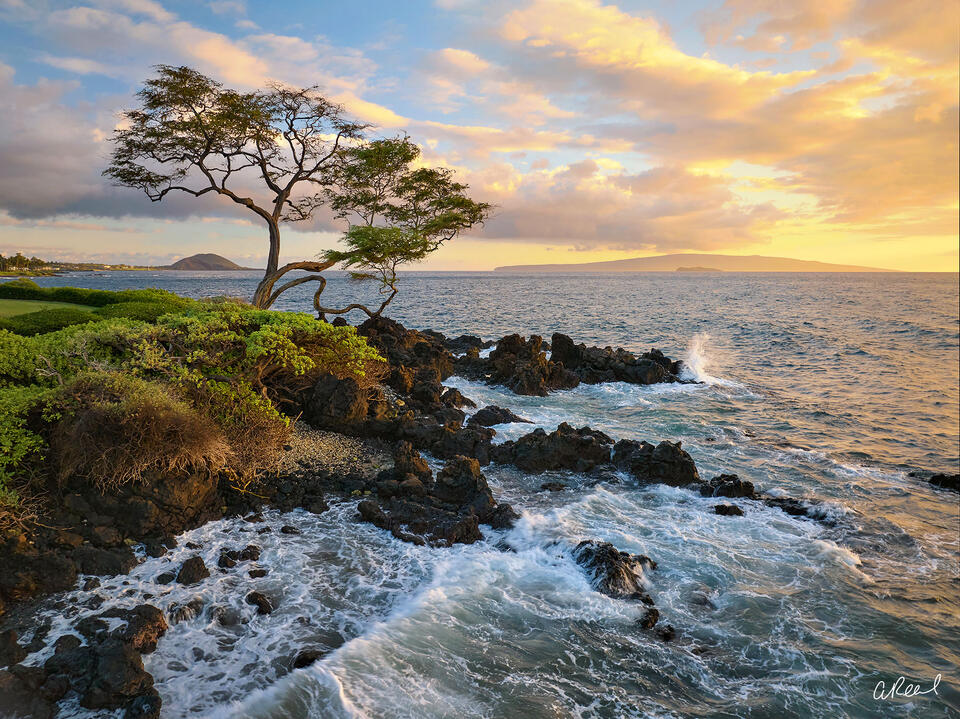
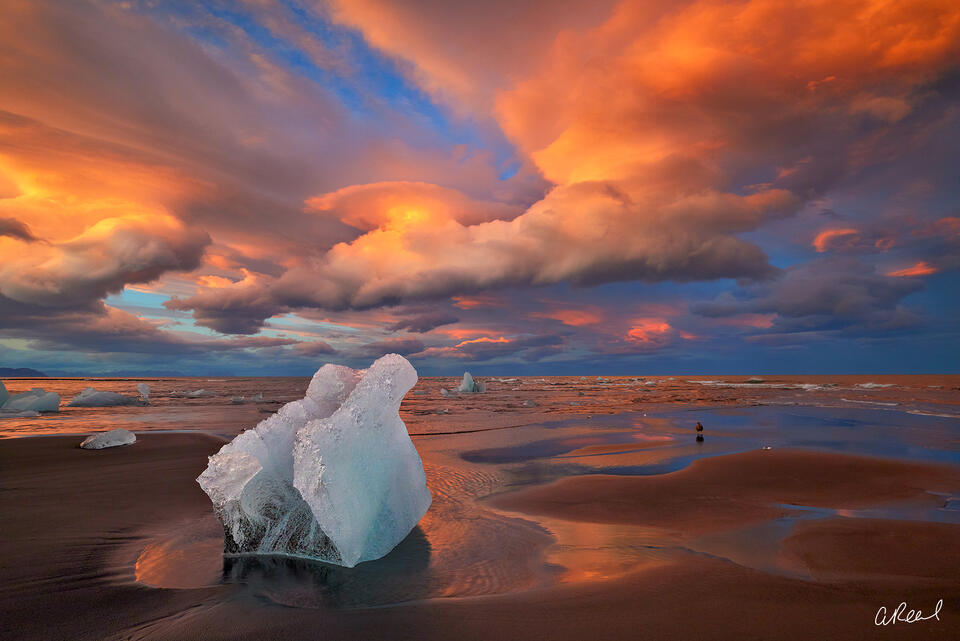
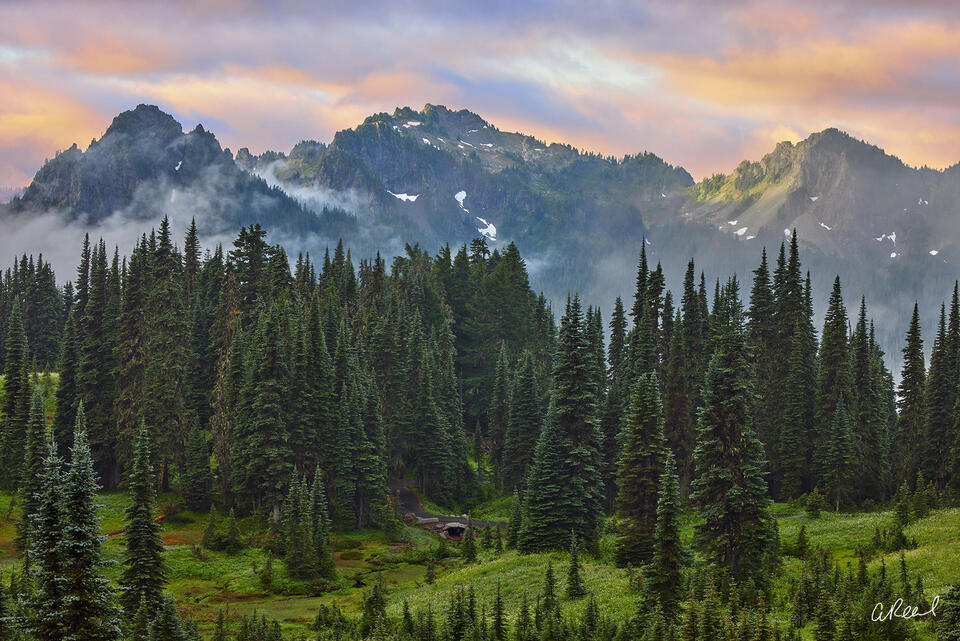
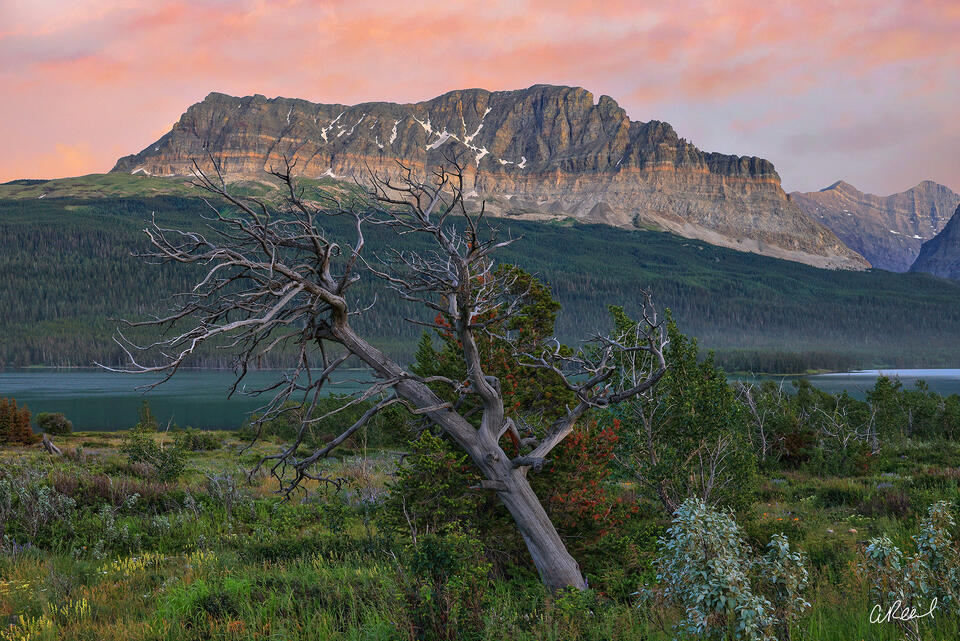
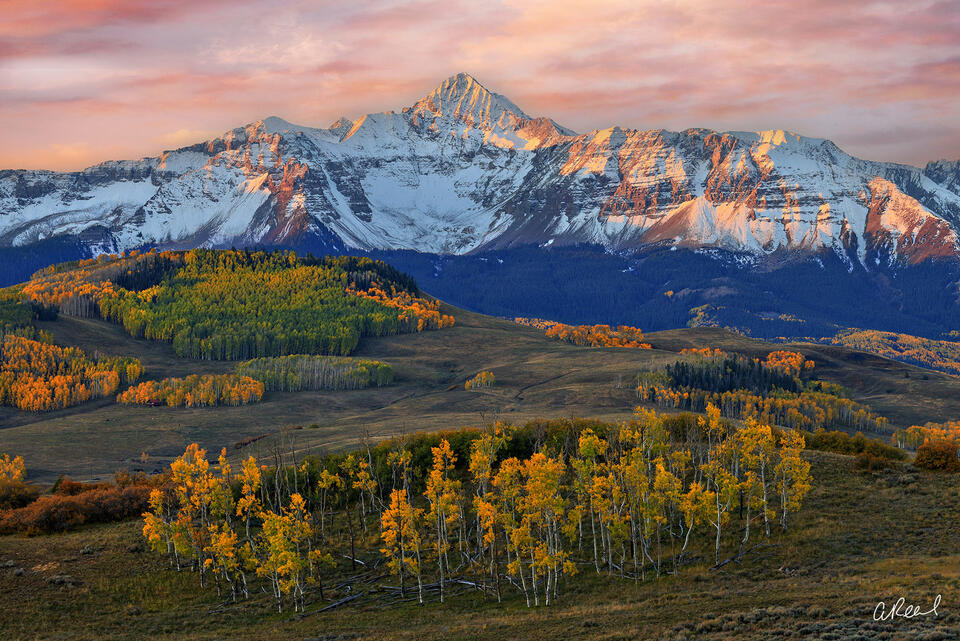
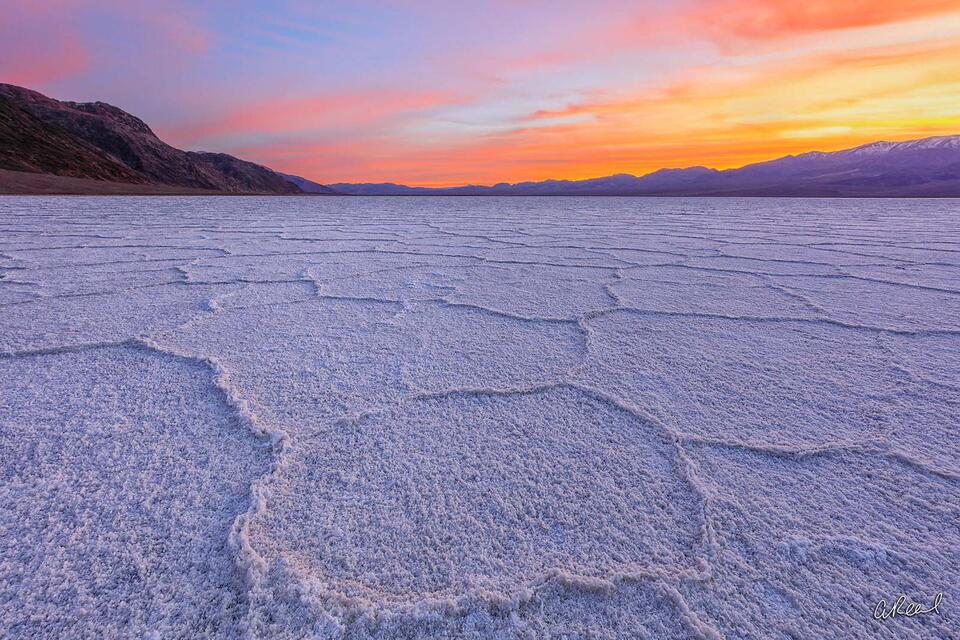
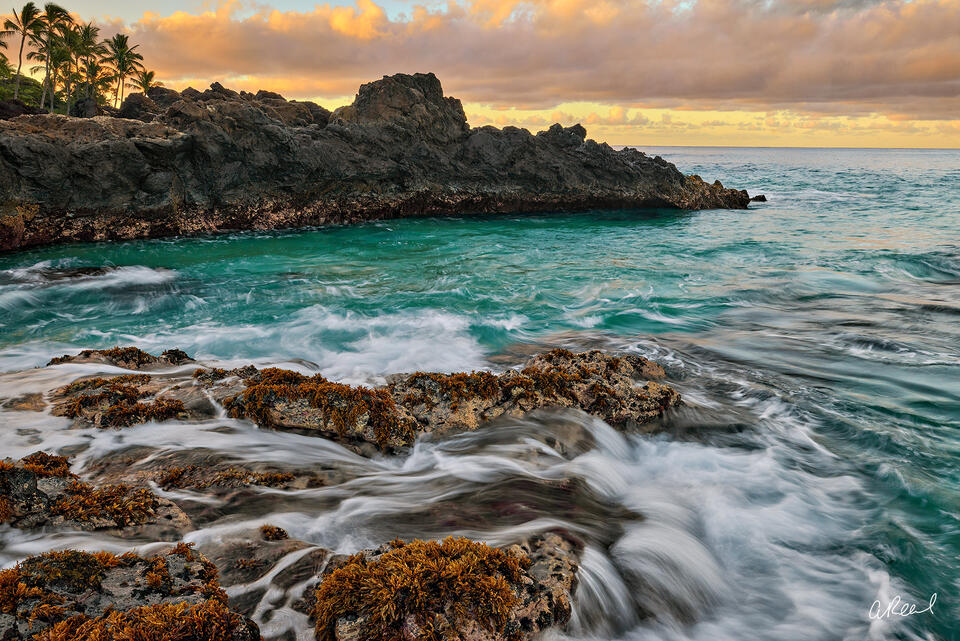
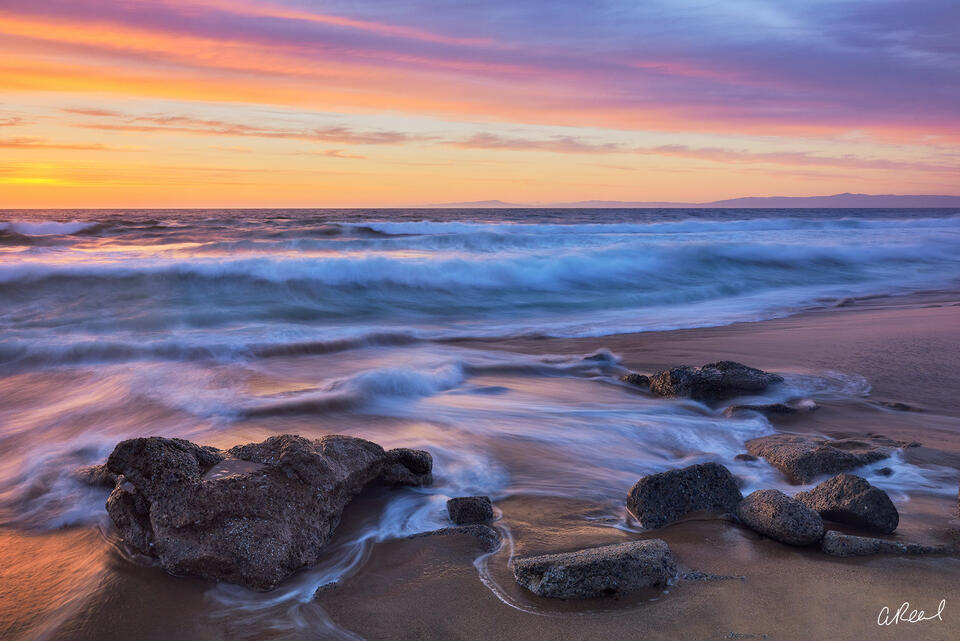
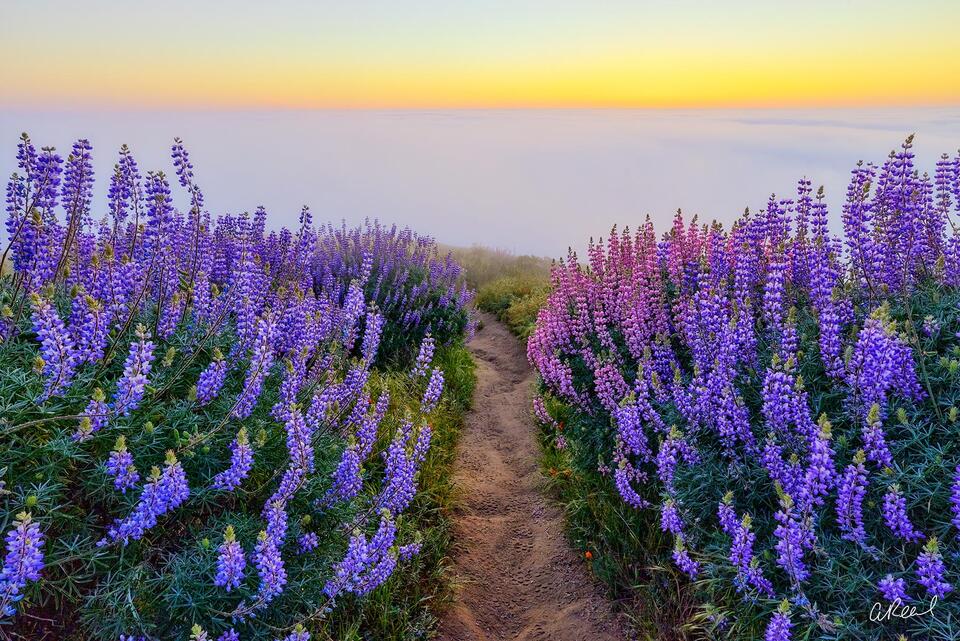
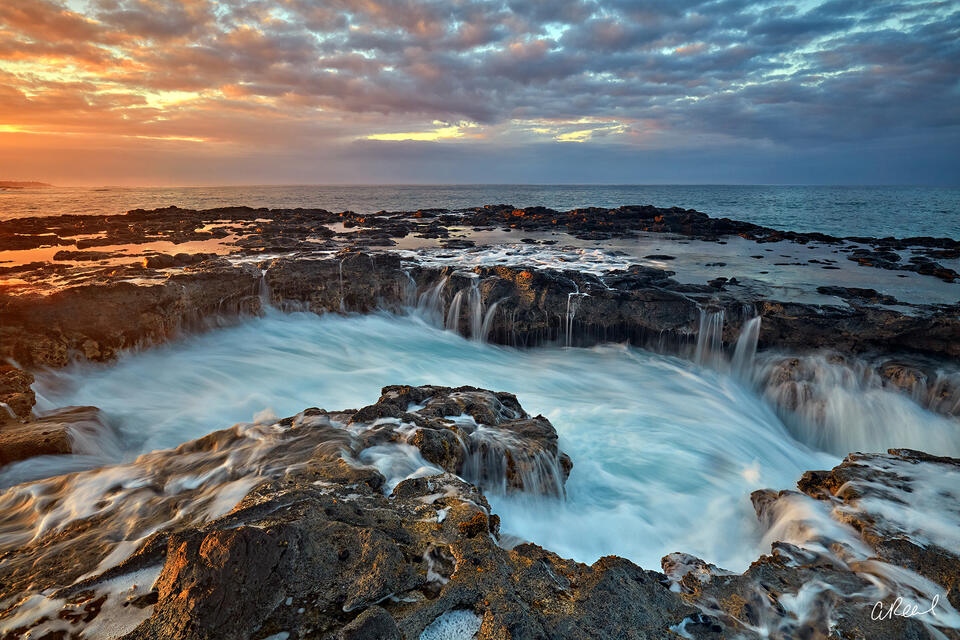
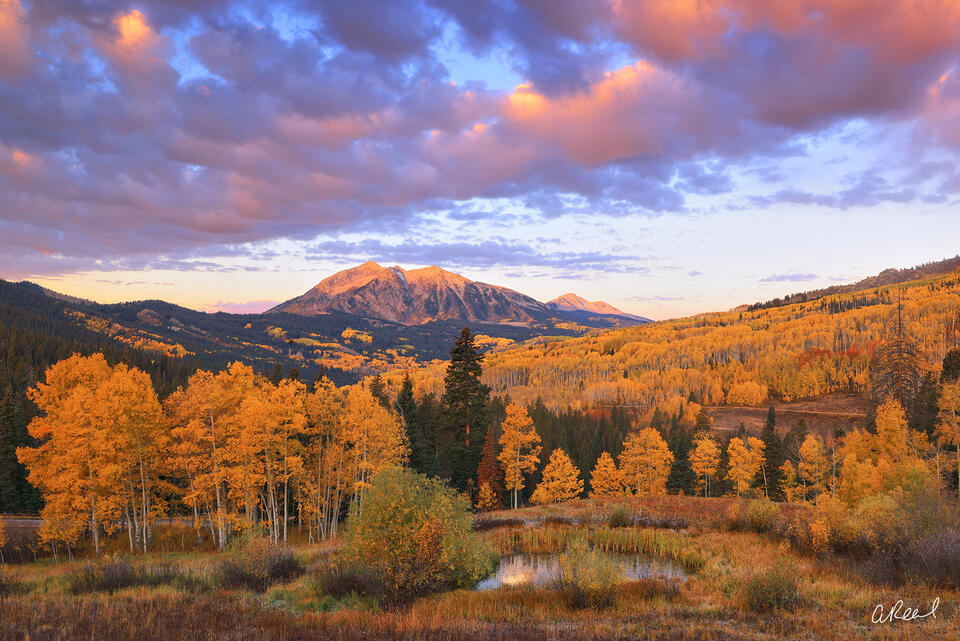
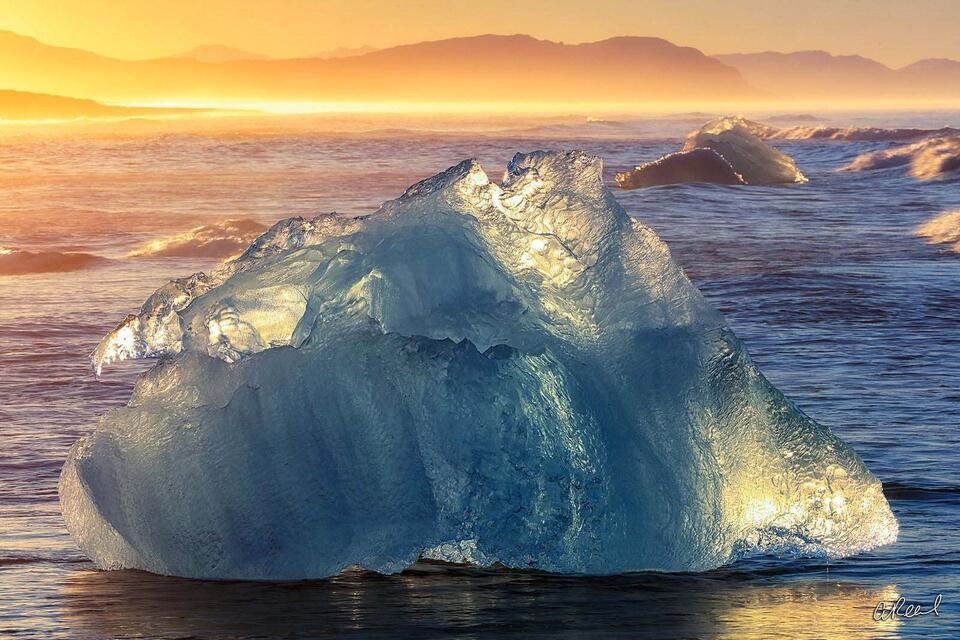
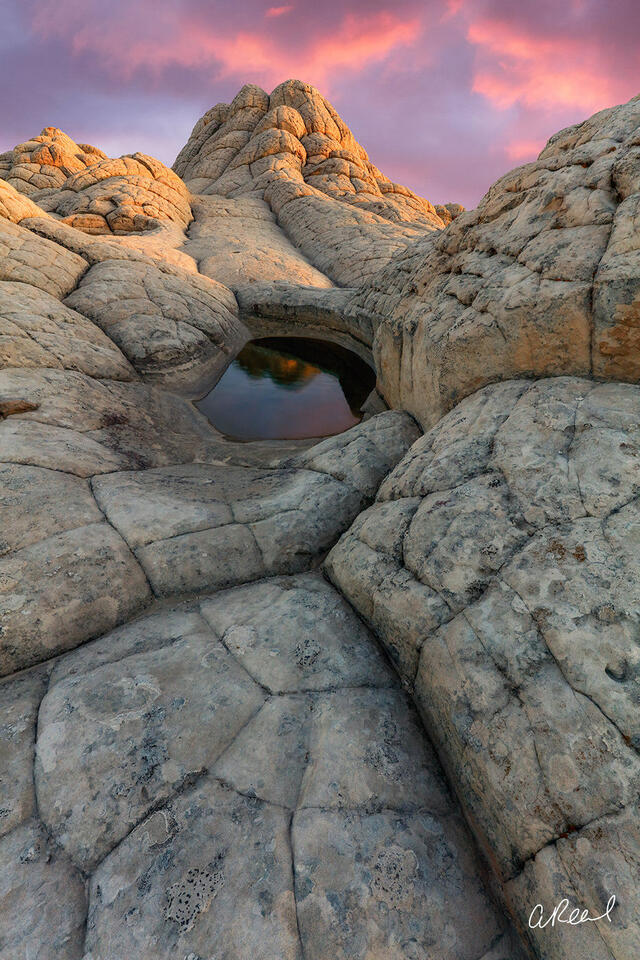
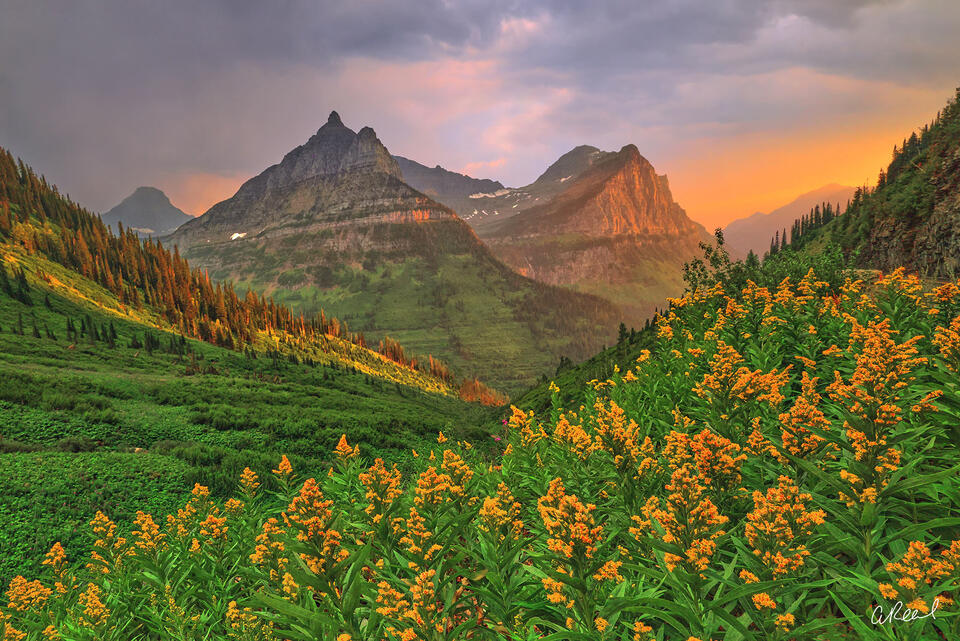
My sunrise and sunset photographs are available as limited edition fine art prints created for collectors, homes, offices and interior design projects. Many of these images work particularly well as large format wall art because the expansive skies, dramatic color and directional light create a strong focal point within a room.
Why Sunrise and Sunset Are the Best Times for Landscape Photography
After spending years photographing landscapes in all kinds of conditions, I have found that the most compelling light usually happens at the very beginning and the very end of the day. There is a reason landscape photographers are willing to wake up hours before sunrise or stay out long after everyone else has packed up and gone home. The quality of light around sunrise and sunset can completely transform an ordinary landscape.
When the sun is high overhead in the middle of the day, the light tends to be strong, direct and often unforgiving. Shadows can become very dark, highlights can become extremely bright, and subtle textures in the landscape can disappear. As the sun moves closer to the horizon, everything changes.
The lower angle of the sun allows its light to travel through much more of the atmosphere before reaching the landscape. The result is the softer, warmer and more directional light that photographers often refer to as golden hour. Instead of simply illuminating a scene from above, the light begins moving across the landscape from the side. This can reveal shapes, textures and details that might have been almost invisible only a few hours earlier.
A rocky desert, for example, can look relatively flat beneath midday sun. Photograph that same landscape near sunrise or sunset and every ridge, crack and contour can suddenly become visible. Mountains gain dimension. Sand dunes reveal their curves. Tree trunks and branches become more defined. Even small variations in the land can create interesting patterns of light and shadow.
That directional quality is one of the things I enjoy most about photographing near the edges of the day. Light is no longer simply making the landscape brighter. It is helping define the landscape itself.
Softer Light and More Manageable Contrast
Another advantage of photographing around sunrise and sunset is the relationship between the brightest and darkest areas of the scene.
During the middle of a sunny day, the difference between a bright sky and a shadowed foreground can be enormous. That can make it difficult to capture detail throughout the entire photograph. Either the highlights become too bright or the shadows become extremely dark.
Around sunrise and sunset, that difference is often much less severe.
Because the sunlight is softer and less intense, I can frequently capture considerably more information throughout the scene. Details remain visible in both the landscape and the sky, creating an image that feels more balanced and natural.
This softer light can also give landscapes a more inviting appearance. Instead of the stark feeling produced by overhead sunlight, early and late light tends to wrap around subjects. Mountains, coastlines, forests and desert formations often take on a depth and warmth that simply is not present during most of the day.
The Colors of Sunrise and Sunset
Of course, one of the most obvious reasons I photograph around sunrise and sunset is color.
When conditions come together, the sky can move through an incredible range of colors in a very short period of time. Pinks, reds, oranges, yellows, purples and softer pastel tones can appear as sunlight interacts with clouds, moisture and particles in the atmosphere.
Some of the most dramatic color can actually happen before the sun rises or after it disappears below the horizon.
This is why I rarely think of sunrise or sunset as a single moment. The entire transition is important. The sky can begin changing long before the sun appears in the morning, and some of the most beautiful light in the evening may arrive after the sun itself is gone.
Clouds can make an enormous difference. When they are positioned correctly, they catch the remaining sunlight and reflect color across the sky. Sometimes that color is subtle and peaceful. Other times the entire sky seems to explode.
The unpredictable nature of those conditions is part of what keeps landscape photography exciting for me. I can return to the same location again and again and never experience exactly the same light twice.
What Makes Sunrise Special
Sunrise has qualities that are difficult to duplicate at any other time of day.
The landscape is often quieter. Popular locations that may be filled with visitors later in the day can be almost completely empty before dawn. There is something special about standing in a beautiful place while most of the world is still asleep and watching the first light begin to reveal the landscape.
Morning conditions can also produce atmospheric effects that disappear quickly once the day begins to warm.
Fog may settle into valleys. Mist can hover over rivers and lakes. Dew can cover grasses and plants. Low clouds may drift between mountains or through forests. When the first sunlight begins interacting with those conditions, an already beautiful landscape can become something entirely different.
Early mornings are also frequently calmer. Wind often increases as the ground warms throughout the day, so sunrise can provide better conditions when I am photographing reflections, delicate foliage or scenes where movement would otherwise become distracting.
There are certainly mornings when getting out of bed in the dark feels like a terrible idea. Then the light begins to appear and I remember exactly why I do it.
Why Sunset Is Equally Compelling
Sunset offers a different experience.
Instead of watching a landscape slowly emerge from darkness, I am watching the character of the scene gradually change as daylight disappears. Harsh afternoon light begins to soften. Shadows grow longer. Warm light starts moving across the landscape and the colors of the environment often become richer.
One advantage of sunset is that I have the entire day to study the location and watch the weather develop. I can pay attention to cloud movement, determine where the light is likely to fall and refine my composition before the best conditions arrive.
But sunset can also be deceptive. Sometimes everything appears completely ordinary until the final few minutes of daylight. A dull sky can suddenly ignite with color. Light can break through a small opening in the clouds and illuminate a mountain, tree or distant section of the landscape for only a few seconds.
Those fleeting moments are often the ones I remember most.
The Best Light Is Often Fleeting and Rare
What I love about sunrise and sunset photography is that nothing stays the same for very long.
The light can change from minute to minute and sometimes from second to second. A composition that works beautifully at one moment may look completely different five minutes later. Colors shift, shadows move and clouds change position constantly.
That temporary nature of the light is also what makes these photographs special to me.
A landscape may have existed for thousands or even millions of years, but the exact combination of light, weather, atmosphere and color that I photograph may exist for only a brief moment. Once it disappears, it may never happen in quite the same way again.
That is ultimately why I continue returning to these early mornings and late evenings. I am not simply photographing a mountain, coastline, forest or desert. I am photographing what happens when extraordinary light briefly transforms that place.
For me, that intersection between landscape and light is where some of the most memorable photographs are created.