Salvador Dalí the Surrealist King of the Bizarre
Salvador Dalí: Who Was He and Why Was He So Important?
Surreality, waxy timepieces, oblong egg shapes – the name Salvador Dalí likely conjures a whirlwind of striking images from the artist’s most well-known works. Even if you aren’t familiar with Dalí by name, it’s very likely that you’ve happened upon his work at some time or another in your life.
With his trademark upturned mustache and flair for eccentricity, Dalí left a huge impression on the twentieth-century art scene. Renowned as one of the leading figures of the Surrealist movement, Dalí’s work pushed the very boundaries of the human imagination, his works often depicting dreamlike landscapes and bizarre, distorted but not unfamiliar realities.
In our latest blog post, we’ll attempt to unravel some of the enigma surrounding this artist’s life, work, and the lasting Dalí legacy which endures to this day.
Dali's Early Years
Like many artists, Salvador Dalí’s formative years were marked by a pernicious blend of talent and unconventional eccentricity. Born in 1904 in Figueres, Spain, Dalí expressed a passion for the arts from a very young age. His parents recognized his artistic aptitude and encouraged his pursuit of such talents, so his formal art training began at an early age.
In 1922, Dalí enrolled at the Royal Academy of Fine Arts of San Fernando in Madrid, where he began to embrace the themes of the Surrealist movement and develop his own distinctive style. Many historians agree that at this time Dalí began to express his flamboyant ideas confidently and cultivated the imagery and techniques that would pop up in his work throughout his career.
Dalí’s artistic education, while grounded in traditional techniques, had always been driven by his underlying desire to innovate and challenge the norms of the art world and ultimately society at large. These earlier years sowed the seeds of his future groundbreaking – and controversial – works, eventually shaping him into the influential and iconic figure the world knows and loves today.
The Surrealist Movement
In the early twentieth century, the Surrealist movement gained steam as a powerful, visceral reaction to the rationalism and disillusionment of large swaths of populations following the atrocities of World War I. In a way, Surrealism sought to tap into the subconscious mind and liberate the imagination from the constraints of things like reason – in an effort to reveal the deeper mysteries of the human psyche.
Dalí, whether he meant to or not, became one of the most iconic figures of the Surrealist Movement. He was a master provocateur and often courted controversy if it suited his interests. His partnership with Surrealist poet Federico García Lorca, his borderline obsession with Freudian psychoanalytics, and his use of paranoia-criticism (which we’ll talk about more in the next section), all added to the depth and perverse intrigue of his body of work.
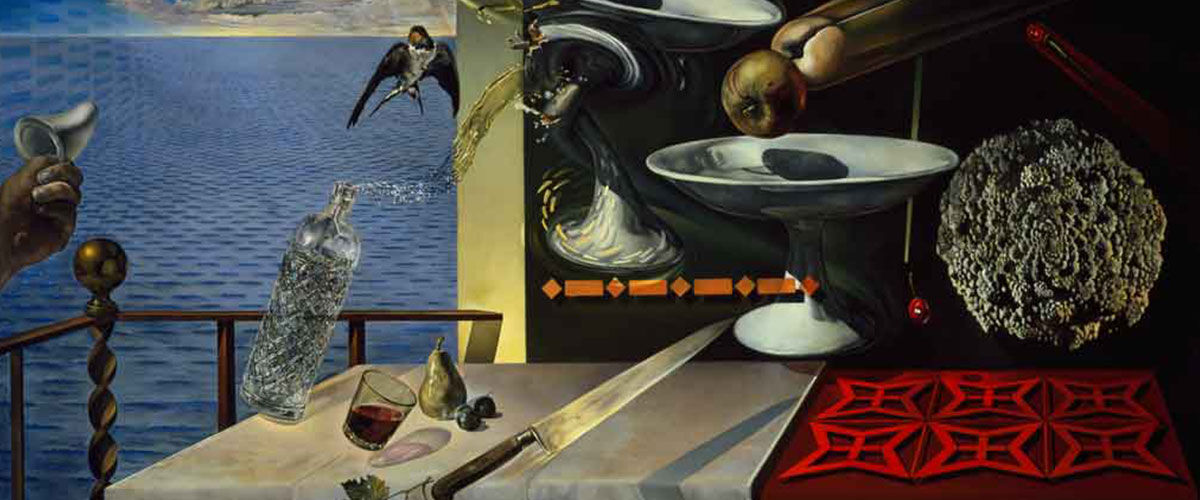
In terms of the Surrealist themes of his work, classics like The Persistence of Memory, which features melting timepieces draped over a surreal landscape, became emblematic of some of Surrealism’s core principles. Dalí’s meticulous technique and precision added an element of hyper-realism to the fantastical, which vexingly blurred the lines between dreams and reality.
Dalí’s works continue to captivate, mystify, and inspire generations of artists and art enthusiasts, cementing his place in history as a distinguished pioneer of the Surrealist movement.
Dali's Paranoiac-Critical Method
This technique, coined by Dalí himself, gave him the freedom to explore the complex interplay between the conscious and “subconscious” mind, unlocking a world of boundless creative possibilities.
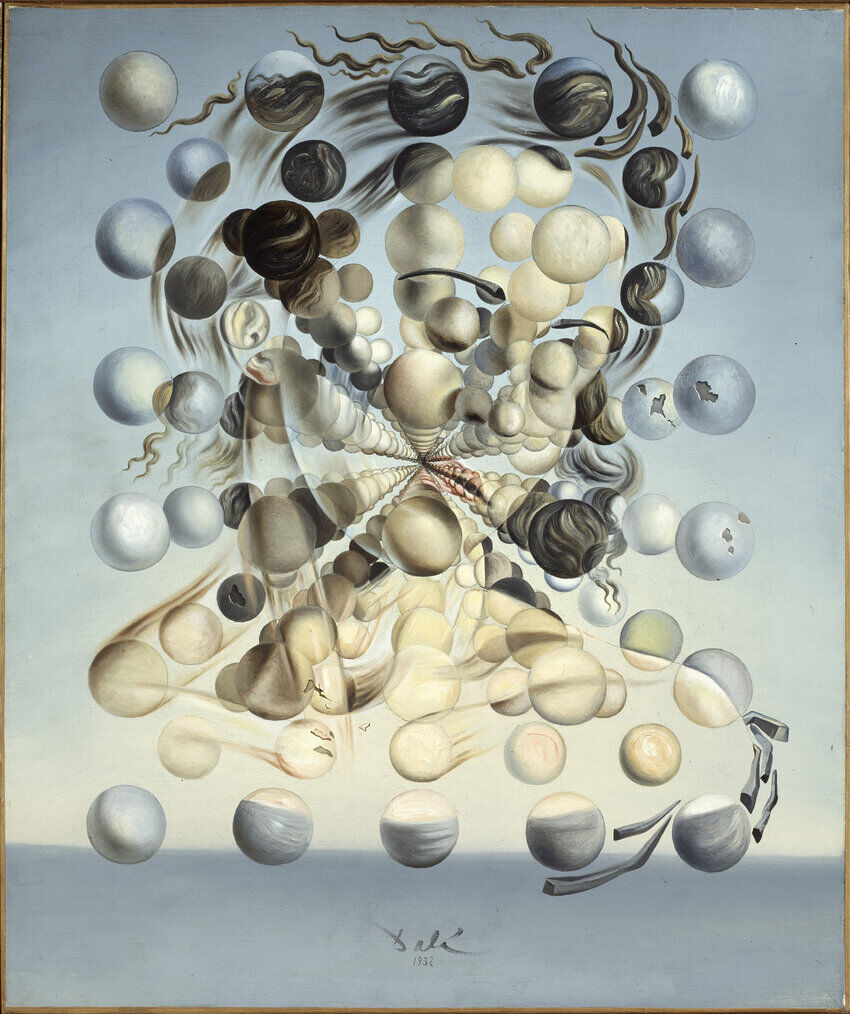
At its essence, paranoiac-critical methodology involves harnessing paranoia and self-induced delusion as a means of artistic inspiration. Dalí believed that by deliberately inducing a state of paranoia, he could access the darker, hidden recesses of the mind where unfiltered, uncensored thoughts and associations lurk. In this altered state of mind, Dalí would perceive distorted, dreamlike images that he could then pour out onto the canvas.
This method led to the creation of works that defied conventional understanding and often elicited multiple, contradictory interpretations. Dalí’s playful exploration of his own obsessions, fears, and desires through paranoiac-critical methodology is readily evident throughout his work, which is characterized by intricate symbology, distorted figures, and a hallucinatory, ephemeral quality.
Some of the most notable examples of this technique can be found in works like The Elephants and Swans Reflecting Elephants, where the boundaries between the real and the surreal are blurred, and images may not be what they seem at first glance.
Dalí’s paranoiac-critical method not only contributed to his personal style but also left a mark on the Surrealist Movement, inviting viewers to question their own perceptions, embrace ambiguity, and engage with the mysteries of the human condition through artistic expression.
Why is Salvador Dali So Famous?
Dalí’s early success in the art world catapulted him to international stardom, and his bombastic persona made him an enchanting public figure. His art, especially his explorations of Surrealism, attracted immense attention and critical acclaim.
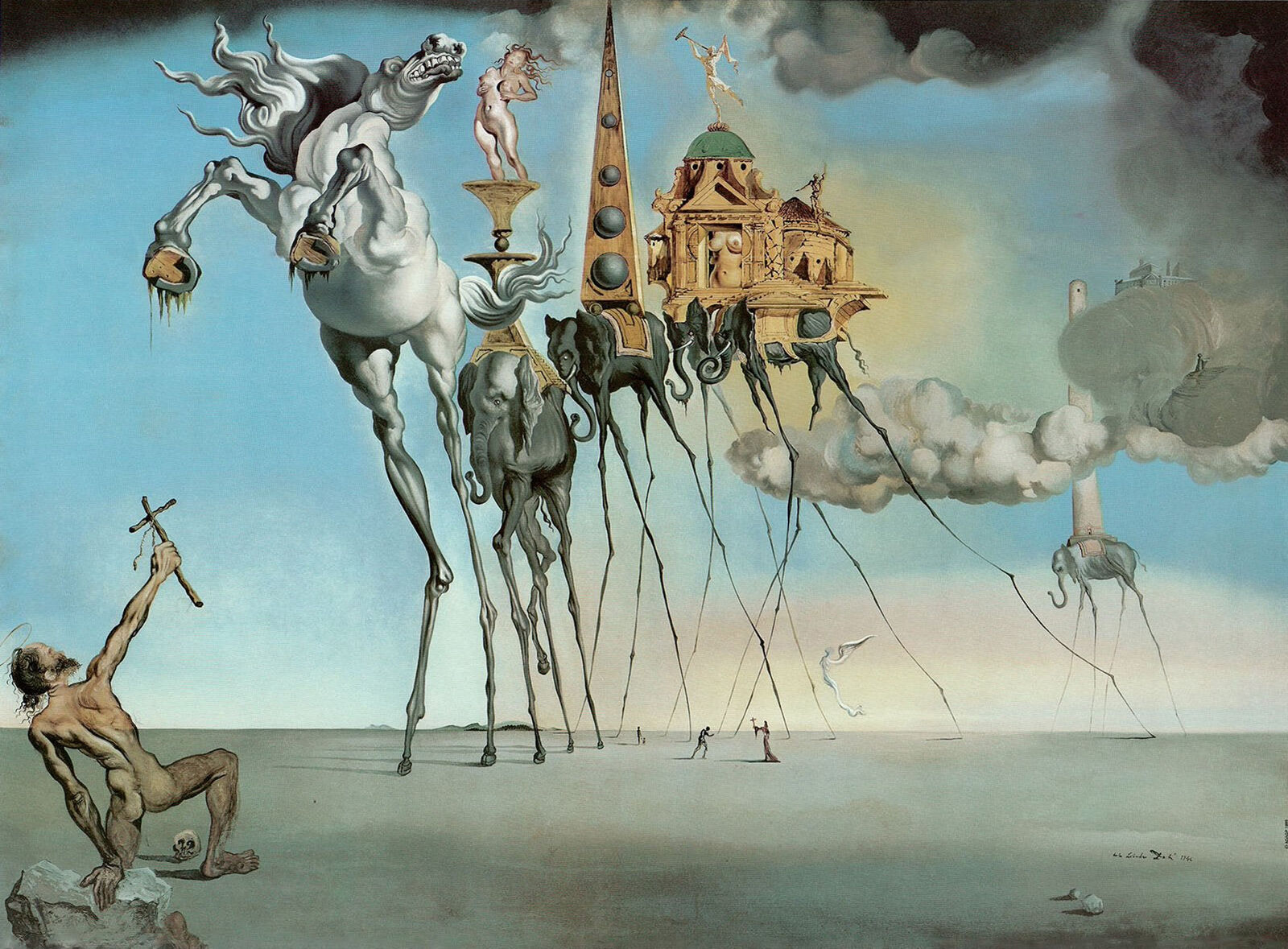
His most famous painting, The Persistence of Time (1931), depicting limp melting watches, is my personal favorite of his work. Other famous paintings include The Elephants (1948), Swans Reflecting Elephants (1937), The Metamorphosis of Narcissus (1937) and The Temptation of St. Anthony.
Growing Fame
As his fame grew, Dalí’s fortune followed suit. Throughout his career, he collaborated with filmmakers, fashion designers, and even appeared in a handful of Hollywood films. His iconic mustache and vibrant attire became synonymous with the Dalí brand, and he used his charisma as a means to market his work.
However, Dalí’s unique persona and approach to art eventually caused a rift within the Surrealists. André Breton, the leader of the Surrealists, had strict principles regarding political and artistic commitment. Dalí’s divergent views and his commercial success strained his relationship with Breton and other Surrealists. Additionally, Dalí’s support for Franco’s regime during the Spanish Civil War and his open fascination with money and fame clashed with the group’s most cherished ideologies.
In 1939, Dalí was expelled from the Surrealist movement, although this gesture was largely symbolic. This moment also marked a turning point in Dalí’s career. He continued to create art, but his style diversified significantly, gravitating towards classical and religious themes. Despite his expulsion, Dalí’s fortune and fame remained intact. He became a cultural icon and a celebrated artist throughout his lifetime, known for his innovative techniques and mesmerizing visual works.
The Later Years
Following his expulsion from the Surrealists, he embarked on a phase often referred to as his “classical” or “nuclear” period. During this time, Dalí traced back to his roots in Catalonia and explored more traditional artistic themes, blending his technical mastery with historical and religious subjects. It was during this time that Dalí created works like The Sacrament of the Last Supper, which showcased meticulous attention to detail and a genuine reverence for classical forms.
In his later years, Dalí also dabbled in alternative media, including sculpture and film – even a brief foray into holography. His work continued to provoke, surprise, and captivate audiences, and he maintained his status as a celebrated and beloved figure in the art world. However, health issues, including Parkinson’s disease, would limit his productivity eventually. Dalí passed away in 1989, leaving behind a prolific body of work that spanned surrealism, classicism, and the avant-garde.
Dali Forever
The journey of Salvador Dalí – from his early years as a pioneering Surrealist to his stint as a Hollywood movie star – showcases the evolution of a one-in-a-generation artistic talent. His paranoiac-critical method, eccentric persona, and deeply imaginative creativity have forever changed the art world.
His ability to straddle the realms of dream and fantasy while pushing the boundaries of the subconscious continues to inspire. The legacy of Dalí invites us to ponder the transformative power of artistic expression and invites our own exploration of the depths of imagination and perception.