
Aspen or Birch? The Art Is In The Details
Birch vs Aspen: What's the Difference?
Where do we come from? What is the meaning of life? Is it an aspen tree or a birch? These are the questions that have plagued mankind since the dawn of time. Without a doubt, both are beautiful trees, loved by nature photographers, hikers and all seekers of fall color around the country. But what is the difference? Is it the way they taste? The sound that each makes when they fall in the forest and no one is there to hear their cries? Let's dig a little and see if we can find out.
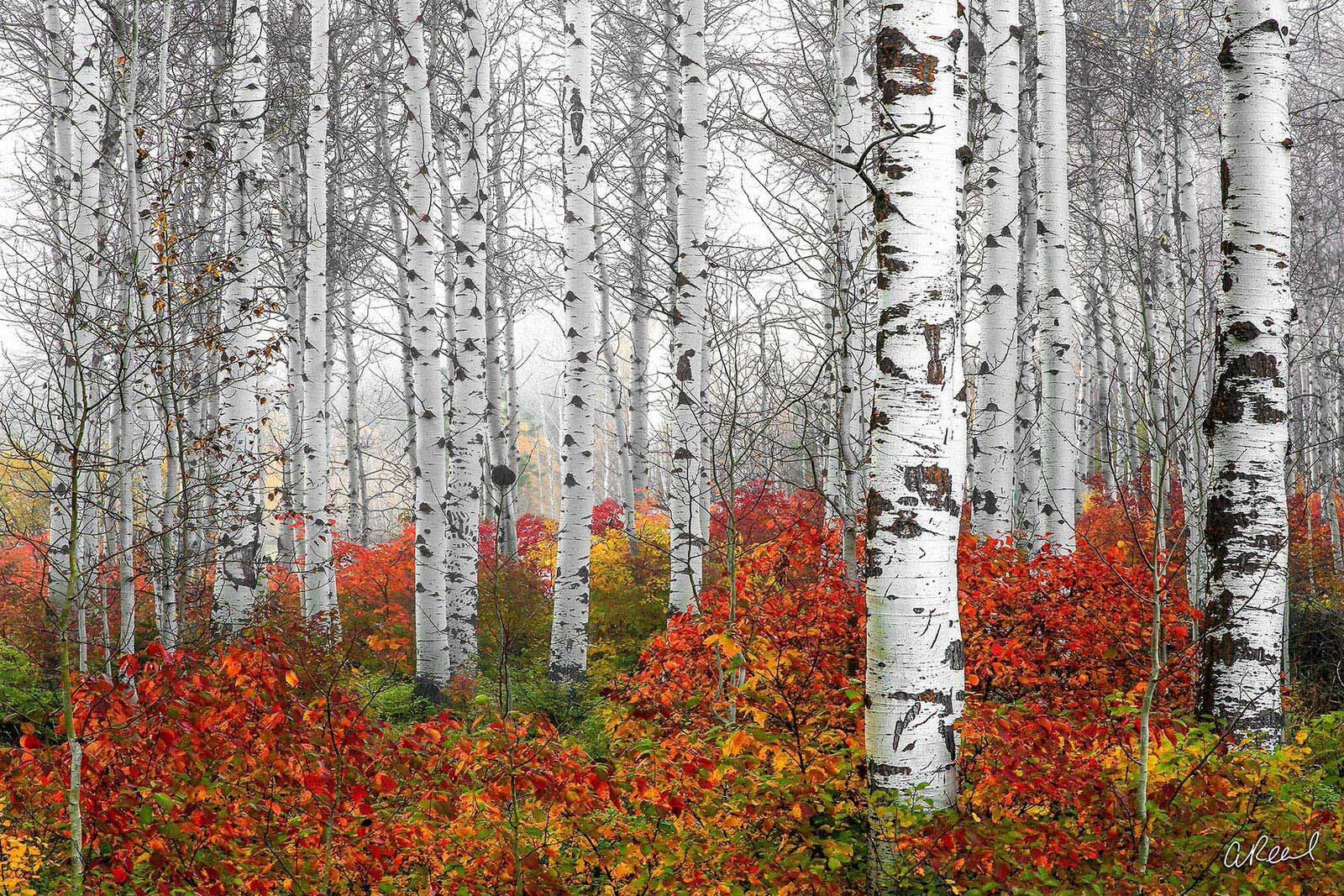
It’s a beautiful sight and one many of us are familiar with either from personal experience or a gorgeous photograph: pearly white bark, vibrant yellow leaves shivering in the sunlight, branches extended to the bright blue sky above. This view can be a real treat as you cruise around mountain bends, explore a national park, or wander through an art gallery during a night out on the town.
But, what kinds of trees provide that iconic beauty?
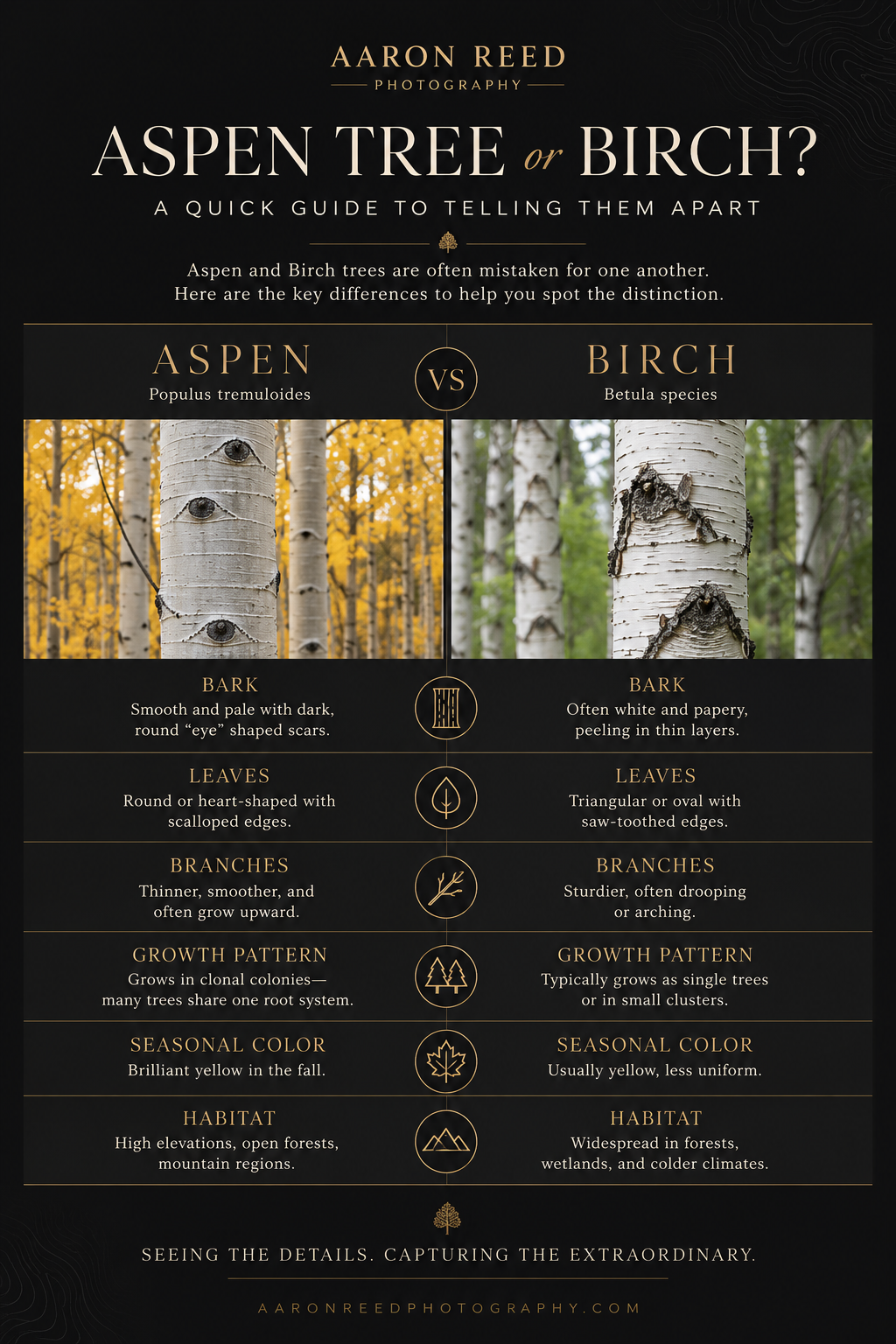
Often, we associate yellow leaves and white bark with aspen trees. But, what can be hard to tell out the window of your car is whether they are aspen or birch trees, which actually have a very similar appearance to aspen trees.
While both trees grow to great heights, have the appearance of white bark from afar, and turn a gorgeous yellow in the fall, their similarities stop there. Despite these visual similarities, birch and aspen trees belong to an entirely different family, with birches classified in the Betulaceae family and aspens in the Salicaceae family, highlighting their distinct botanical classifications. A keen eye (or adept dendrologist!) can spot the differences between these two unique trees if you simply know what to look for. Both aspen and birch trees are tall and slender, but birches as a group have unique characteristics that set them apart from aspens. There are also multiple species of both birch and aspen, each with their own unique features.
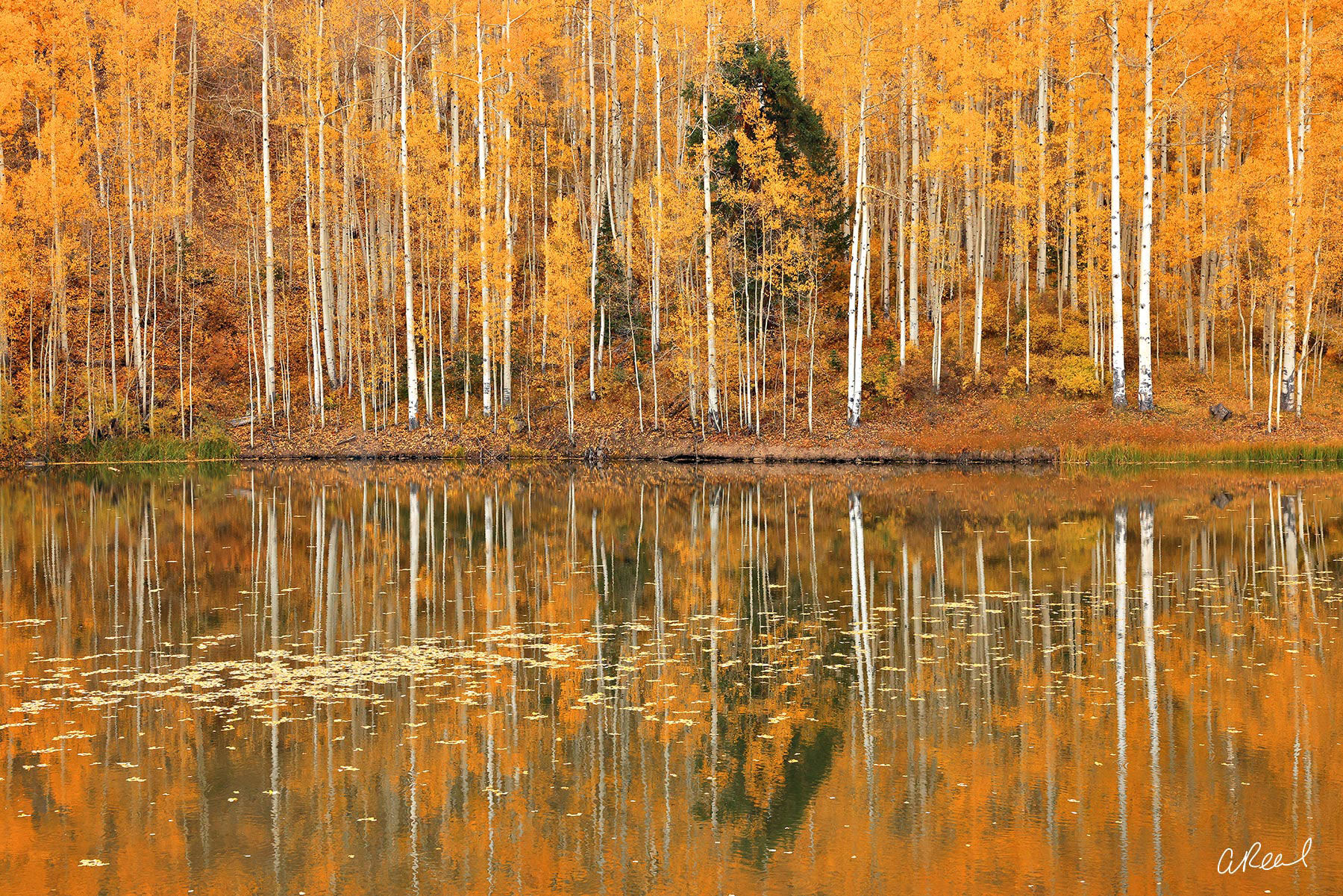
Golden leaves drift in a mirror of autumn splendor in this pond in Telluride, Colorado. Fine Art Limited Edition of 50.
Do You Know Where You Are?
A really easy way to tell the difference between birch and aspen trees is to locate yourself on a map.
Aspen trees are found across most of North America, from Canada all the way down to Mexico, so that’s not necessarily going to narrow down your options. Birch trees belong to a different botanical group, specifically the Betula genus in the Betulaceae family, unlike aspens. So, if you’re out West, the golden leaves waving at you probably belong to an aspen.
If you still aren’t sure after you’ve done some geography, then it’s time to get a closer look at the specific details of the tree.
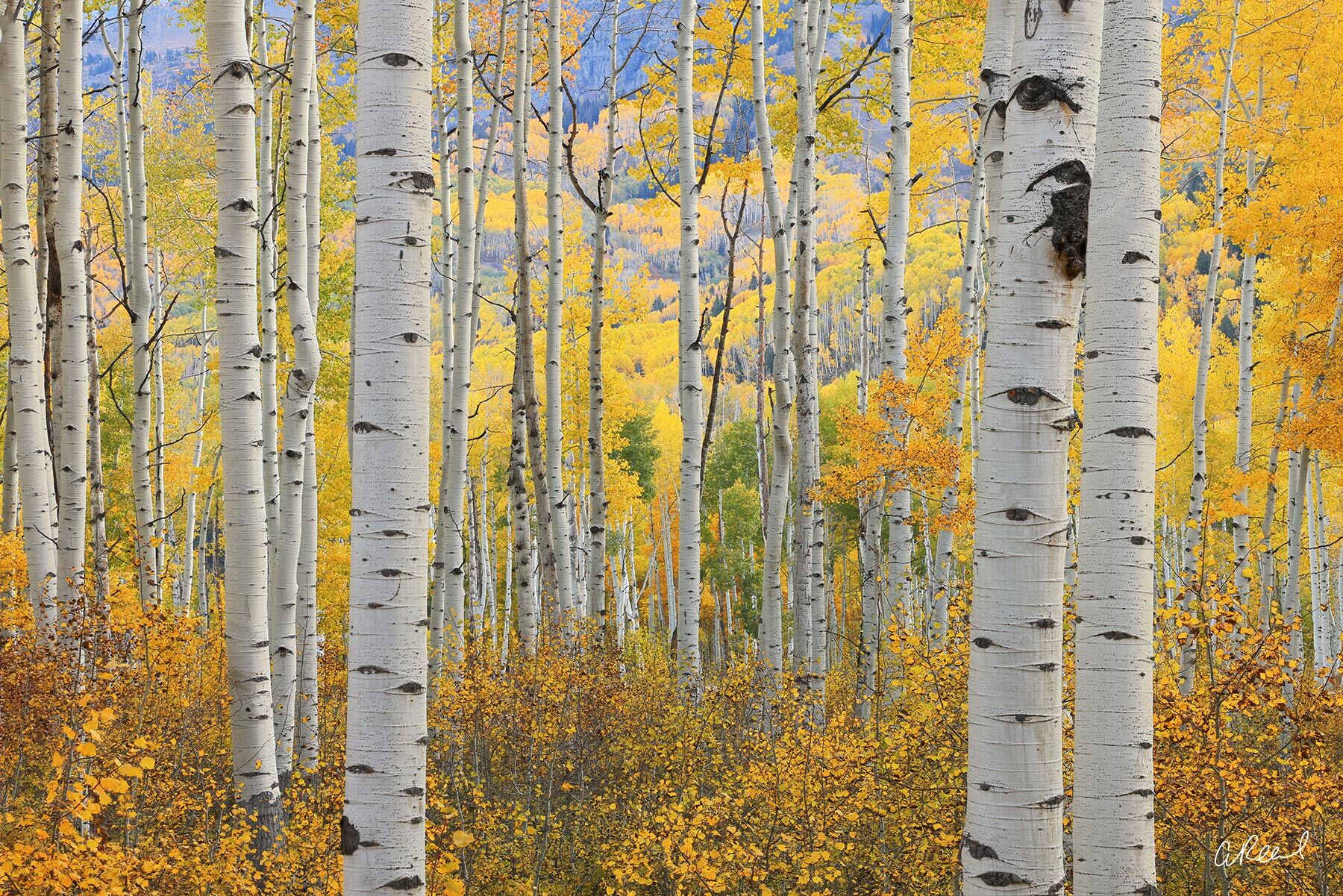
Bands of gold cross the foothills of the Rocky Mountains near Aspen Colorado. Mature aspens serve as a seasonal clock in the mountains, heralding and celebrating the arrival of autumn, then falling quiet again at the first snow. Fine Art Limited Edition of 50.
Leaves Are Falling All Around
Take this chance to collect a fallen leaf or two; they’ll help you identify what kind of tree you’re looking at!
While the leaves of the aspen and birch trees look a little similar, there are several key differences. Birch leaves are spear-shaped with saw-toothed, double-serrated margins, making them easy to distinguish. The white birch has a kind of spear-shaped leaf with a double-serrated edge, whereas the aspen leaf is more heart-shaped with small, rounded teeth and is perfectly flat, lacking the elongated or V-shape of birch leaves. Quaking aspen leaves are also known for their trembling movement; even the slightest breeze causes them to flutter, which is how the tree got its name. A longer leaf indicates a birch tree, while a stouter leaf belongs to an aspen.
Though helpful, this technique really only works if you have leaves to look at. If it’s winter time and the leaves have fallen, you’ll have to use other parts of the tree to determine whether the tree in question is an aspen or a birch.
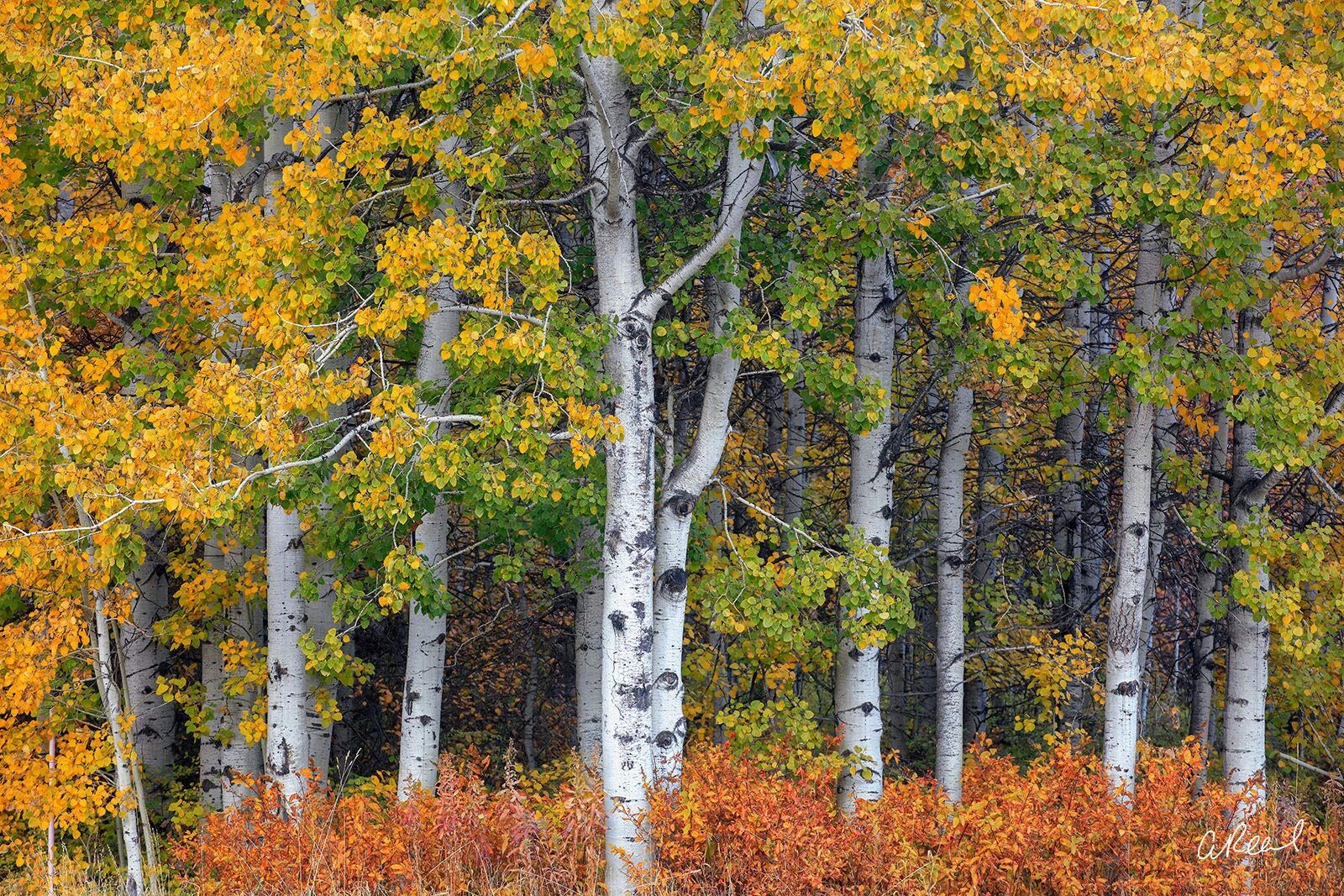
A dense stand of quaking aspen sits on the edge of a meadow near Leavenworth, Washington. A brilliant canary yellow spreads through the boughs–a sure sign of cooler weather to come. Fine Art Limited Edition of 50.
Junk In The Trunk
If leaves are absent, take a look at the tree’s trunk. While their bark might seem the same from a distance, up close their color and markings can be used to tell the two apart.
The bark of the birch tree is truly white, while the aspen tree has a distinct green tint just beneath its whitish exterior. Birch wood is also known for its light brown color, which distinguishes it from other species.
The texture of the bark also drastically differs between the two types of tree. Birch bark will hang off the tree like pieces of paper, easily peeling away when pulled on. Aspen bark, on the other hand, will be tightly wrapped around the trunk. Birch bark has been traditionally used to make canoes due to its unique properties, such as its ability to peel in large, flexible sheets.
In other words, if you can pull off the bark and use it for crafts like picture framing and decorative furniture, it’s a birch tree! In fact, birch has historically been used for basket making, canoe building, and even has distinct medicinal properties. Among birch species, Silver Birch is especially notable for its distinctive appearance and versatility.
Additionally, both trees have different marks on their trunks. Aspens have knots that resemble eyes while birch have more horizontal markings all over the trunk. These markings are native to the plant and not necessarily a result of scarring from previous branches, which is often the case with aspen trees.
Birch is a hardwood, valued for its strength and durability, and is often compared to other hardwoods for woodworking and furniture making. Aspen wood, while softer, is known for its straight grain, which makes it easy to work with and gives it a fine, uniform texture.
Between distinct leaf shapes and very different bark textures and markings, you should be able to easily tell the difference between a birch and aspen tree with a little up close examination.
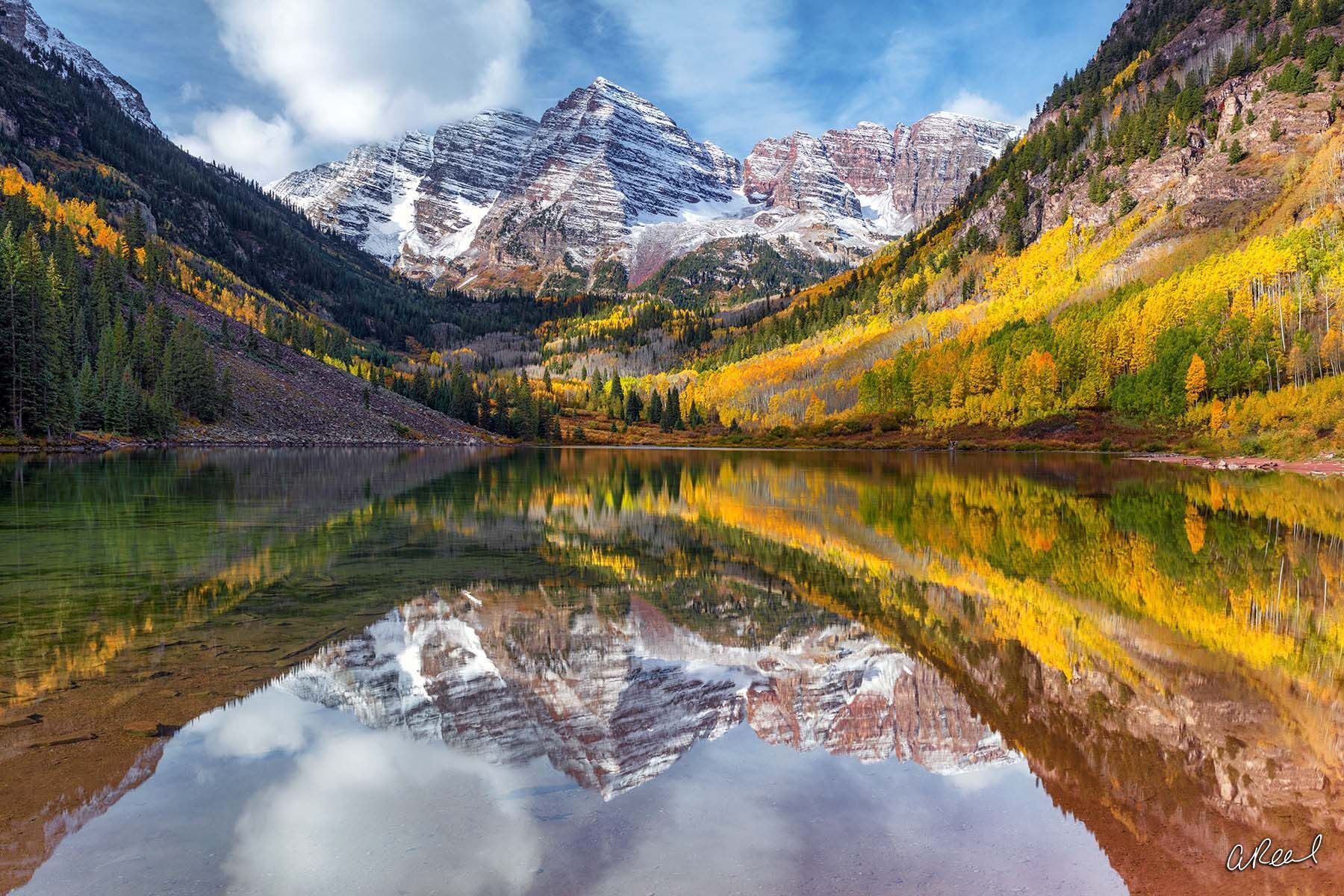
Cloud shadows flow across the face of the scarred peaks of Colorado’s Maroon Bells Wilderness. Glimpses of jade boulders on the lakebottom are seen through the veil of gold radiated by the autumnal aspens on the shore. Fine Art Limited Edition of 50.
Growing Pains
If you want to get really specific, there are also some key similarities and differences between the way aspen and birch trees grow.
Both trees prefer moist soil and are not fans of being in the shade. Birch trees can thrive in partial sunlight, but aspen trees require full sun. These trees need sunlight -- and lots of it. How else are their beautiful golden leaves supposed to shimmer in the afternoon sun?
Birch trees require loosely packed soil because they have shallow roots, whereas aspen trees tolerate a variety of types of soil. Aspen groves often originate from a single root system, allowing them to form large colonies. An entire stand of aspens can be a single clone, genetically identical and connected underground. While individual trees may die from disease, pests, or other threats, the root system often survives, allowing the clone to persist and regenerate. So, while each tree is picky about certain things, they balance each other out by being adaptable in other ways. If you’ve got a knack for growing things, these similarities and differences can be the key to identifying each type of tree!
Birch and aspen are often found alongside spruce trees in mixed forest ecosystems. Additionally, both birch and aspen have been traditionally used by Native Americans for crafting, transportation, and other cultural practices.
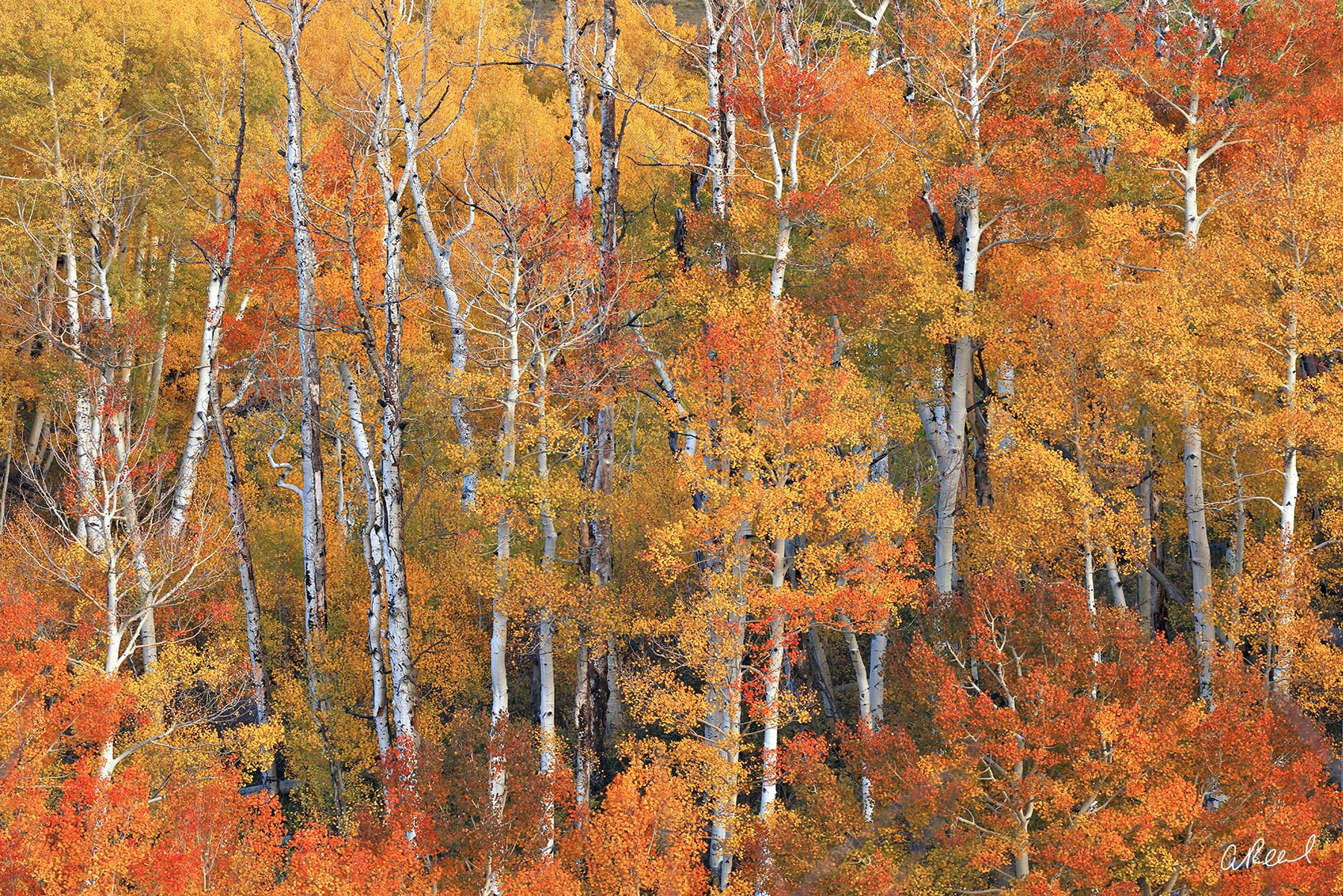
Towering Aspen and Silver Birch trees intertwine to create a wall of autumn splendor on Last Dollar Road between Telluride and Ridgway in Colorado. Fine Art Limited Edition of 50.
Guardians of the Grove: Conservation in Action
Birch and aspen trees are more than just a photographer’s dream or a hiker’s autumn highlight—they’re vital guardians of our forests, playing a crucial role in the health and diversity of national parks and wild landscapes. Conservation efforts for these unique trees are essential, not only to preserve their beauty but also to maintain the delicate balance of the ecosystems they call home.
Take the quaking aspen, for example. This remarkable aspen tree is famous for its ability to reproduce asexually through its extensive root system, creating what’s known as an aspen clone. In some cases, a single aspen clone can cover hundreds of acres, with individual trunks all connected underground. This interconnected root system is the secret to the aspen’s resilience, but it also means that damage or disease to the roots can threaten entire groves. Protecting the root system of aspen trees is a top priority for conservationists, ensuring these living networks continue to thrive in moist soil and full sunlight.
Birch trees, including the elegant yellow birch and the iconic paper birch, are equally important. Their white bark and smooth texture make them stand out in the forest, but these features also make them vulnerable to damage from both natural threats and human activity. Birch wood is prized for its fine grain and is often used in furniture and interior trim, but overharvesting can put pressure on wild populations. Sustainable management of birch wood resources is key to keeping these deciduous trees a vibrant part of our forests.
Both birch and aspen trees provide food and shelter for countless animals, from birds nesting in their branches to mammals foraging among their roots. Their leaves—heart-shaped in the aspen, elongated in the birch—are not just a way to tell the two trees apart, but also a vital part of the forest canopy, capturing sunlight and supporting the cycle of life in the woods.
As we enjoy the golden shimmer of aspen leaves in the fall or the striking white bark of birch trees against a winter sky, it’s important to remember the role we play in their survival. By supporting conservation efforts, respecting forest habitats, and choosing sustainably sourced wood products, we can help ensure that both birch and aspen trees continue to stand tall for generations to come. Together, we can preserve the beauty, diversity, and ecological magic of these guardians of the grove.
Nothing Else Matters
These two trees are certainly easy to confuse with one another. For many years I thought that I was photographing birch trees in one area in Washington based on the geographical location, however, it appears they were aspens the entire time! In fact, I am not sure I have even photographed a stand of birch!
Their biggest similarity of all? They’re both gorgeous trees. Being able to identify them simply helps you determine their uses, how they fit into the landscape, and even how they might match the interior of your home in furniture, artwork, or fine art nature photography. Now, you’ll be able to stop generalizing and give each tree the admiration it deserves the next time you pass one by.
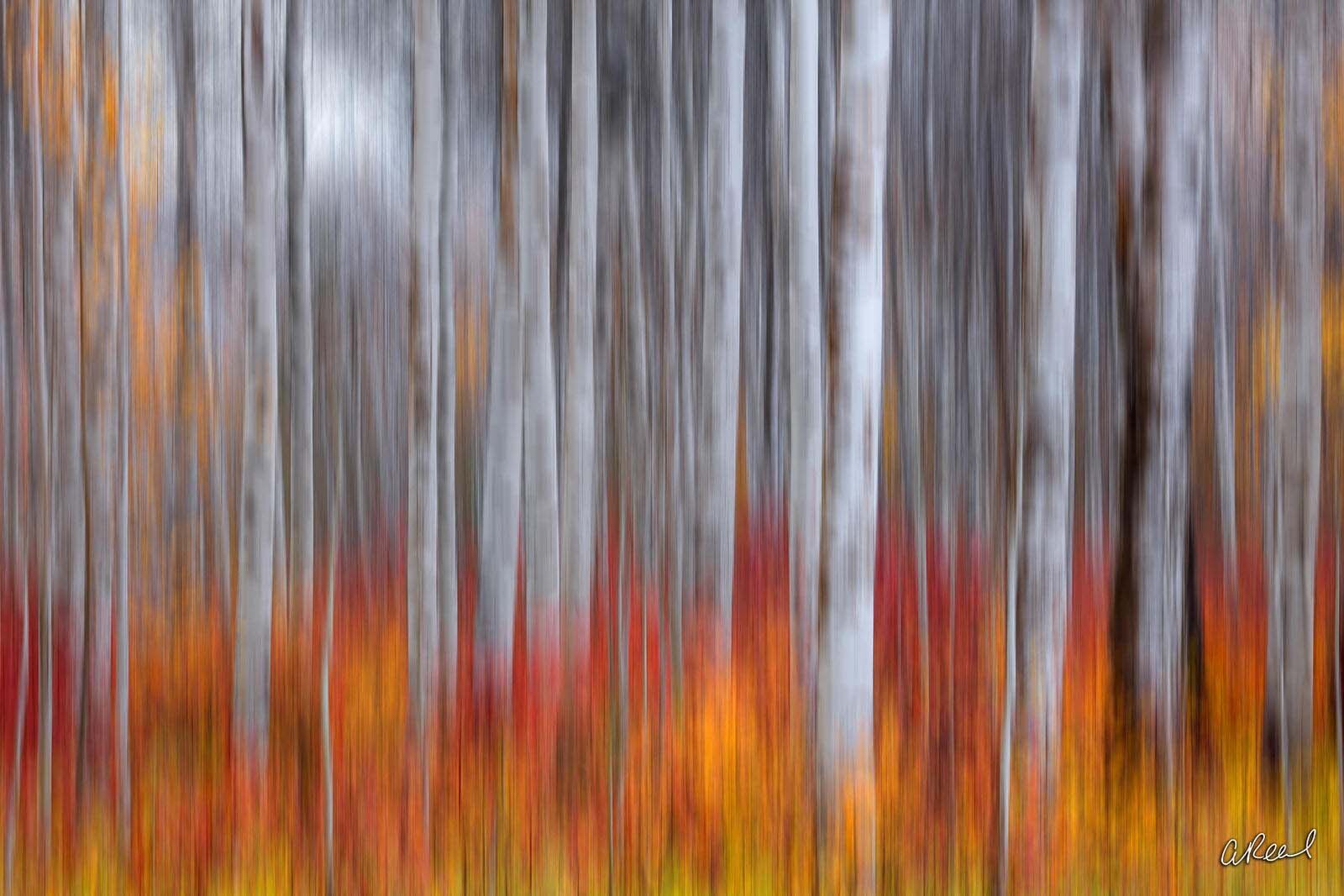
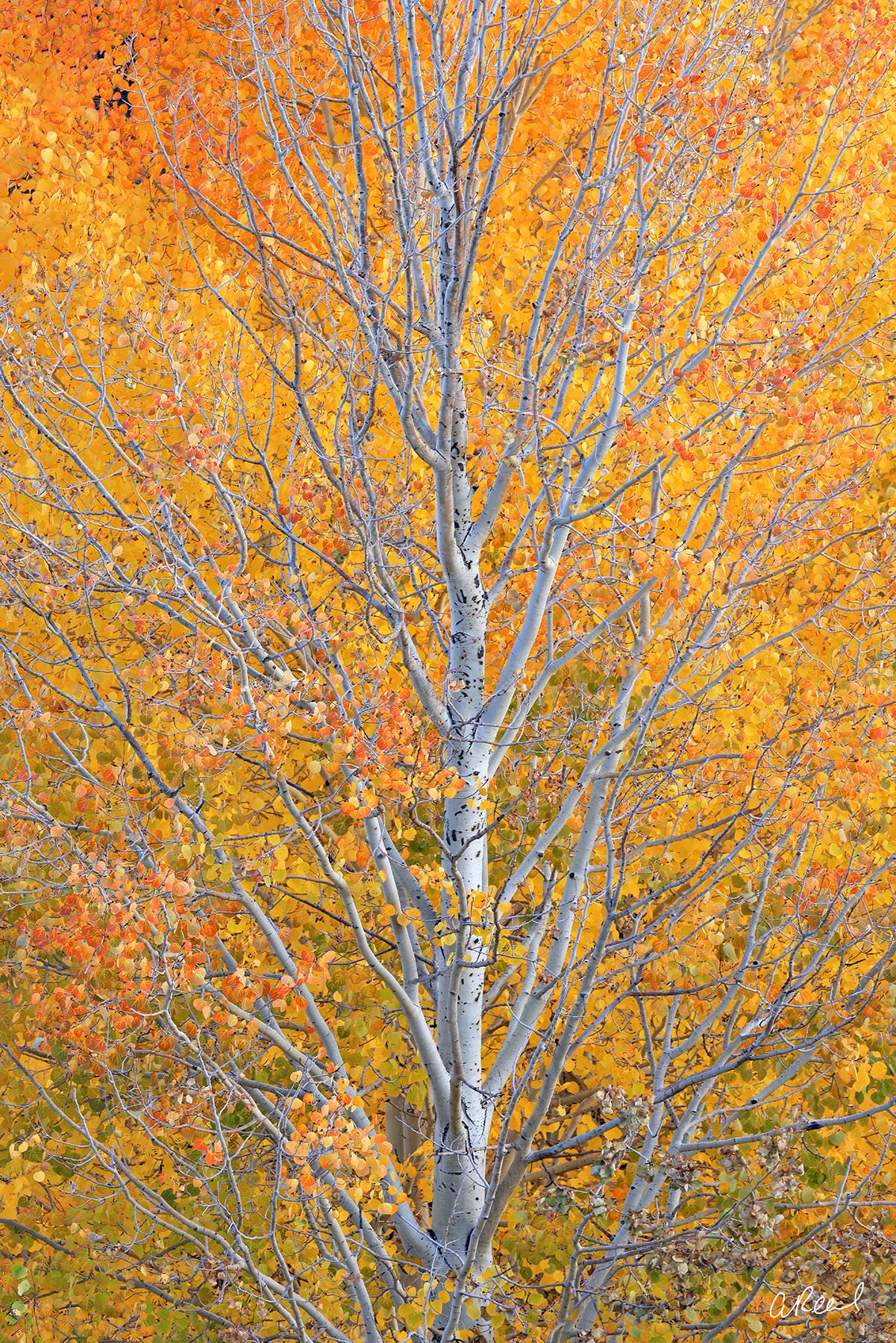
Branches like arteries stretch in every direction providing the nutrients of life to the leaves of this Aspen tree in Ridgway, Colorado. Fine Art Limited Edition of 50.