What IS a Landscape Anyway?
Landforms and Landscapes of Planet Earth
When you come across the term “landscape,” what comes to mind? The orientation of a photograph? Landscapes are often captured and appreciated through photographs, which play a crucial role in representing natural scenery and highlighting the beauty of the world around us. A picturesque Bob Ross painting? Perhaps you’re able to conjure topographies and natural elements in your mind – a meandering stream through your favorite park or lush groves of leafy trees jutting up towards the sky? The reality is that there’s no one right answer.
Landscapes are a dynamic part of the world in which we live, and the term itself helps us make sense of our visual surroundings. Every time we gaze longingly out the window, hike through a mountain range or meander down a slow-moving river, we are not merely spectating these landscapes. We are actively participating in the formation and, in some cases, the alteration and destruction of these landscapes.
Whether naturally occurring or man-made, landscapes can be incredibly diverse. Ranging from beautiful mountainous peaks to tranquil river valleys, each landscape tells a tale of the geologic processes of the Earth, its climatic variations, as well as the imprint human society leaves on our planet. In essence, landscapes are much more than the backdrops that adorn our daily lives.
While landscapes can inspire awe and wonder, they also bear the scars of human influence. Sometimes, landscapes can acutely reflect the cost of unsustainable practices and haphazard development. As we set off on our exploration of landscapes, we will attempt to unravel their mystery while simultaneously contemplating humanity’s role in their preservation and restoration.
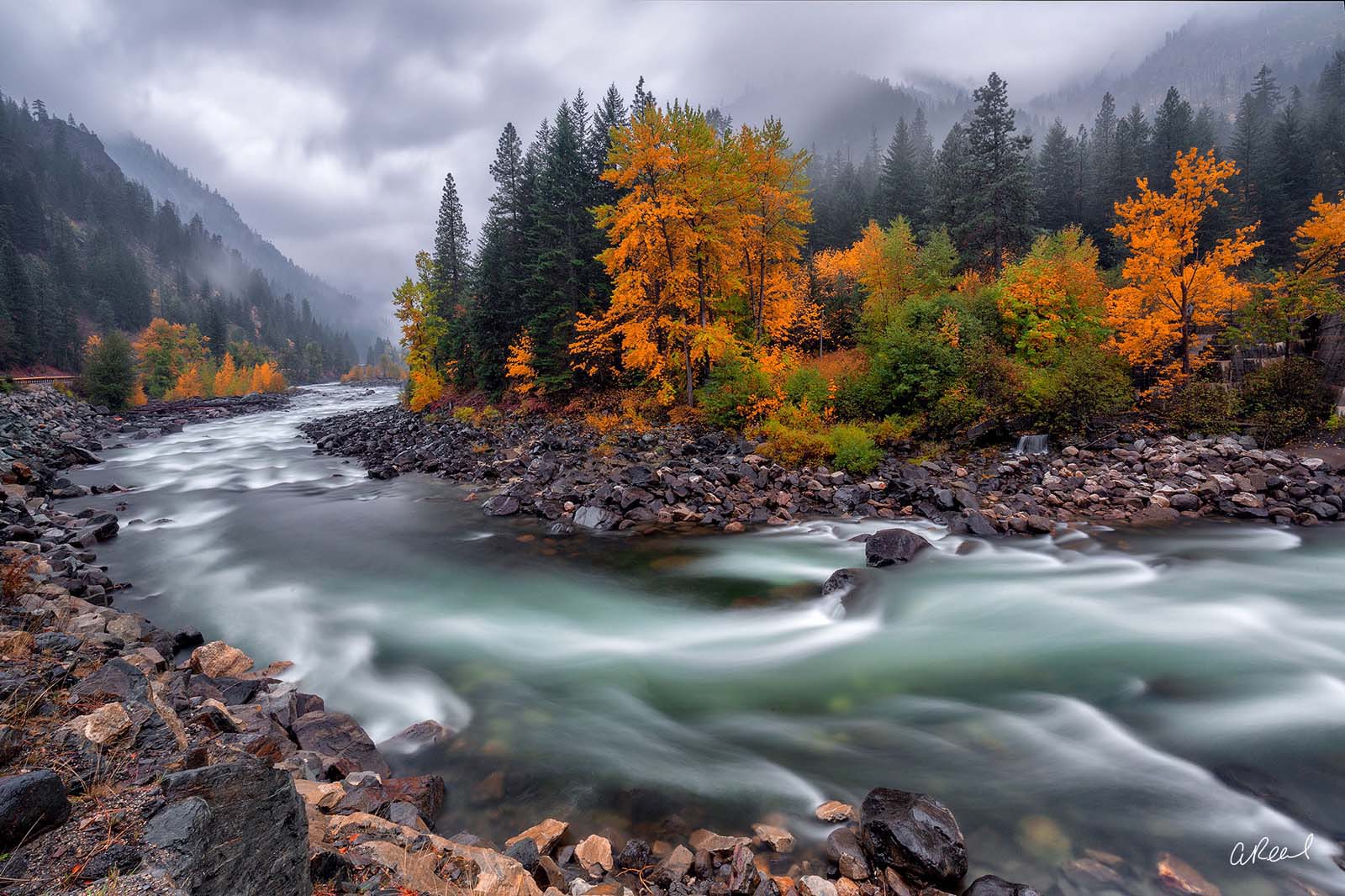
A rush of clear water races down from the forbidden peaks of a range of misty mountains. Along the rocky banks, flashes of gold announce the arrival of autumn to the high places. Fine Art Limited Edition of 50.
What Is a Landscape?
In short, a landscape is the visible and spatial representation of the physical features and ecological elements of a particular area. It encompasses the topography, landforms, and the arrangement of natural elements, such as mountains, valleys, rivers, forests, and ecosystems.
Landscapes are naturally shaped by geologic processes, including tectonic forces, erosion, and weathering, and are also greatly influenced by climatic patterns. Their variation serves as evidence of the dynamic relationship between the Earth’s natural forces and the living organisms that inhabit them.
Landscapes also play a substantial role in determining local and regional environmental conditions, affecting everything from weather patterns to biodiversity.The study of geography provides a scientific foundation for understanding how landscapes develop, change, and vary across different regions.
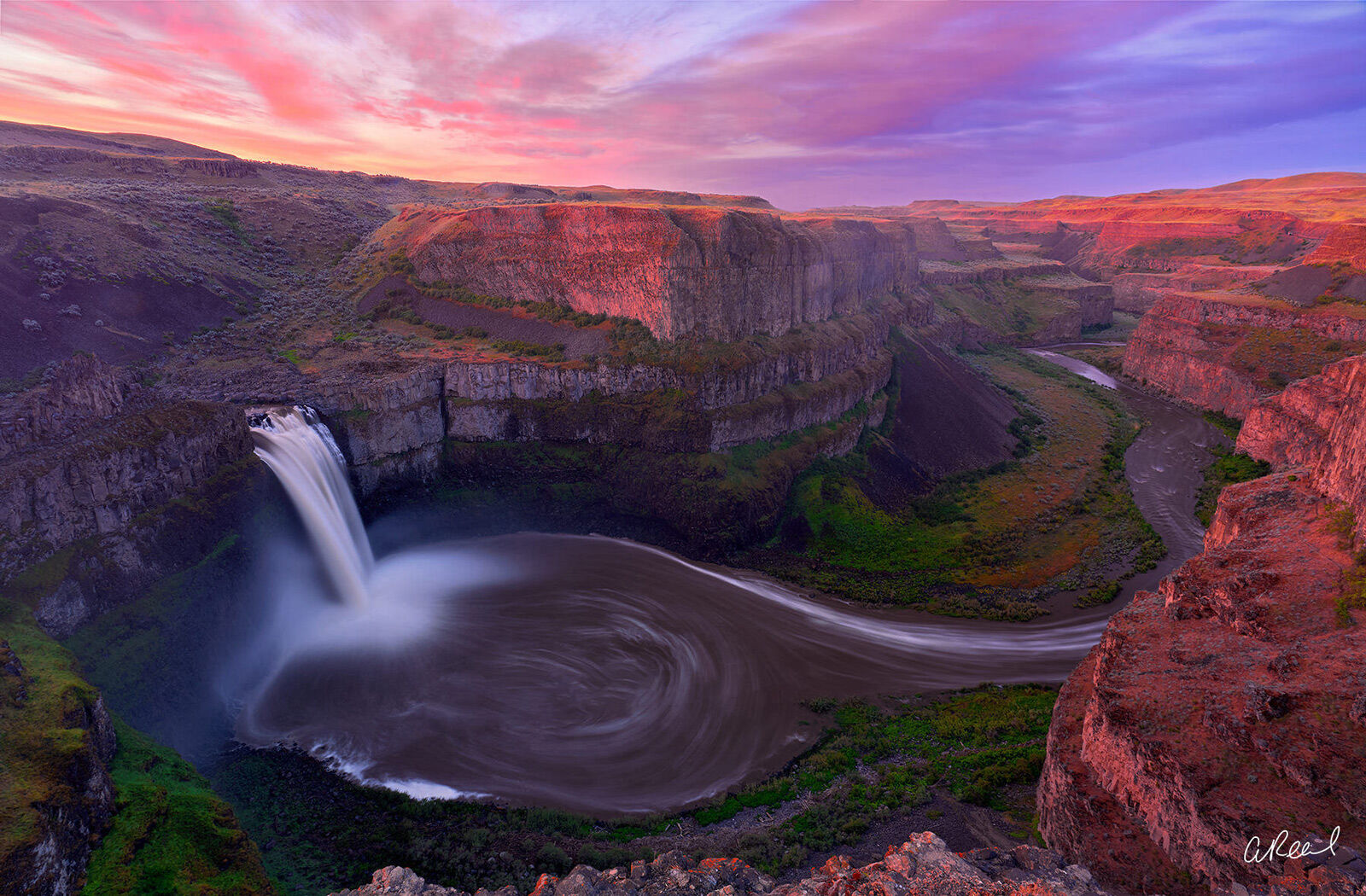
The charging waters of a desert cataract plunge into a turbulent vortex as they wind their way across the eroded tablelands of the Southwest. Across the plateaus, the sinking sun paints the world in a sanguine glow. Fine Art Limited Edition of 50.
The Many Landscapes of Planet Earth
Planet Earth is a resonating tapestry woven with an astonishing array of landscapes, each representing a unique chapter in our planet’s history. These landscapes appear in different forms—mountains, forests, deserts, wetlands, and more—showcasing the incredible diversity of our world. From the towering peaks of the Himalayas to the mysterious depths of the Marianas Trench, from the lush Amazon rainforest to the arid expanses of the Sahara Desert – Earth’s landscapes captivate our senses and fuel our curiosity.
The diversity of landscapes across our globe is more than a visual spectacle – it’s a testament to Earth’s geological and environmental complexity. Each landscape is a living example of the intricate interplay of natural forces, ecological structures, as well as human influence. Landscapes represent much more than the views they provide; they are the windows into the soul of our planet. Each landscape creates a powerful image in our minds or in artistic representations, evoking emotional and cultural responses.

Autumn layers cascade down the mountainsides and through the hills rejoicing with the colors of autumn near Ridgway, Colorado. Fine Art Limited Edition of 50.
Mountains and Valley Landscapes
Mountains and valleys are formed through complex geological processes, including plate tectonics. Mountains are generally characterized by their towering summits, steep slopes, and rugged terrain, while valleys lie nestled between these lofty giants, offering a distinct contrast with their low-lying, more fertile and vibrant environs.
When the collision of continental plates pushes the Earth’s crust upward, mountain ranges are born, and over time, these mountains are further shaped and sculpted by erosion from wind, water, and ice. Glaciers carve out dramatic valleys, while rivers and streams meander through, further altering the terrain.
Mountainous landscapes are known for their extreme altitudes and diverse microclimates which can create habitats that vary from snow-capped peaks to alpine meadows and even dense forests. The harsh conditions at higher elevations present a number of challenges to life, yet many animals have adapted to such environments. Snow leopards, mountain goats, and pika are among some of the remarkable species that call mountains home. Lakes are also commonly found in mountain valleys, serving as vital water bodies that enhance the region's biodiversity and add to the scenic beauty of these landscapes.
Valleys, in contrast, often support a plethora of life due to their milder climates and fertile soils. Here, one can find diverse, bustling ecosystems, lush woodlands, open grasslands, and more. Animals like deer, bears, and innumerable bird species thrive in these hospitable landscapes.
Mountains and valleys are not only visually captivating but also crucial for the balance and formation of Earth’s most precious ecosystems. The presence of clouds drifting among peaks and valleys further shapes the atmosphere and mood of these landscapes, adding to their dramatic and ever-changing visual appeal.
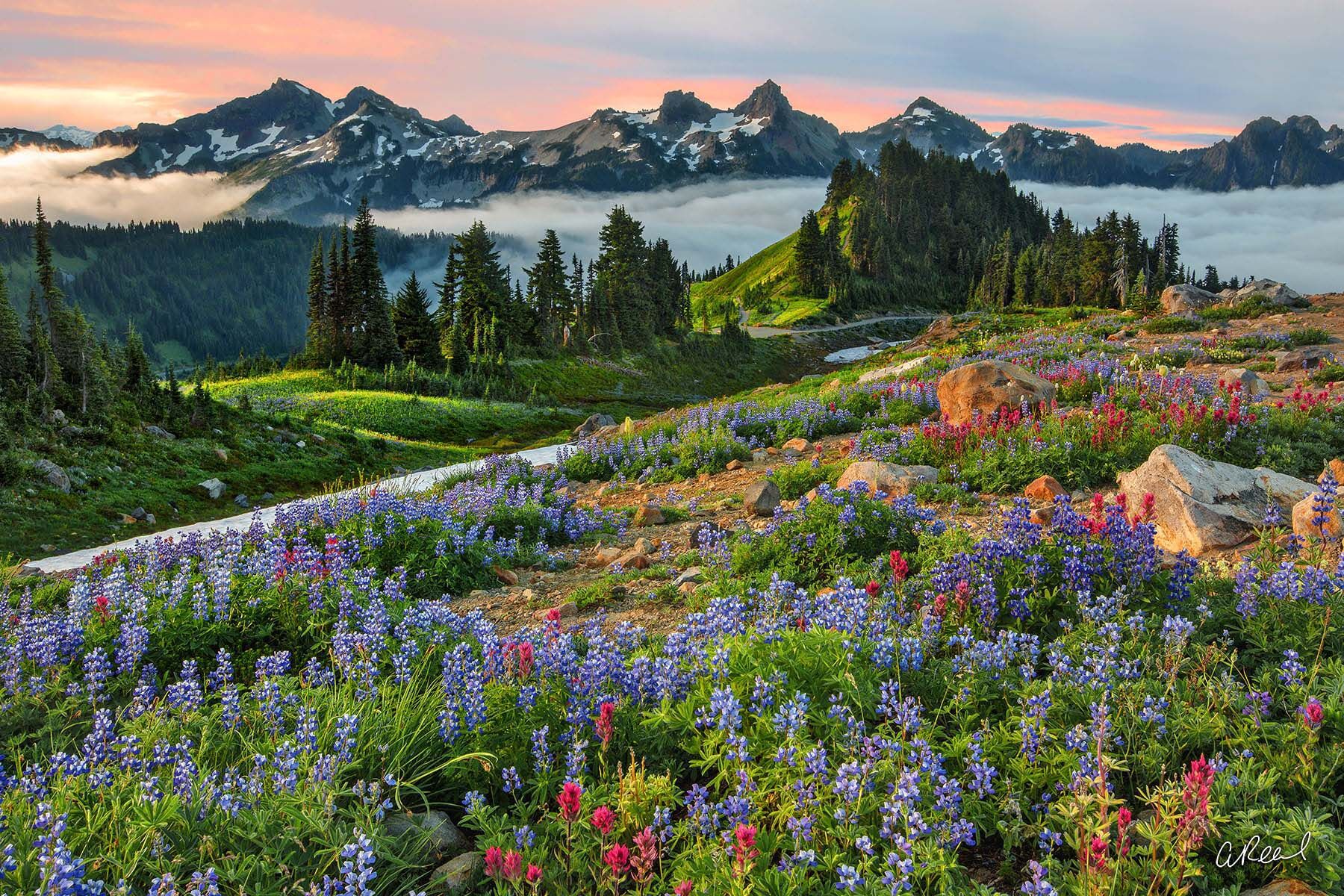
Liquid sun laps like the waves on a beach over a meadow of lupine and paintbrush in Mount Rainier National Park. Low banks of fog move through the valleys beneath the torn peaks of a dark mountain ridge, its snowy crags warmed by the embers of a dusky sky. Fine Art Limited Edition of 50.
Riverine Landscapes
Riverine landscapes are dynamic and vital slices of Mother Nature’s pie that are shaped by the rhythmic flow of water, creating stunning habitats that can support a wide range of life. Formed by the continuous movement of streams and eventually rivers, these landscapes are created by natural water processes that sculpt and define the terrain, exhibiting a unique blend of geology and ecology in their features.
Rivers carve their paths through the surface of the Earth by eroding and shaping the land they traverse. The landscape in these places often features meandering waterways, riverbanks, floodplains, and deltas. The arrangement of these elements forms the structure of riverine landscapes, determining how water moves and how habitats are distributed. Sediments carried by the flow of waters help contribute to the fertility of the surrounding soil, making riverine areas essential for biodiversity and agriculture.
The defining characteristic of a riverine landscape, of course, is the river itself. These bodies of water range from narrow, fast-flowing streams to wide, slow-moving rivers. Riparian zones along riverbanks are typically rich in vegetation which creates a dynamic transition between aquatic and terrestrial ecosystems.
Because of this, riverine landscapes are biodiverse hotspots that host a variety of animal and plant species that have adapted to both aquatic and terrestrial life. Fish like salmon and trout deftly navigate the currents while amphibians like frogs and salamanders find refuge in surrounding wetlands. Birds like herons and kingfishers hunt for prey along the water’s edge, and mammals like otters and beavers construct their dwellings along the riverbanks.
Such ecosystems showcase the intricate interdependence of land and water, making riverine landscapes an essential part of the balance of our planet.
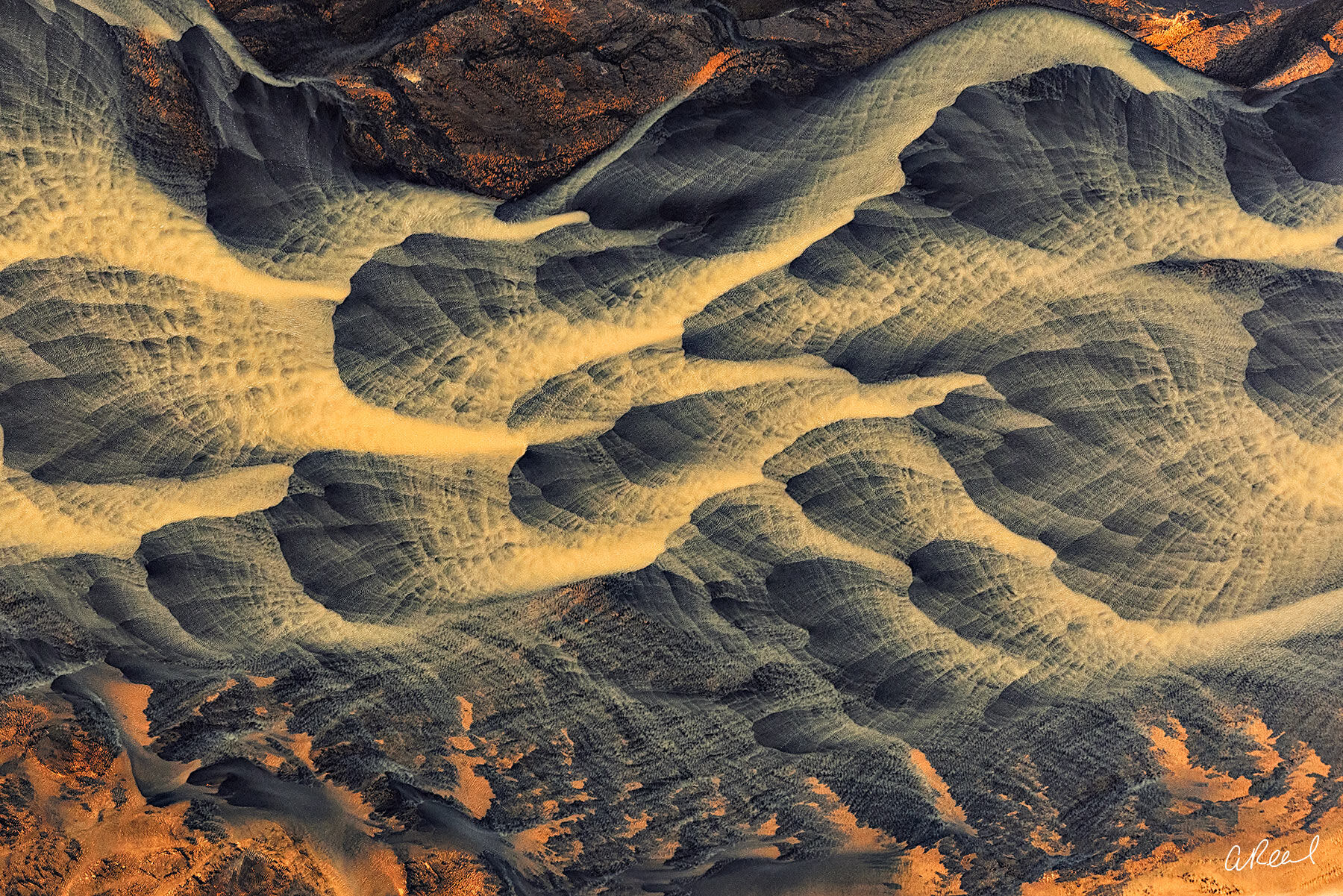
A sprawling floodplain is threaded by the scars of a braided river in southern Iceland. Erosion of the dark sands reveals the golden beds of clay beneath, creating a diaphanous aurora across the landscape, bordered by columns of orange fire. Fine Art Limited Edition of 50.
Arid Landscapes
Deserts, arid landscapes that evoke both harshness and a rugged beauty, are characterized by low levels of precipitation and sparse vegetation. These regions can be desolate and expansive, and they currently cover about one-fifth of the Earth's available land surface.
Perhaps unsurprisingly, the defining trait of an arid landscape is its aridity. These areas generally receive less than 250 millimeters of rainfall per year, which means water availability in such regions is incredibly scarce. Coupled with high temperatures and other extreme conditions, survival in these places is a formidable test of adaptation. Desert landscapes often showcase vast stretches of sandy dunes, rocky plateaus, or salt flats, sculpted by relentless exposure to the wind and sun.
Temperature fluctuations in arid landscapes can be extreme, with scorching daytime heat and frigid nights. This thermal volatility contributes to distinctive landforms, such as hoodoos and mesas, adding to the surreal beauty of these landscapes. Vegetation in deserts must adapt to conserve water, and many plants here have succulent leaves or specialized root systems to store additional moisture.
Still, arid landscapes can host a surprising array of life, including resilient plant species like cacti and animals like snakes, burrowing mammals, and insects. Despite their seemingly inhospitable conditions, arid landscapes are ecosystems of great ecological importance, and their uniqueness makes them a subject of scientific fascination and a source of inspiration to explorers and artists alike.
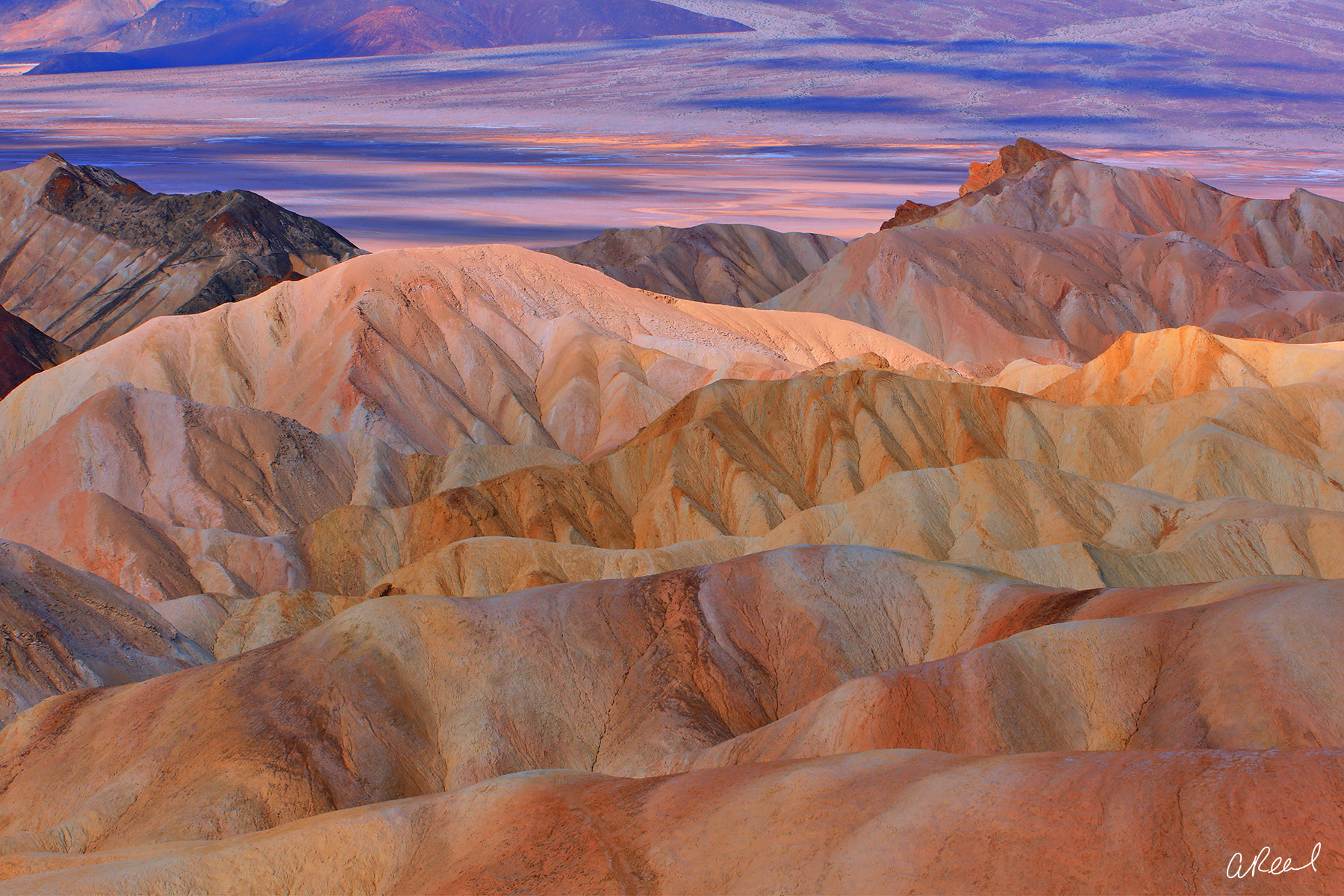
A single beam of sun alights on the melting ridges of Zabriskie Point in Death Valley National Park. Bands of red and gold mineral deposits race over the rippled landscape like a geologic river towards the desolate wastes of the valley far below. Fine Art Limited Edition of 50.
Karst Landscapes
Karst landscapes, shaped by the dissolution of soluble rocks like limestone, are characterized by unique landforms that include intricate cave systems and sinkholes. Rainwater, slightly acidic due to the absorption of carbon dioxide, seeps into the ground and slowly dissolves the limestone to create vacuous, labyrinthine underground caverns. Over millennia, these processes led to the creation of stunning karst formations such as stalactites, stalagmites, and flowstone.
Surface features of karst landscapes include limestone pavements and disappearing streams, where surface water vanishes into a sinkhole only to reappear elsewhere at a lower elevation. These landscapes often feature exposed bedrock, which creates a visually striking, almost otherworldly environment.
Karst regions support unique ecosystems, with specialized plant and animal adaptions. Sinkholes may become micro-ecosystems that host rare flora and fauna, and cave systems provide habitats for subterranean species that have adapted to life in the dark.
Beyond their geological significance, karst landscapes can contribute to water resource management initiatives, as underground rivers and aquifers in these areas play an invaluable role in supplying water to the surrounding regions. In many cases, karst areas represent an organically evolved landscape, having developed gradually through the ongoing interaction of natural processes and human activity over time.
Urban and Cultural Landscapes
Human landscapes, often referred to as ‘urban’ or ‘cultural’ landscapes, are intricate, human-made structures that reflect society’s history, values, creativity, and ingenuity. These landscapes embody the tangible expressions of human civilization, from ancient settlements to modern-day mega-metropolises.
Urban landscapes are characterized by dense concentrations of human structures, including buildings, roads, and other infrastructure. An urban landscape refers to the human-modified environment of cities and built environments, highlighting the interaction between people and these areas, their design, cultural significance, and the impact of human activity on shaping city environments. They represent the culmination of architectural styles, city planning, and the evolution of human settlements over time. Skyscrapers, historic landmarks, and bustling streets define the visual identity of urban areas, and the full spectrum of human culture is on display in these places.
Cultural landscapes may extend beyond urban city centers, encompassing rural and suburban areas shaped by human interaction with the environment. A cultural landscape is a geographic area, including both cultural and natural resources, that has been affected, influenced, or shaped by human involvement, and is recognized for its significance by organizations such as UNESCO and the World Heritage Committee. An associative cultural landscape is a type of cultural landscape that holds spiritual, economic, or cultural significance for a community, even if there is little or no physical evidence of human use. Agricultural fields, historic sites, and traditional villages – all of these entities contribute to the cultural richness of these landscapes, telling stories of humanity’s connection to the land and its resources. Some landscapes are created intentionally, designed and constructed deliberately by humans, while others evolve naturally or organically over time.
The defining features of human landscapes include the imprint of cultural practices, architectural styles, and the utilization of space. Streets and plazas become the stages for social interaction, commerce, and public expression. Public parks and gardens provide vital green spaces amid the gray concrete and utilitarian forms. Economic activities also play a significant role in shaping and transforming both urban and cultural landscapes, as patterns of land use and development often reflect economic priorities and changes.
Human landscapes are more than city skylines; they also bring in intangible elements of culture, art, and social dynamics. Street art, monuments, and public spaces serve as stages for cultural expression, illustrating the diversity and creativity of human societies. As we navigate these landscapes, we witness the ongoing dialogue between tradition and modernity, history and progress, providing a helpful lens through which we can understand the complex interconnectivity between humans and our environment.
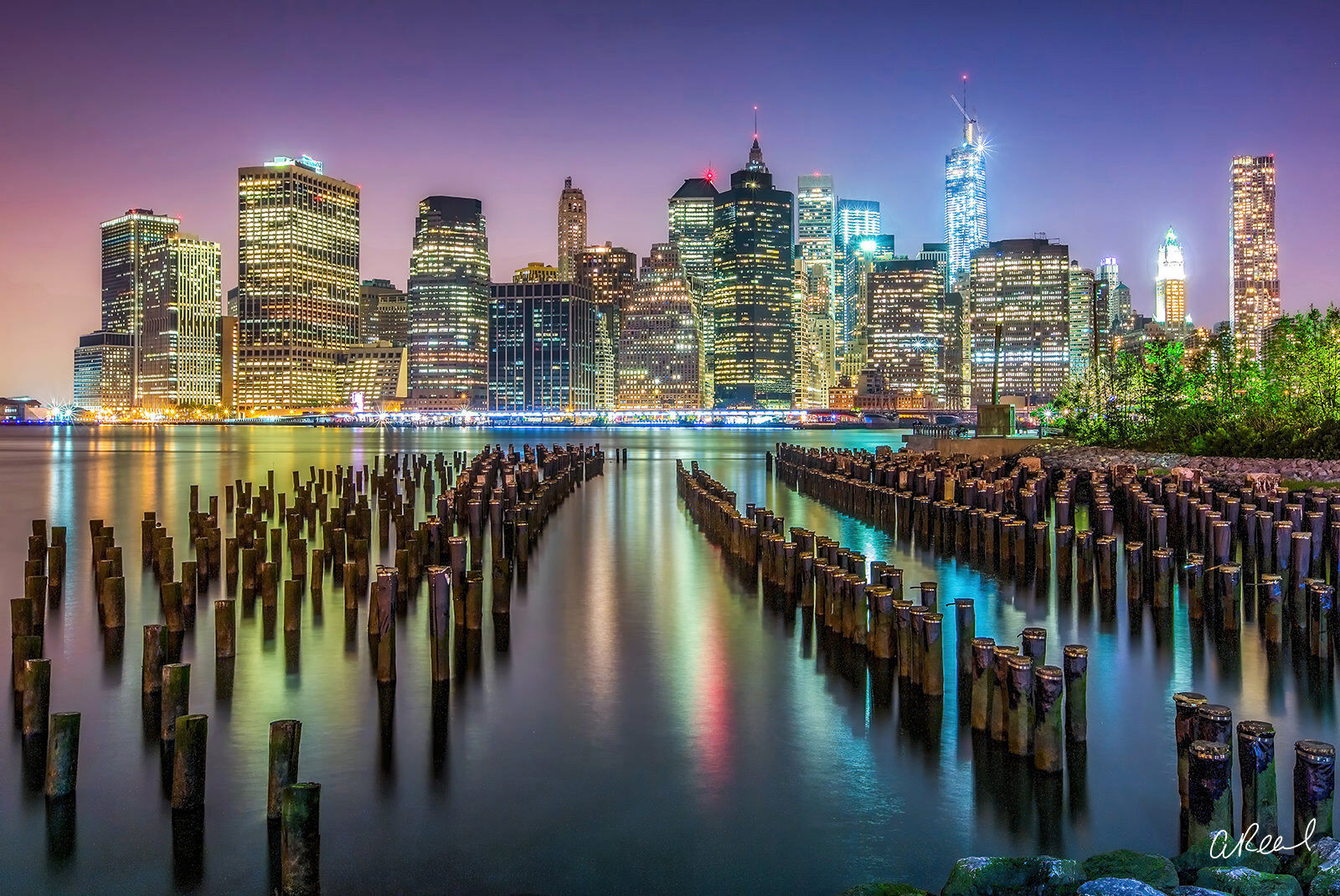
New York City (NYC), often called the City of New York or simply New York (NY), is the most populous city in the United States. With an estimated 2018 population of 8,398,748 distributed over about 302.6 square miles (784 km2), New York is also the most densely populated major city in the United States. Located at the southern tip of the U.S. state of New York, the city is the center of the New York metropolitan area, the largest metropolitan area in the world by urban landmass.
Landscape Ecology: The Science of Patterns and Processes
Landscape ecology is a fascinating branch of science that explores how the patterns and processes of the physical environment shape the world around us. At its core, landscape ecology examines the intricate relationships between natural scenery, human-made structures, and the living organisms—plants and animals—that inhabit these environments. By studying how different elements of a landscape interact, landscape ecologists gain insight into the distribution and abundance of species, the health of ecosystems, and the ways in which landscapes evolve over time.
This field is especially important in today’s world, where human activities such as landscaping, urban development, and agriculture are transforming natural landscapes at an unprecedented pace. Landscape ecology provides the scientific foundation for understanding how these changes impact the environment, from the fragmentation of habitats to the spread of invasive species. Using advanced tools like geographic information systems (GIS) and remote sensing, ecologists can map and analyze the complex mosaic of landforms, vegetation, and built structures that make up our surroundings.
The insights gained from landscape ecology are invaluable for conservation biology, environmental planning, and natural resource management. By identifying areas that are particularly sensitive or vulnerable, ecologists help guide efforts to protect biodiversity and maintain the ecological balance of cultural landscapes and natural scenery. The World Heritage Committee, for example, recognizes the importance of landscape ecology in preserving both natural and cultural landscapes, establishing guidelines to ensure these environments are managed sustainably for future generations.
Ultimately, landscape ecology bridges the gap between science and design, informing the work of landscape architects and planners as they strive to create environments that are both beautiful and resilient. By understanding the patterns and processes that shape our landscapes, we can make more informed decisions that benefit both people and the planet.
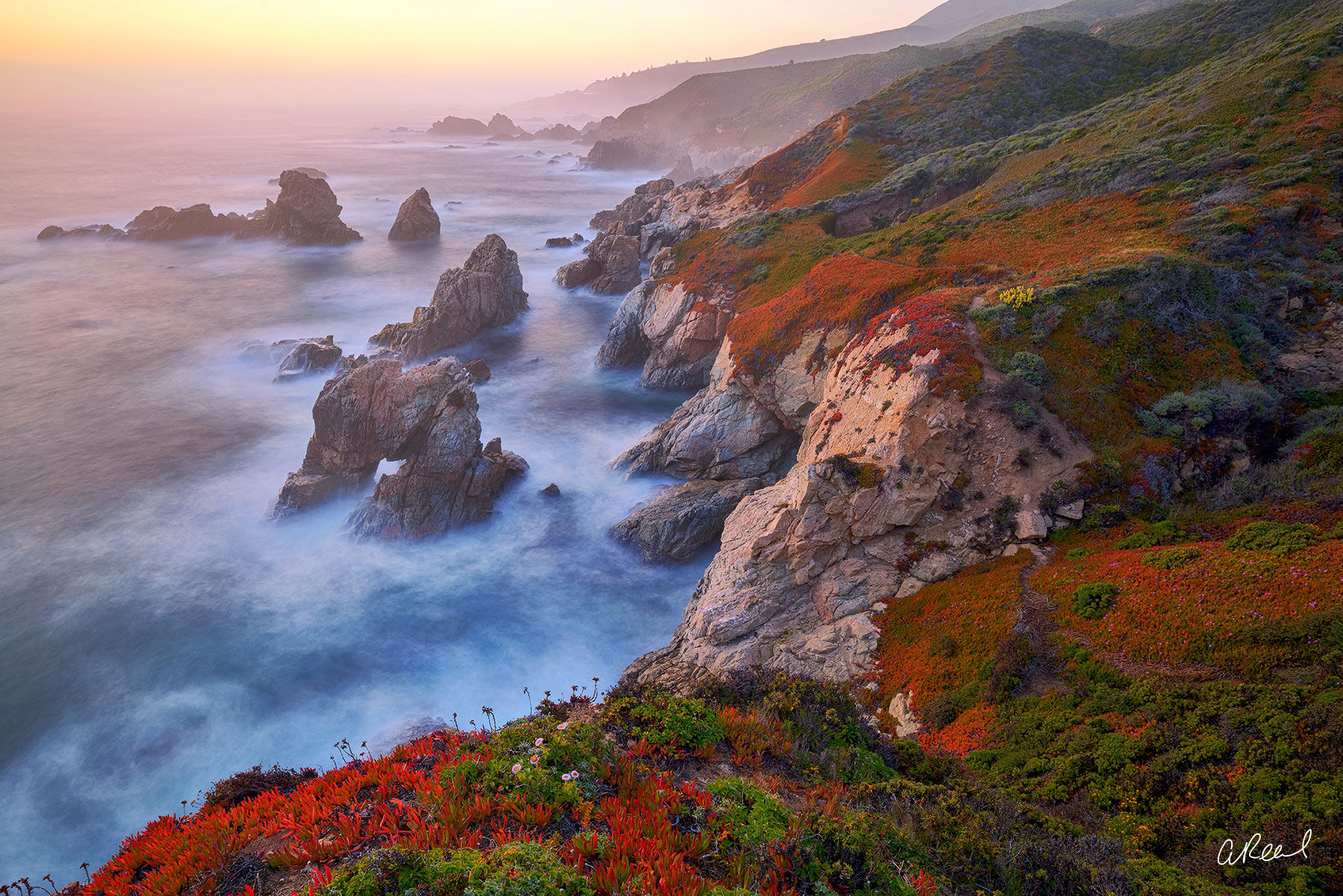
A cold evening fog caresses the sculptured cliffs along Big Sur in California. The evening light inspires a rainbow in the coastal scrub and beds of ice plant as the sun prepares to make its journey across the Pacific. Fine Art Limited Edition of 50.
Landscape Architecture: Shaping Human Environments
Landscape architecture is where art, science, and the environment converge to create outdoor spaces that enrich human life. Landscape architects are the visionaries behind the design and management of public parks, gardens, and urban landscapes—transforming ordinary land into extraordinary environments that invite people to connect with nature and each other.
The practice of landscape architecture is as much about creativity as it is about technical expertise. Landscape architects draw upon their knowledge of climate, soil, vegetation, and ecology to craft designs that are tailored to the unique characteristics of each site. They consider not only the natural features of a landscape but also its social and cultural context, ensuring that every park, garden, or urban plaza reflects the needs and values of the community it serves.
Modern landscape architecture is deeply rooted in sustainability. By integrating principles of landscape ecology, landscape architects strive to create environments that are not only visually stunning but also environmentally responsible. Whether designing a tranquil garden, a vibrant public park, or a dynamic urban greenway, they use tools like computer-aided design (CAD) and 3D modeling to bring their visions to life and communicate their ideas to clients and stakeholders.
Throughout history, renowned landscape architects such as Frederick Law Olmsted—creator of New York’s Central Park—and Capability Brown, who transformed the English countryside, have left a lasting legacy on the world’s landscapes. Their work continues to inspire today’s landscape architects, who are shaping the future of our cities and natural spaces with a blend of artistry, science, and a deep respect for the environment.
At its heart, landscape architecture is about creating places that foster well-being, celebrate beauty, and promote harmony between people and the natural world. Every park, garden, and green space is a testament to the power of thoughtful design to transform landscapes—and lives.
The Role of a Landscape Architect
A landscape architect is much more than a designer of outdoor spaces—they are stewards of the land, shaping environments that enhance human life and protect the physical environment for generations to come. Whether working on public parks, gardens, or expansive urban landscapes, landscape architects play a pivotal role in creating spaces where people and nature can thrive together.
To excel in this field, landscape architects must possess a unique blend of artistic vision, scientific knowledge, and practical skills. Their expertise spans ecology, botany, horticulture, and environmental planning, as well as the principles of design and architecture. This multidisciplinary approach allows them to craft landscapes that are not only beautiful but also functional, sustainable, and resilient.
Collaboration is at the heart of a landscape architect’s work. They engage with a diverse array of clients—from government agencies and private developers to community groups—to understand their goals and translate them into innovative designs. Effective communication with stakeholders, policymakers, and the public is essential to ensure that projects are successfully implemented and maintained.
Many landscape architects choose to specialize in areas such as urban planning, garden design, or ecological restoration, tailoring their expertise to address specific challenges and opportunities within different environments. Regardless of their focus, all landscape architects share a commitment to creating landscapes that support human well-being, foster community, and safeguard the natural world.
By designing parks, gardens, and public spaces that are both inviting and ecologically sound, landscape architects make a lasting impact on the quality of human life and the health of our environments. Their work not only shapes the physical landscape but also helps build a more sustainable and socially responsible future for all.
Landforms and Landscapes Across the Globe
Landforms from around the world collectively paint the portrait of Earth’s beauty and diversity – from towering mountains and sprawling plains to breathtaking canyons sculpted by geologic forces over eons. Vast oceans and meandering rivers carve through the Earth while deserts and lush forests adorn each continent. Europe, in particular, showcases a remarkable variety of landscapes and has played a significant role in the development of landscape art and garden traditions.
Each landform tells a story of Earth’s ever-changing surface, shaped by natural processes and human influence. Landscapes also reflect the changes and developments from the past, revealing how both natural events and human activities have transformed environments over time. The global mosaic of landscapes serves as a testament to the interconnectedness of geological, environmental, and cultural forces, weaving a narrative that spans both continents and epochs.
The Significance of Earth's Natural Landscapes
Earth’s natural landforms and landscapes bear profound significance, shaping the planet’s physical and ecological fabric while also influencing the course of human history. Mountains, rivers, valleys, deserts – these are not merely breathtaking landscapes. They are critical components of Earth’s delicate natural balance.
These natural features influence climate patterns, water cycles, and biodiversity, providing habitats for troves of flora and fauna. A natural landscape refers to areas of the Earth's surface that exist without significant human alteration, in contrast to cultural landscapes shaped by human activity. Beyond their ecological importance, landforms hold a great deal of cultural significance as well, often serving as the foundations for human settlements, trade routes, and spiritual sites. Throughout history, natural landscapes have inspired the creation of landscape art, a genre that captures the beauty and diversity of the natural world. The tradition of landscape painting has allowed artists to depict these environments, using various techniques to convey mood and atmosphere. Many renowned landscape paintings, such as those from the Dutch Golden Age, have had a lasting impact on art and culture. Paintings serve as a primary medium for representing landscapes, offering viewers a window into different places and times. Artists have painted landscapes across centuries, reflecting changing styles and perspectives. A landscape picture provides a visual representation of nature’s grandeur, often highlighting the interplay of light, color, and form. Landscape art frequently features a variety of scenes, from tranquil meadows to dramatic mountain vistas. The artist plays a crucial role in interpreting and presenting these views, shaping how we perceive the natural world. Jacob van Ruisdael is celebrated for his masterful landscape paintings, which set a standard for the genre. Vincent van Gogh also made significant contributions to landscape art, infusing his works with emotion and vibrant color. Artists often use perspective in landscape paintings to create a sense of depth and distance, drawing viewers into the scene.
Preserving these landscapes is vital for environmental responsibility, as they regulate ecosystems, help mitigate the severity of natural disasters, and provide resources for human societies. Additionally, natural landscapes offer ample recreational opportunities and aesthetic value, as they help individuals foster a deeper understanding of the natural world.
Recognizing the significance of Earth’s natural landforms underscores the importance of conservation efforts and the development of more sustainable practices to ensure the well-being and longevity of our planet and the future generations to come.
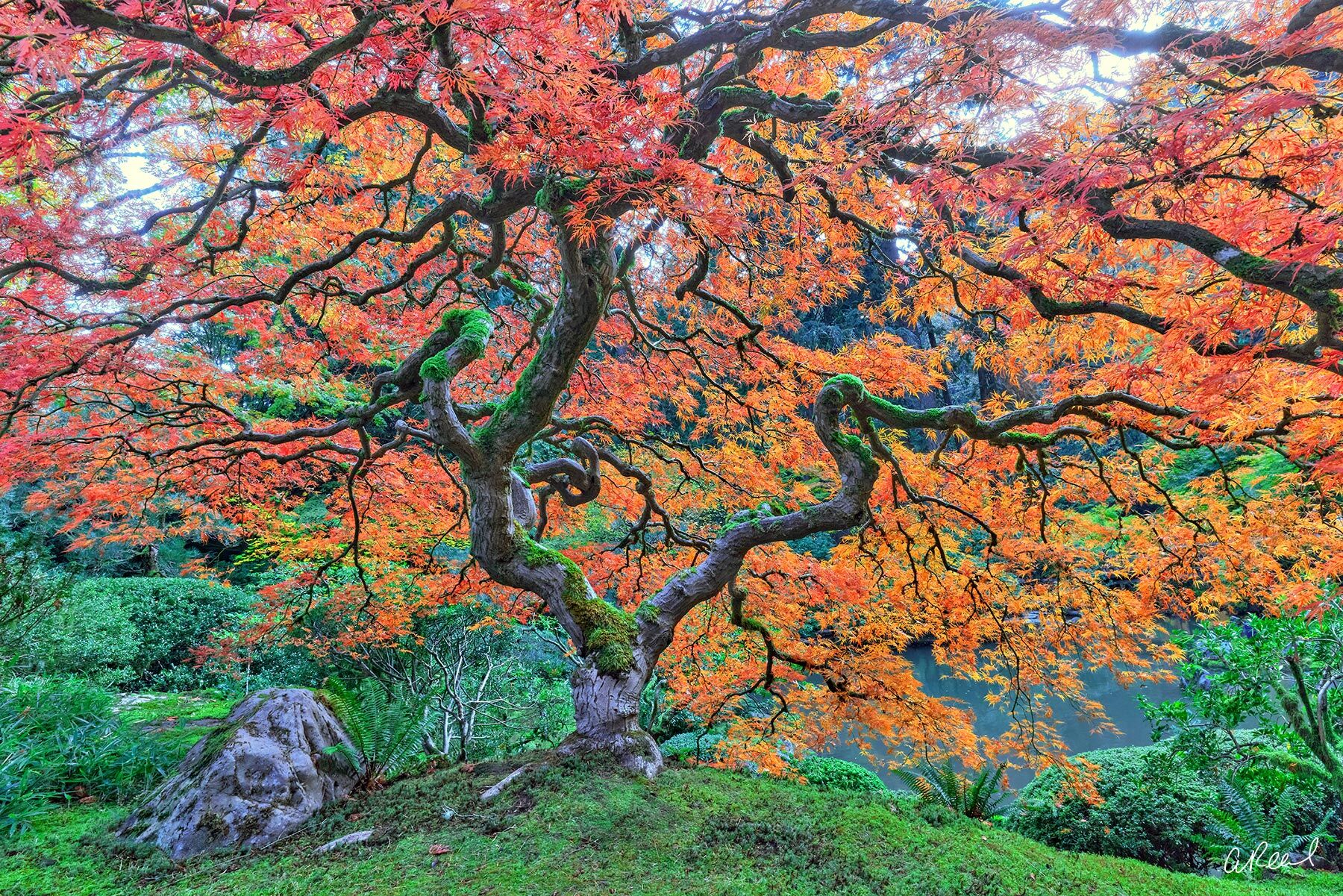
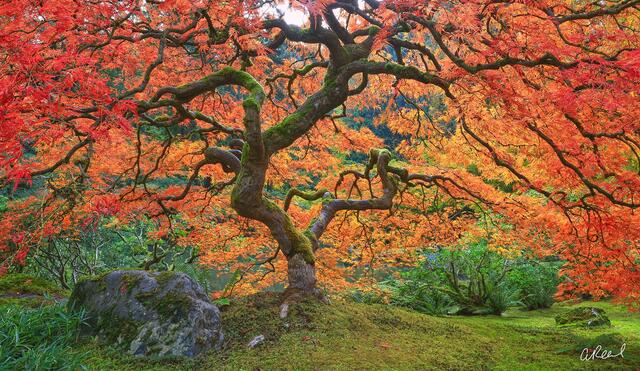
The fiery boughs of a grand Japanese maple fill the skies above a sculpted garden in Portland, Oregon. The enormous canopy shades the beds of jade moss and gently caresses the tranquil waters of a nearby pool. Fine Art Limited Edition of 100.
The Future of Landscapes
In conclusion, the exploration of Earth’s diverse landscapes reveals their breathtaking splendor, yes, but also the delicate balance sustaining life on our planet. From the tallest mountains to the lowest valleys, each landform plays a crucial role in shaping the ecosystems and biodiversity that are foundational for all life on Earth.
Conservation efforts are imperative to protect these natural wonders and ensure the preservation of biodiversity, mitigating climate impacts, and maintaining ecological harmony. Increasing awareness about the fragility of our environment is key to fostering a collective responsibility for the Earth’s well-being.
Only through dedicated conservation and heightened awareness can we safeguard the intricate network of landscapes and landforms that enrich our lives and sustain the vitality of our planet.
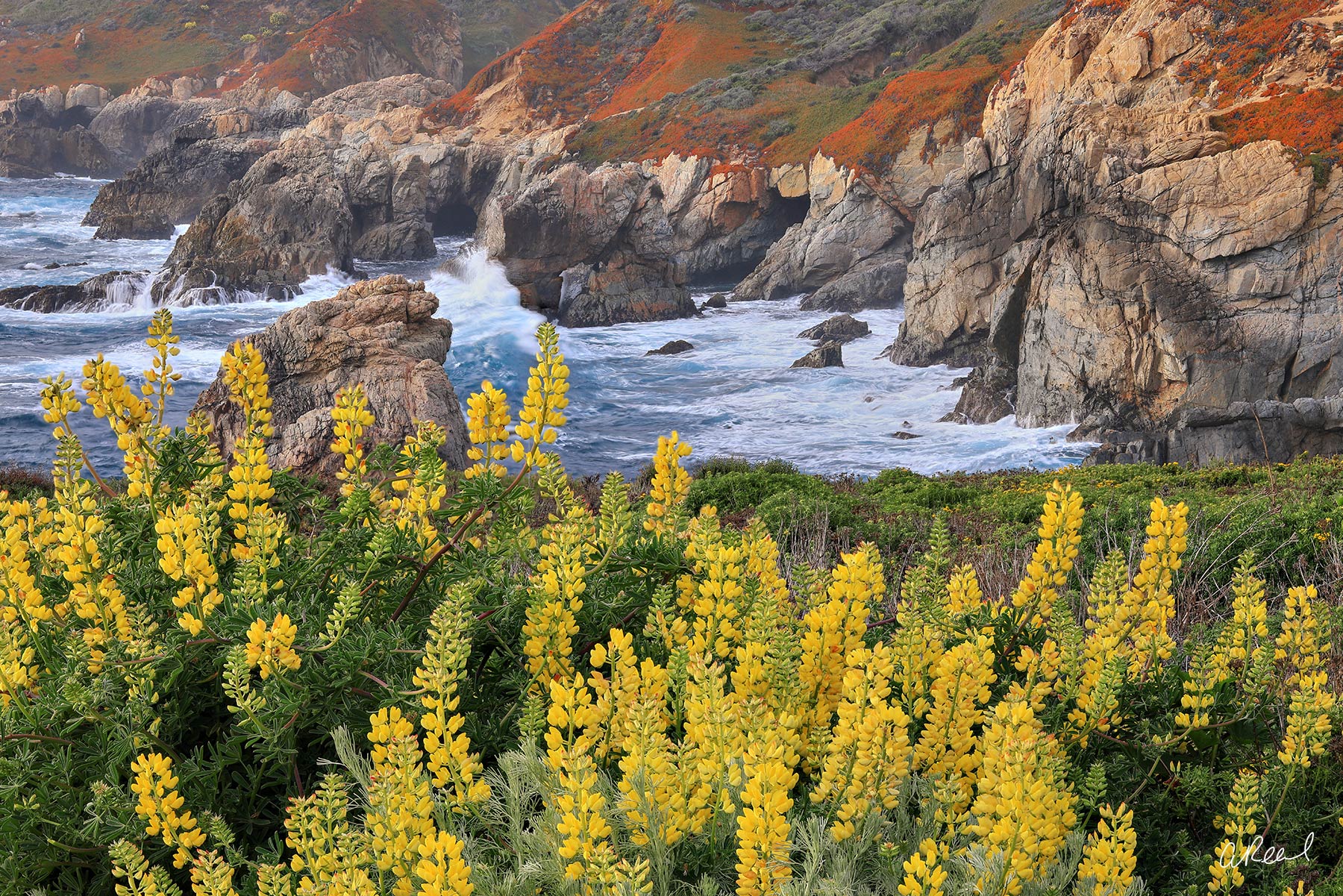
Columns of yellow lupine are nourished by the salty spray of the Pacific along the edge of a cliff in Big Sur, California. Beyond, the frothy surf seeps into the cracks and crevasses of the coastal sea stacks. Fine Art Limited Edition of 50.